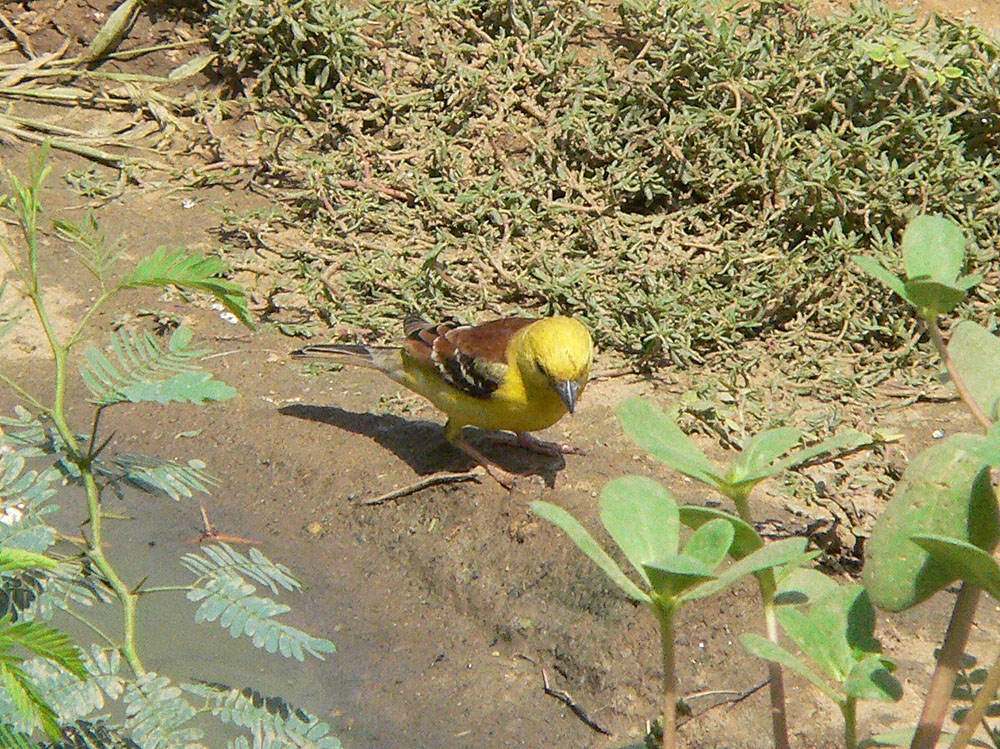
Ideas
A Golden Sparrow and a Sea Cow: Getting to Know Sudan’s Wild Neighbours
Meet Sudan’s wild neighbours through a golden sparrow, seagrass habitats, dugongs and the seasonal waters that sustain birds.
Read the article →Named for the Kandakas — the warrior queens of ancient Nubia — this site brings their spirit of clarity and resolve to today's questions about Sudan. Articles and analysis on the country's economy and development, alongside reflections on its past, culture, and the people who shape its future.

Latest on Kandaka
Meet Sudan’s wild neighbours through a golden sparrow, seagrass habitats, dugongs and the seasonal waters that sustain birds.
Read the article →

Sudan’s army and its allied Joint Force said on Friday they had recaptured the strategic The post Sudanese army, allies announce …
Report by Abdel Moneim Madbo A violent storm has destroyed homes and belongings at Kiryandongo... The post Storm leaves Sudanese …
12 November 2026 Earlier this month, Australia imposed targeted sanctions and travel bans on three leaders within the Rapid …
نيروبي : 13 نوفمبر :2026راديو دبنقاحذّرت نسويات وحقوقيات سودانيات من التداعيات الإنسانية والصحية المتصاعدة لاستخدام... The post …
القاهرة 13 نوفمبر 2026 – غيب الموت بالقاهرة، الجمعة، مرشد الطريقة الختمية وزعيم الحزب الاتحادي الديمقراطي الأصل السيد محمد عثمان …
غيّب الموت الفنان والموسيقي والباحث في التراث السوداني، يحيى إبراهيم أحمد أدروب، أحد الأسماء التي أسهمت في التعريف بالموروث …
Rotating catalogue selections
Nile Book Store is separate from Kandaka’s editorial work. These promotional book selections rotate daily at 00:00 UTC and repeat.

English · Illustrated EPUB
Frédéric Cailliaud’s account of exploration in Sudan and the Nile region.
View this book →
Arabic · EPUB
Essays by Malak Hifni Nasif on education and women’s place in society.
View this book →
English · Comic (CBZ)
The 1940 science-fiction anthology from Fiction House.
View this book →
English · EPUB
George Melly’s historical travel account of Khartoum and the Niles.
View this book →
Arabic · EPUB
Mahmoud Taher Haqqi’s historical novel, presented in Arabic.
View this book →
English · Comic (CBZ)
The first issue of the Golden Age superhero comic.
View this book →
English · Illustrated EPUB
Cailliaud’s atlas of the Nile, Nubia and Sennar.
View this book →
Arabic · EPUB
Zaynab Fawwaz’s collection of women’s biographies.
View this book →
English · EPUB + audiobook
Arthur Ransome’s adventure, with an unabridged audiobook.
View this book →
English · Illustrated EPUB
John Garstang’s illustrated account of the ancient city.
View this book →
Arabic · EPUB
Naum Shuqair’s historical and geographical study of Sudan.
View this book →
Arabic · EPUB
Bram Stoker’s Gothic novel in an Arabic edition.
View this book →New photographs are discovered daily; additions are reviewed weekly before publication in Arabic and English. Photo dates appear in titles and captions; historical images do not show current conditions.
Latest reviewed photo update:
Next photo review:
Next homepage rotation:
All times are in Chicago time, with daylight saving observed. The homepage rotates reviewed photographs weekly; selections may repeat. New photographs follow source, rights and bilingual review, and a review may yield no additions.
The courthouse in Omdurman, Sudan, photographed in November 2014 according to the source record. The precise day is uncertain: the catalogue gives 24 November, while embedded image metadata gives 26 November. The source credits Noory Taha and identifies the photograph as the uploader’s own work. This unmodified historical image does not establish the building’s current condition or public access.
Noory Taha (credited by the source) · CC BY-SA 4.0 Wikimedia Commons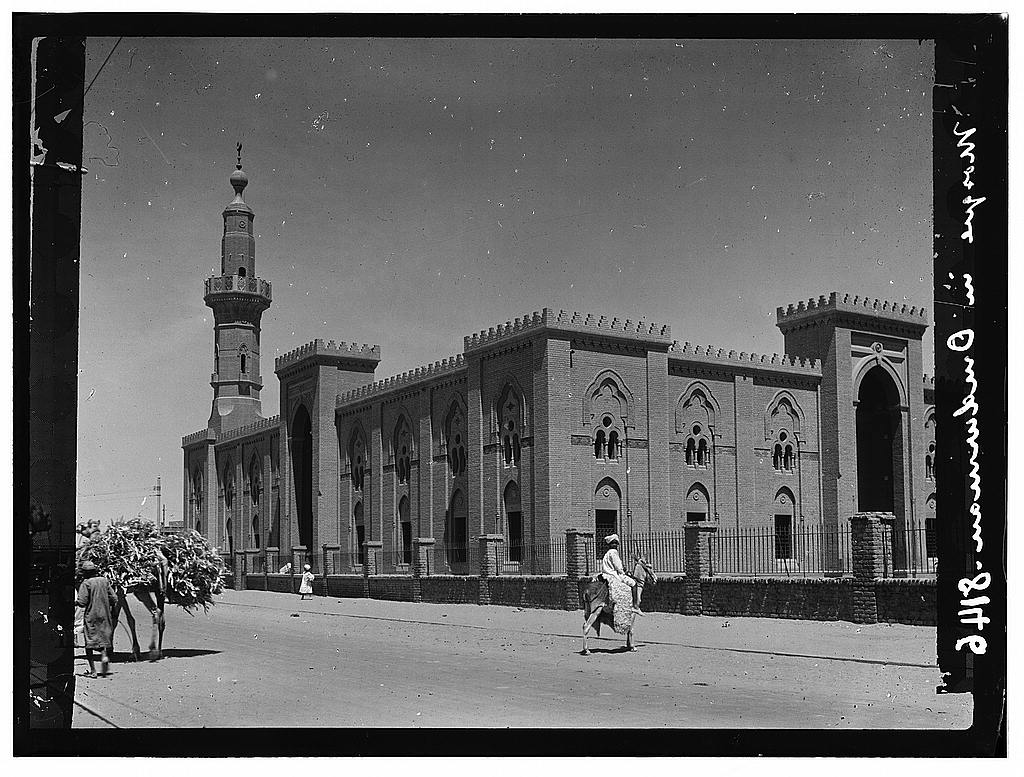
The catalogue identifies this street view as Omdurman’s main mosque. Its brick façade and minaret face a street used by pedestrians and animals. Matson Photo Service; Library of Congress, dated [1936]. The date is approximate. This historical image does not describe current conditions. The Library records no known restrictions on publication; that is not a declaration of public-domain status.
Matson Photo Service / Library of Congress · No known restrictions on publication Library of Congress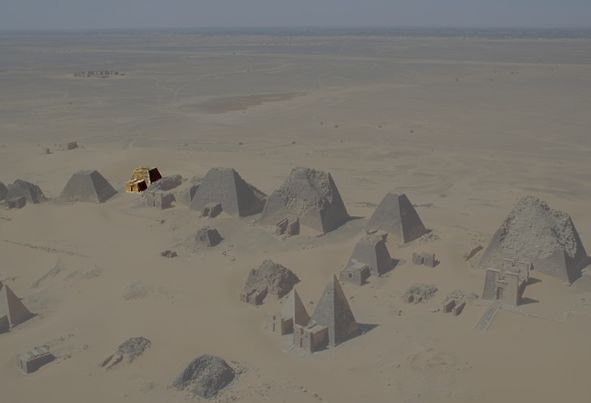
The full source page identifies B. N. Chagny as photographer and dates the aerial view to 2001. This is an annotated derivative: most of the scene has been darkened to highlight the structure labelled N5 by the source. It is not an unaltered documentary image. The source’s owner credit is retained as written; no new historical identification is inferred.
B. N. Chagny; source owner credit: Francis Geius / SFDAS mission; annotated derivative uploaded by Sven-steffen arndt · CC BY-SA 1.0 Wikimedia Commons
The unfinished royal statue at the Tombos quarry, near the Third Nile Cataract in Sudan. Although the original Commons file is titled “Kerma Statue”, its carved details and surrounding boulders match archaeological photographs of Tombos. The king’s identity is uncertain. The camera metadata records 8 June 2016; this is not the upload date. Photograph by MustafaO, reproduced without modification under CC BY-SA 4.0. This historical photograph does not establish present-day conditions or visitor access.
MustafaO · CC BY-SA 4.0 Wikimedia Commons
An interior of the Palace in Khartoum, Sudan, catalogued by the Library of Congress to 1936. Matson Photo Service is credited as photographer. Arches, displayed weapons and a wheeled cannon are visible; the record does not identify the people. The year is a catalogue date, not a verified day of capture. This is the Library’s uncropped digital reproduction, used without further modification. It documents a historical interior, not present-day conditions or visitor access.
Matson Photo Service · G. Eric and Edith Matson Photograph Collection · No known restrictions on publication Library of Congress
Steve Evans’s historical photograph of a Nubian royal statue in Sudan. Commons associates the statue with Tabo on Argo Island but treats its identification as Natakamani as uncertain. The record gives 24 February 2005; the exact capture date is not independently established. This unmodified photograph does not document present conditions.
Steve Evans · CC BY 2.0 Wikimedia Commons
Al-ʿEkura in Gezira State, Sudan, photographed on 15 February 2022 by Muwafaq Osman. Houses, trees and sandy streets fill the foreground, with fields beyond. The photographer identifies this as their own work. This unmodified historical photograph does not show current conditions or establish safe access.
Muwafaq Osman (موفق عثمان) · CC BY-SA 4.0 Wikimedia Commons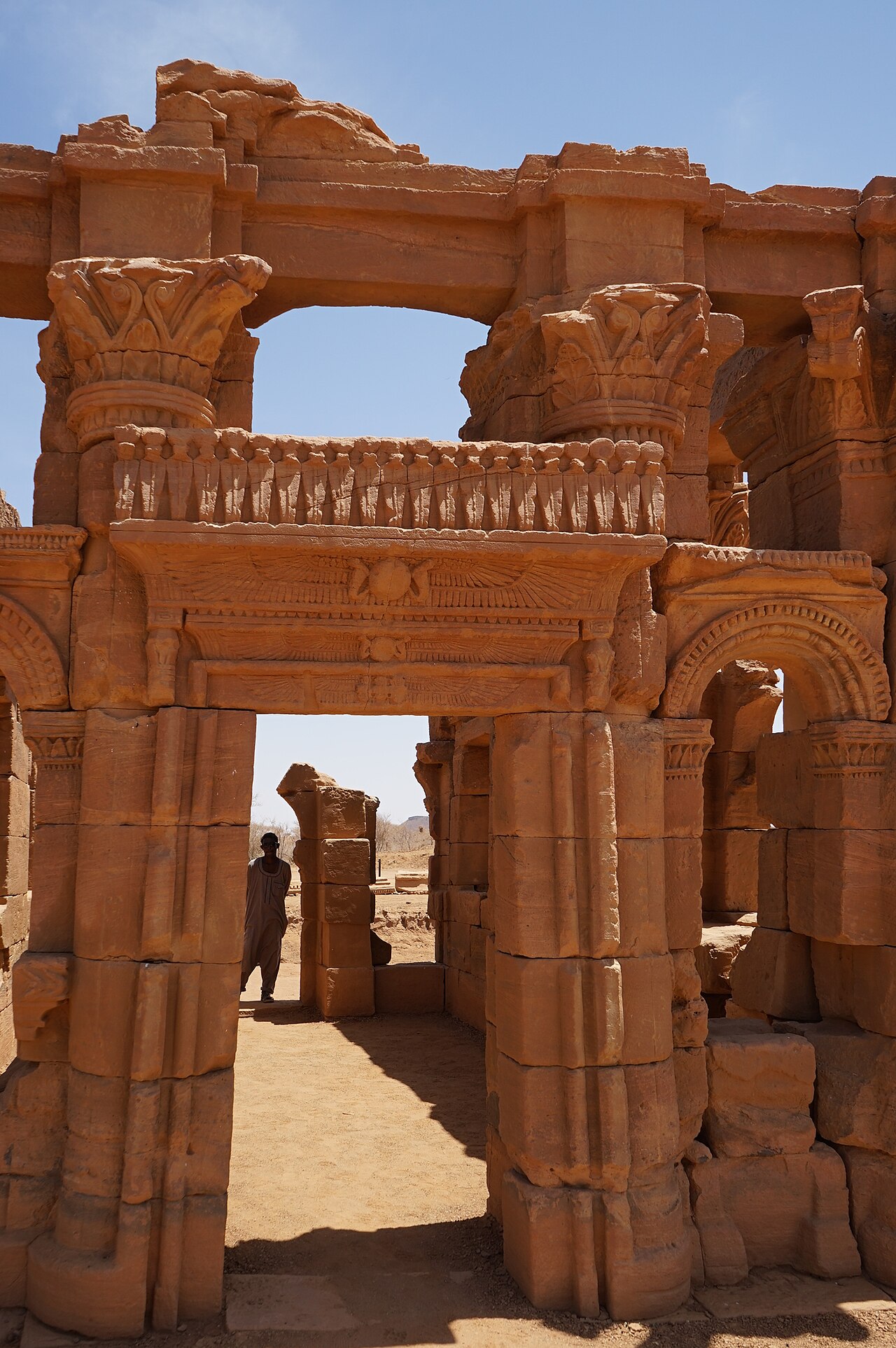
The carved entrance of the Hathor chapel at Naqa, Sudan, photographed by Nina R on 26 March 2016. The columns, arched openings and winged sun-disc decoration match the chapel documented by the Naga excavation team. The source file's title and description incorrectly refer to pyramid reliefs at Meroe; Kandaka has corrected that identification. This photograph records the monument in 2016, not its present condition.
Nina R, via Flickr and Wikimedia Commons; image unmodified · CC BY 2.0 Wikimedia Commons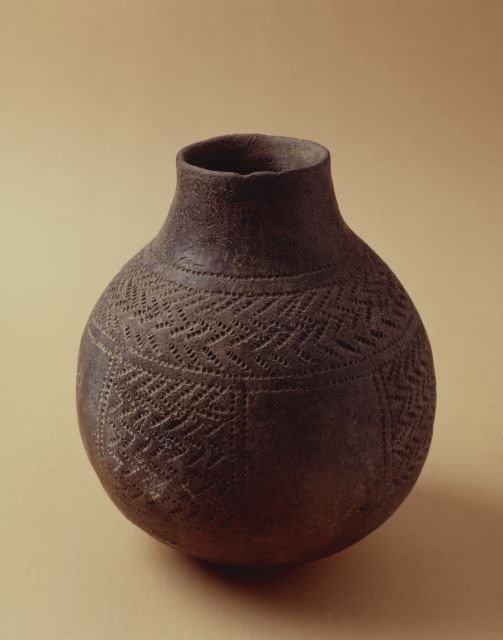
A Meroitic jar with a rounded base and comb-impressed decoration, held by the Finnish Heritage Agency (KM17000:39:119:3). Its catalogue gives a broad date of 300 BCE–400 CE and links it to Nubia, listing both Egypt and Sudan rather than a clear modern-country findspot. The maker and photographic date are unrecorded. This entry uses the actual object photograph, not the accompanying archaeological drawing.
Finnish Heritage Agency, Archaeological Object Collection; photographer not named · CC BY 4.0 Finnish Heritage Agency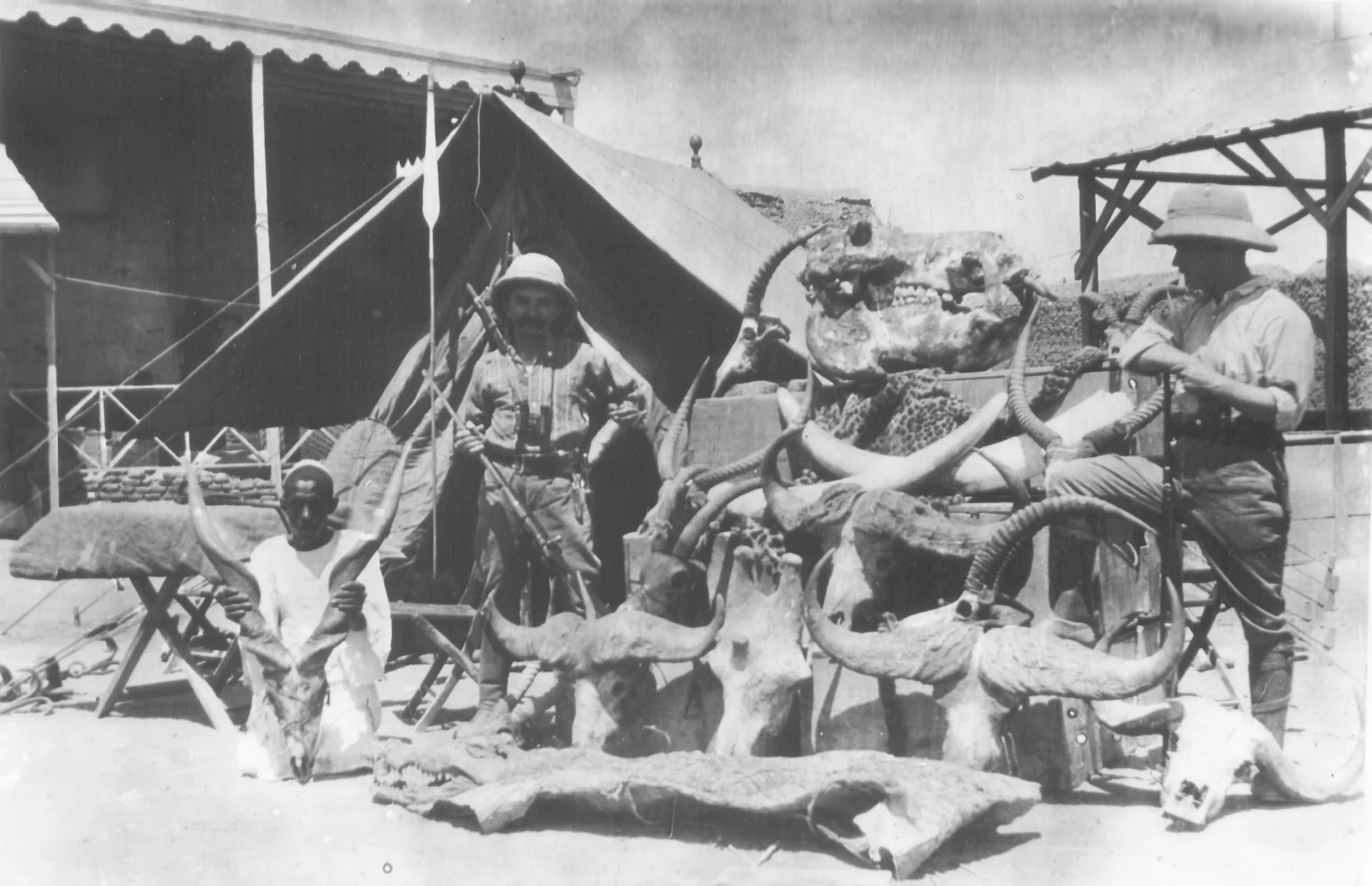
A historical display of hunting trophies in a Khartoum courtyard, dated by the Náprstek Museum to the early twentieth century. The catalogue names Machulka and tentatively identifies Štorch, retaining a question mark; other people and the photographer are unnamed. The image documents historical hunting and collecting, not an endorsement of those practices. No precise capture year or species identification is asserted.
Photographer unknown; National Museum – Náprstek Museum, Bedřich Machulka photographic collection, Af I 808 · CC BY 4.0 National Museum / eSbírky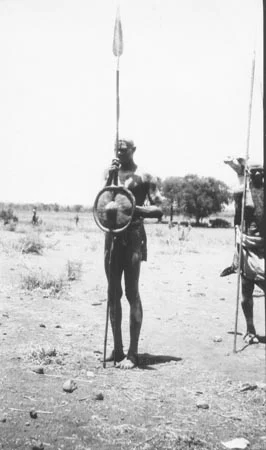
The Náprstek Museum catalogue dates this photograph to 1927 and attributes its location to Kordofan, Sudan. The photographer and the subjects’ names are unrecorded. Its historical labels “Nubové” and “Bagirmi” have not been independently resolved and are not treated here as verified community identities or a precise location. Holding these objects does not establish the man's occupation or participation in combat.
Photographer unknown; National Museum – Náprstek Museum, E. St. Vráz photographic collection, Af I 2046 {K-07263} · CC BY 4.0 National Museum / eSbírky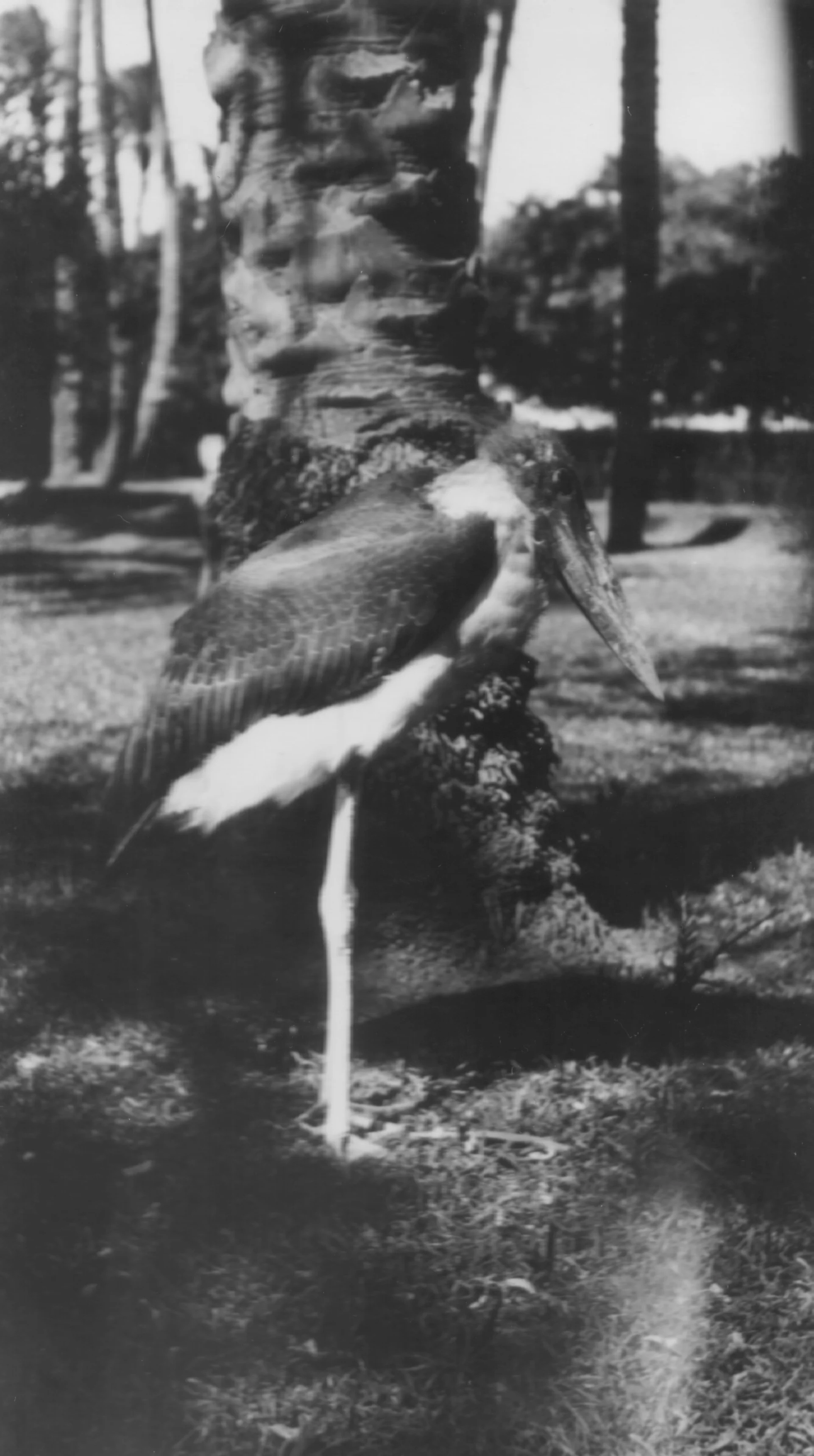
The Náprstek Museum identifies the bird as a marabou stork at Khartoum Zoo and dates the photograph to the 1920s. The photographer is unrecorded. This historical zoo image does not establish the bird's wild origin, present-day species distribution or the zoo's current condition.
Photographer unknown; National Museum – Náprstek Museum, Bedřich Machulka photographic collection, Af I 99 · CC BY 4.0 National Museum / eSbírky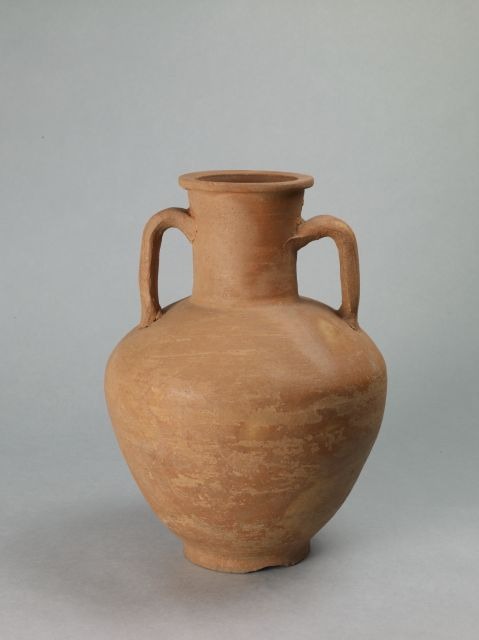
A two-handled Meroitic amphora in the Finnish Heritage Agency collection (KM17000:39:116:2), catalogued broadly to 300 BCE–400 CE. The record associates it with Nubia but lists both Egypt and Sudan, so no precise modern-country findspot is asserted here. The maker and photographic date are unrecorded. This is a museum object photograph, not a view of present-day Sudan.
Finnish Heritage Agency, Archaeological Object Collection; photographer not named · CC BY 4.0 Finnish Heritage Agency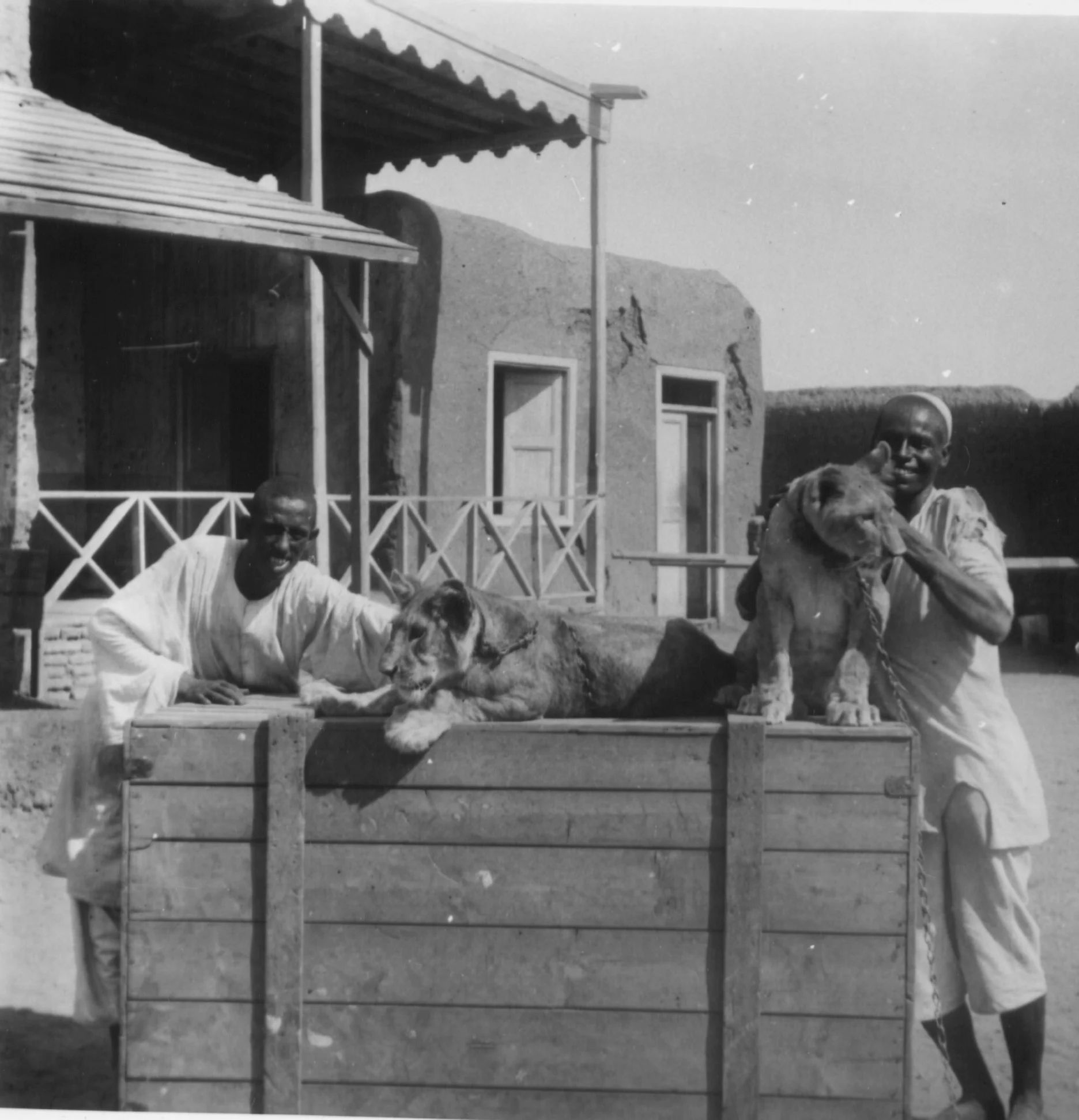
The Náprstek Museum identifies this 1911 scene as Bedřich Machulka's assistants with lion cubs in the courtyard of his Khartoum home. The men and photographer are not named in the record. The photograph documents a historical captive-animal setting; it is not evidence of present-day wildlife conditions or an endorsement of keeping wild animals.
Photographer unknown; National Museum – Náprstek Museum, Bedřich Machulka photographic collection, Af I 629 · CC BY 4.0 National Museum / eSbírky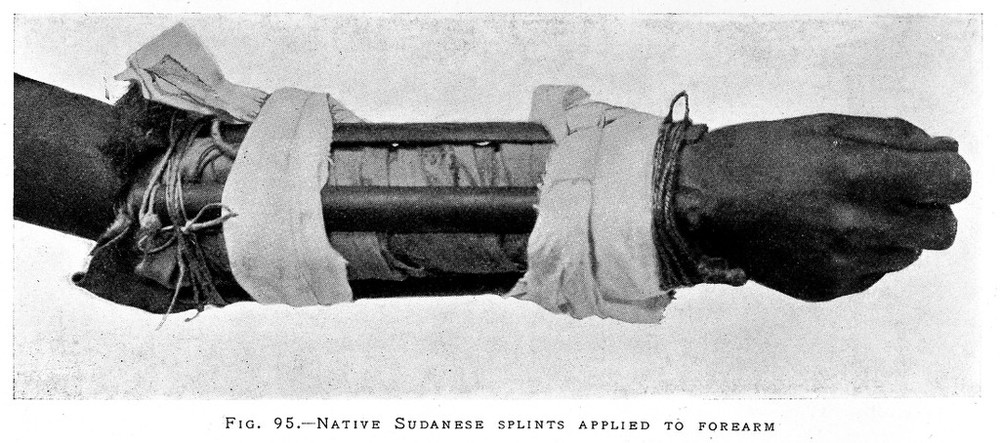
Wellcome identifies this as a reproduction of a photograph published in Robert Grenville Anderson’s 1908 book on medical practices in Kordofan. The individual photographer and exact capture date are not recorded. The image shows a forearm supported by a splint; it is historical documentation, not medical advice or evidence of treatment effectiveness. The image-level record M0005276 is licensed CC BY 4.0.
Photographer unrecorded / Wellcome Collection; reproduced in R. G. Anderson, 1908 · CC BY 4.0 Wellcome Collection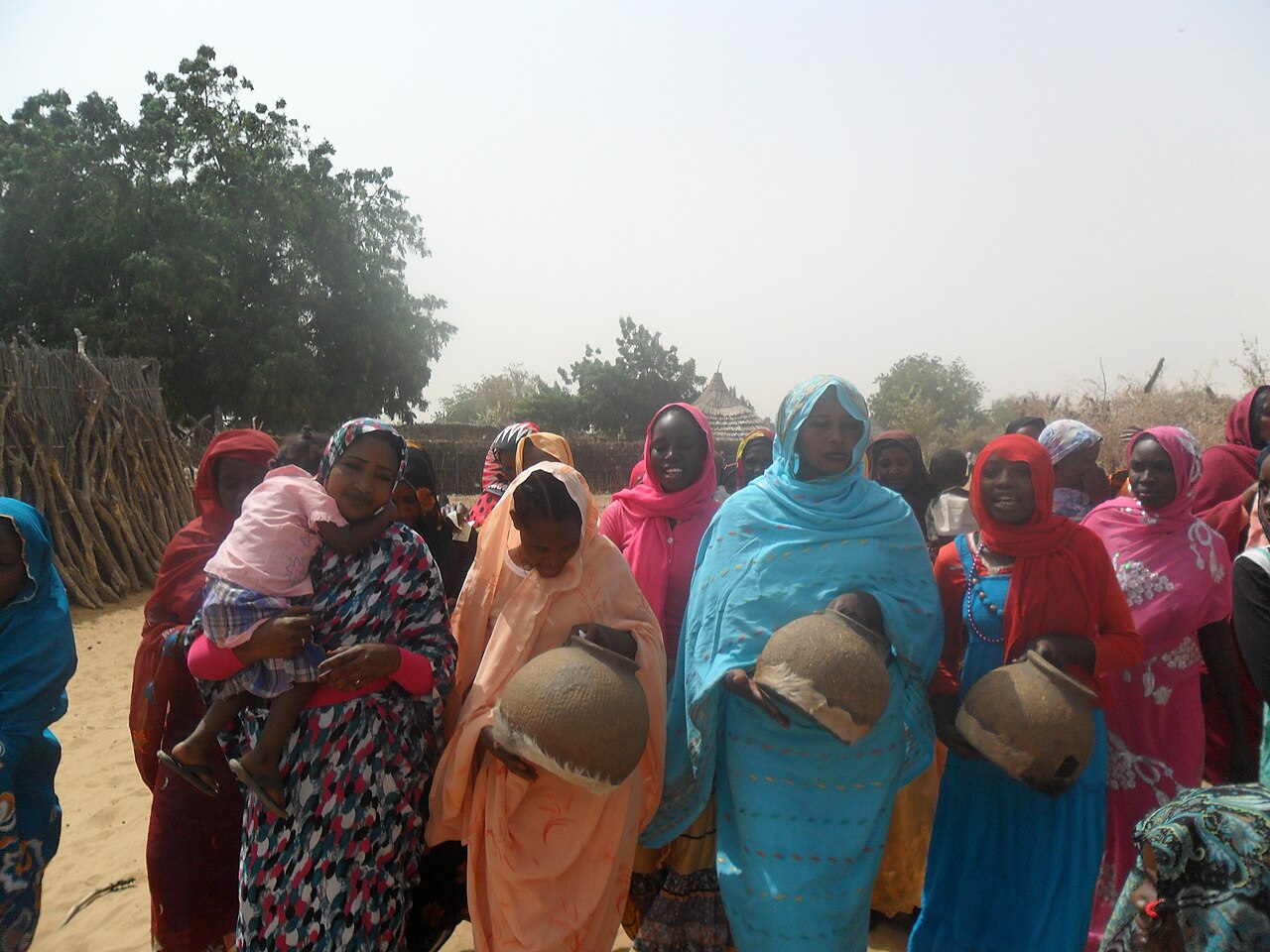
Rahma Abdalla identifies this photograph as a traditional Sudanese wedding and dates it to 20 March 2012. The photograph shows women gathered outdoors, several holding large rounded vessels. The source does not identify the village, participants or particular ritual. It illustrates one gathering, not a custom shared by every Sudanese community.
Rahma Abdalla · CC BY-SA 4.0 Wikimedia Commons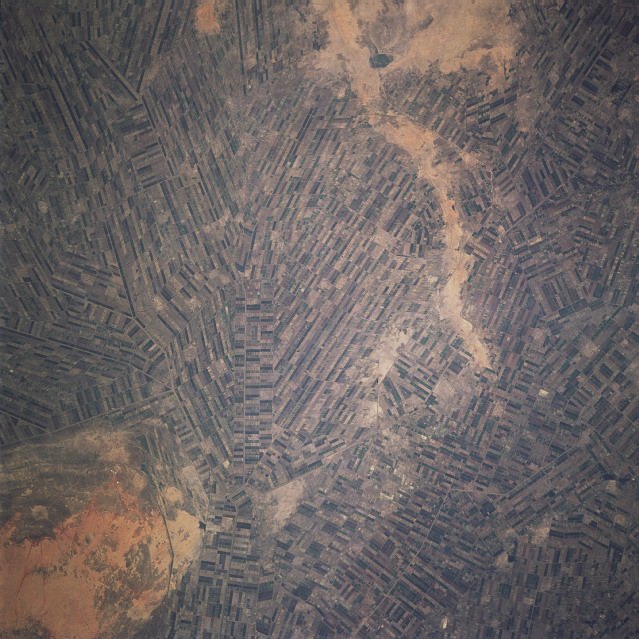
NASA’s photograph shows the field patterns of the Gezira Plain in November 1997. Its mission identifier is STS087-717-088. This is the original version, not the contrast-enhanced derivative made in 2013. It records a historical landscape, not current cultivation or irrigation performance.
NASA · Public domain Wikimedia Commons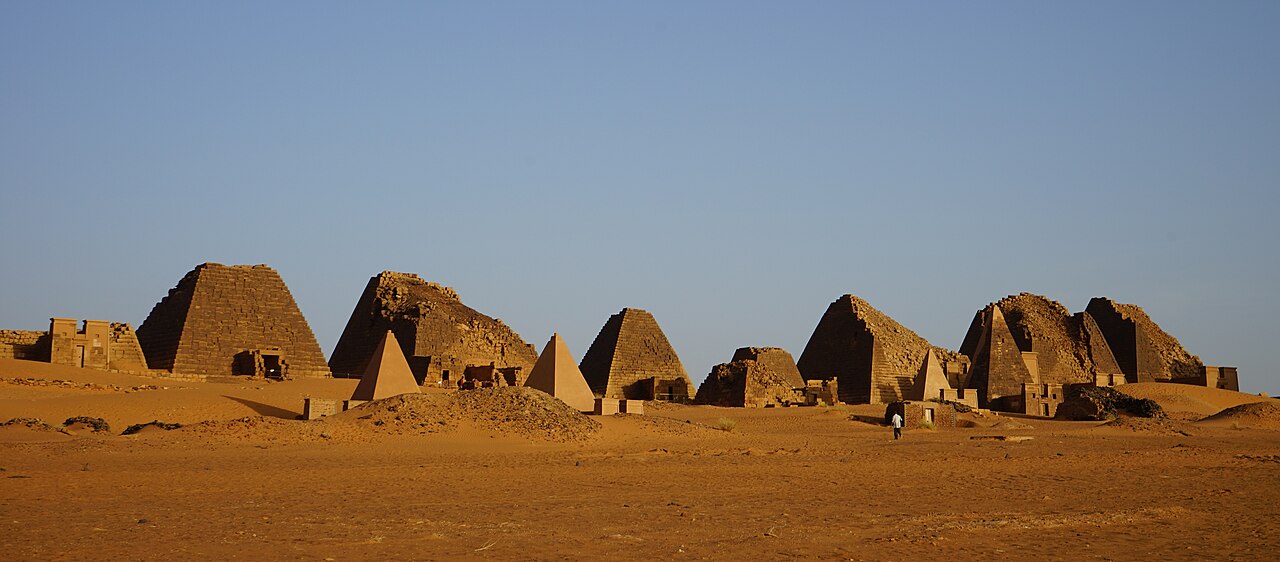
Nina R photographed this view of the Meroe pyramids in Sudan on 27 March 2016. Pyramids of different surviving heights and their chapel entrances stretch across the sandy foreground. This is a dated view of the site, not evidence of its present condition or visitor access. Reproduced at a smaller display size without further alteration.
Nina R · CC BY 2.0 Wikimedia Commons
Walter Callens photographed the Western Deffufa at ancient Kerma on 26 March 2009. This version is a narrow panoramic crop supplied by Wikimedia Commons; it does not show the monument’s full height. The crop is disclosed rather than presented as the complete original photograph. No further cropping or reconstruction has been applied.
Walter Callens · CC BY 2.0 Wikimedia Commons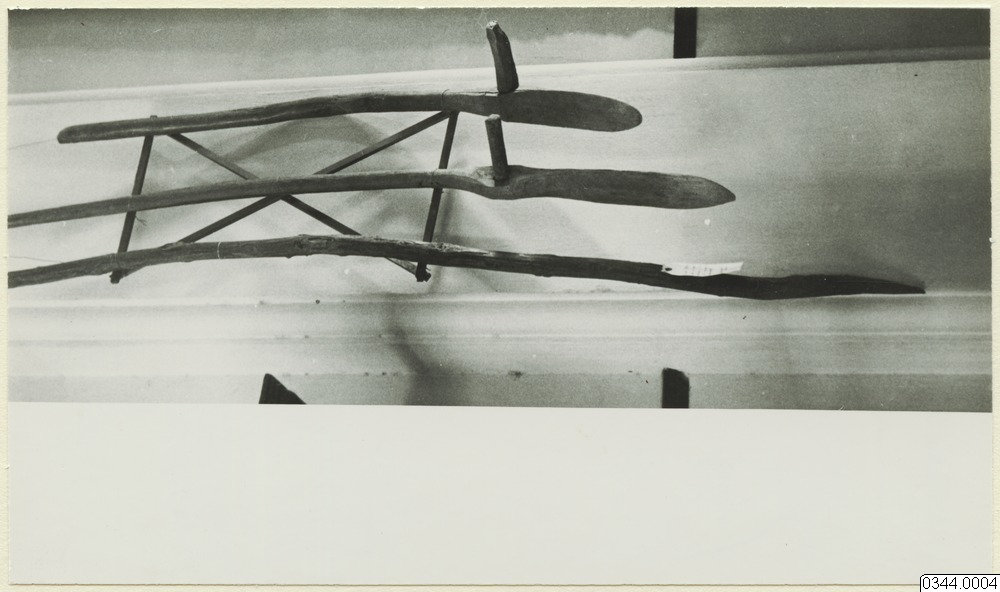
The Museum of Ethnography’s record 0344.0004 attributes this photograph to James Hornell. It identifies the tools with Dongola province and places the photograph in a museum in Khartoum. The collection acquired it in 1939; that is not a verified capture date. The source marks the image public domain. This is a historical display, not a current museum installation.
James Hornell / Museum of Ethnography, Stockholm · Public domain Museum of Ethnography, Stockholm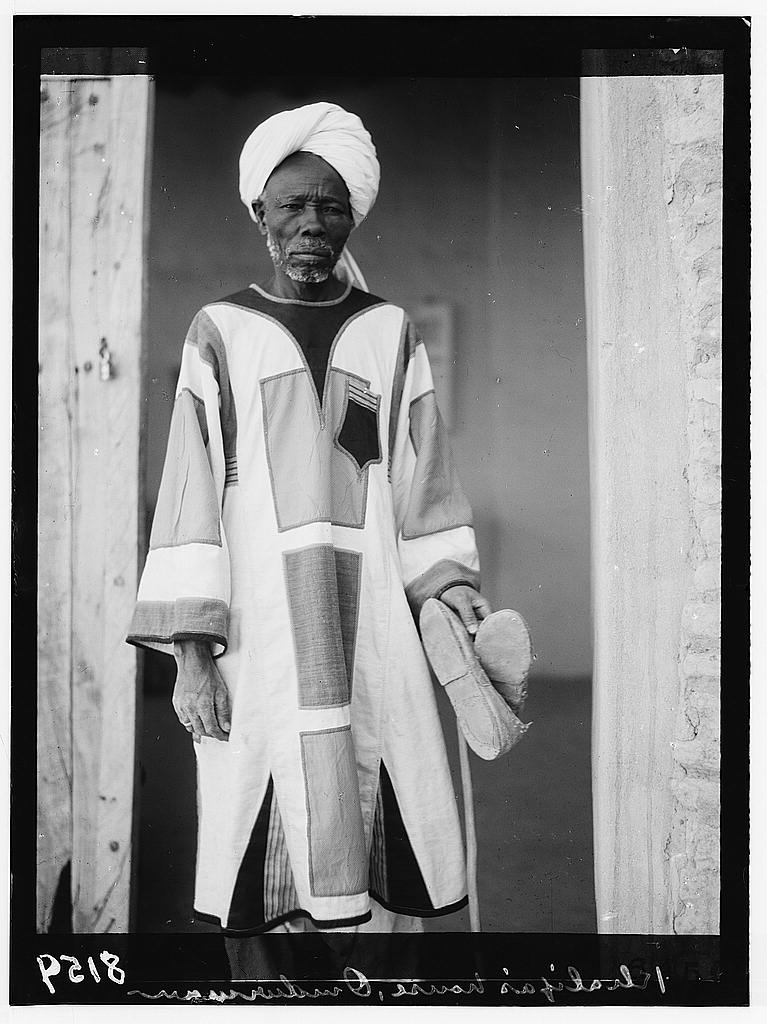
The catalogue identifies the man as the caretaker of the Khalifa’s House in Omdurman; his personal name is not supplied. The older caption’s generalisation about Mahdist followers is not adopted here as a factual identification. Matson Photo Service; Library of Congress, dated [1936]. The date is approximate. This historical image does not describe current conditions. The Library records no known restrictions on publication; that is not a declaration of public-domain status.
Matson Photo Service / Library of Congress · No known restrictions on publication Library of Congress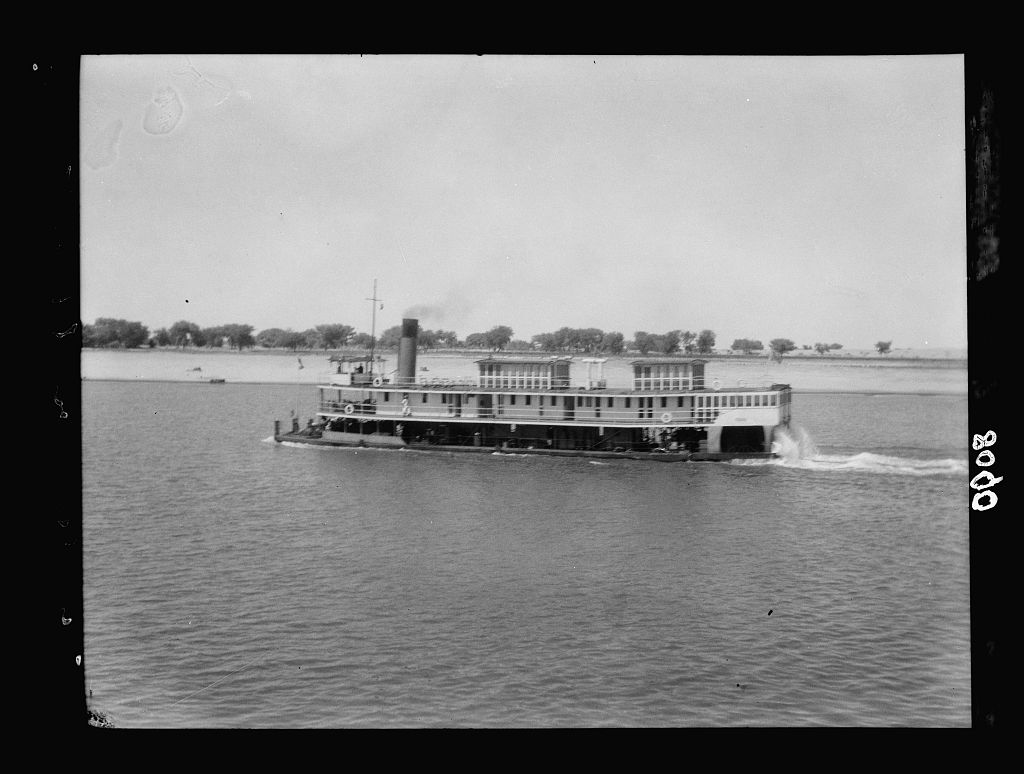
The catalogue locates this Nile steamer at Khartoum. The photograph shows its decks, funnel and wake; it does not provide a vessel name, which is therefore not inferred here. Matson Photo Service; Library of Congress, dated [1936]. The date is approximate. This historical image does not describe current conditions. The Library records no known restrictions on publication; that is not a declaration of public-domain status.
Matson Photo Service / Library of Congress · No known restrictions on publication Library of Congress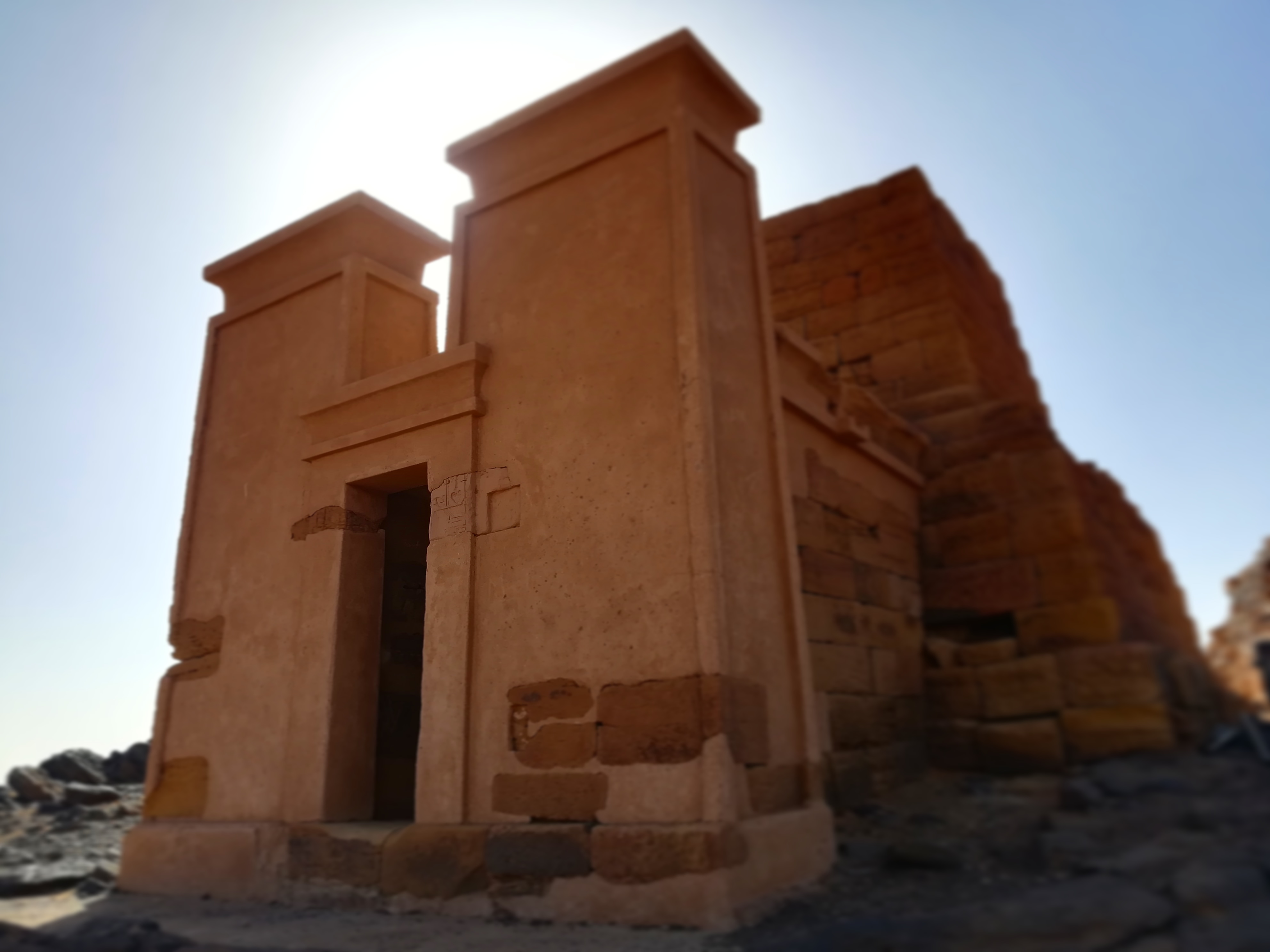
Ahmed Amir photographed this architectural detail at the Meroe pyramids in Bajrawiya on 14 April 2019. The image shows a chapel façade and part of a pyramid, rather than a panorama of the whole site. No individual tomb number is assigned here, and the photograph does not establish present conservation conditions.
Ahmed Amir · CC BY-SA 4.0 Wikimedia Commons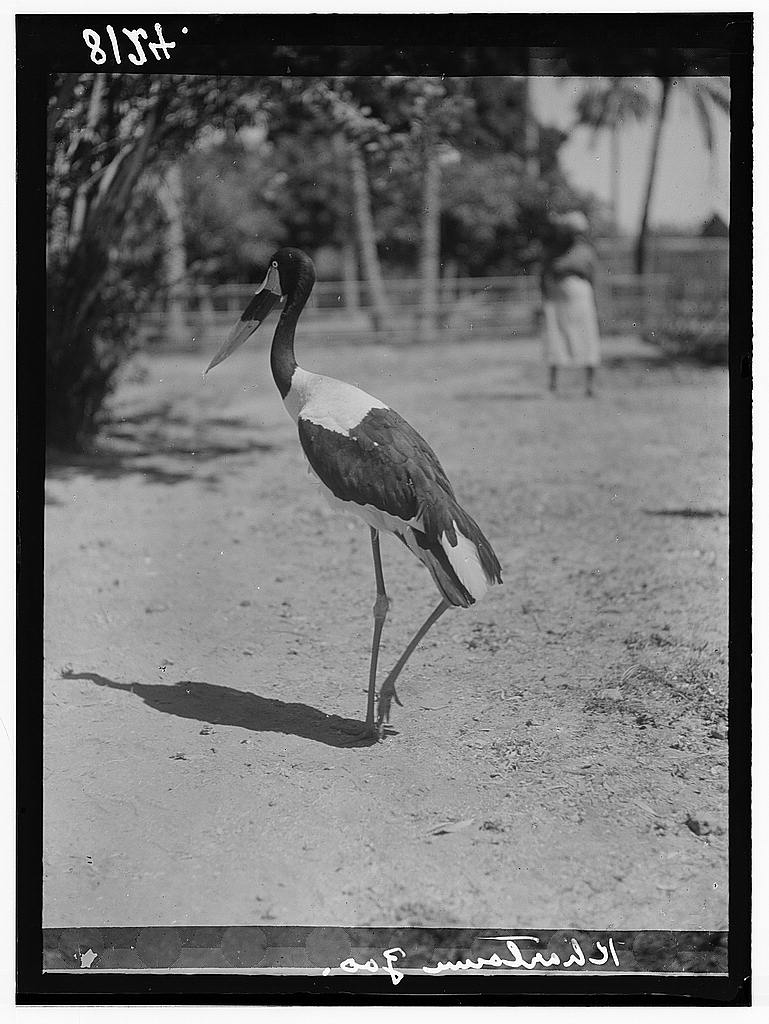
The Library of Congress catalogue identifies this as a photograph at Khartoum Zoo. A stork stands in the foreground, with trees and a figure behind it. Matson Photo Service; Library of Congress, dated [1936]. The date is approximate. This historical image does not describe current conditions. The Library records no known restrictions on publication; that is not a declaration of public-domain status.
Matson Photo Service / Library of Congress · No known restrictions on publication Library of Congress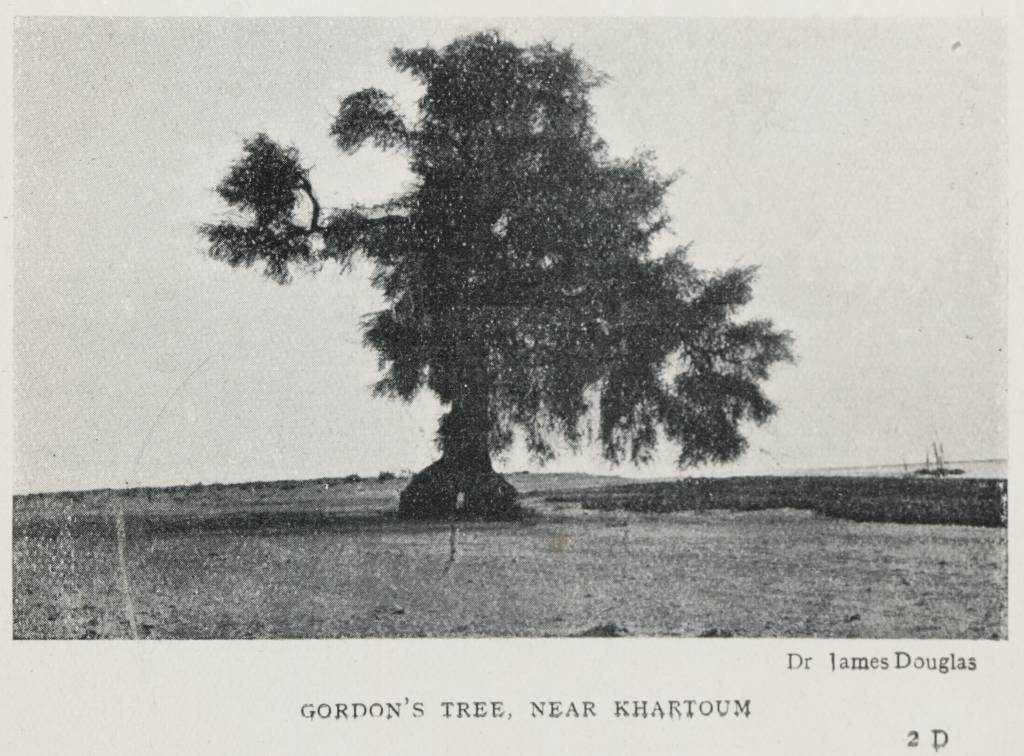
This photograph by James Douglas appeared in New Egypt in 1906, captioned “Gordon’s Tree, Near Khartoum”. The publication year is not a verified capture date. The historical caption is retained as source context, not independent proof of the tree’s identity or survival today. Digitised by the Travelers in the Middle East Archive (TIMEA).
James Douglas / TIMEA · CC BY-SA 2.5 Wikimedia Commons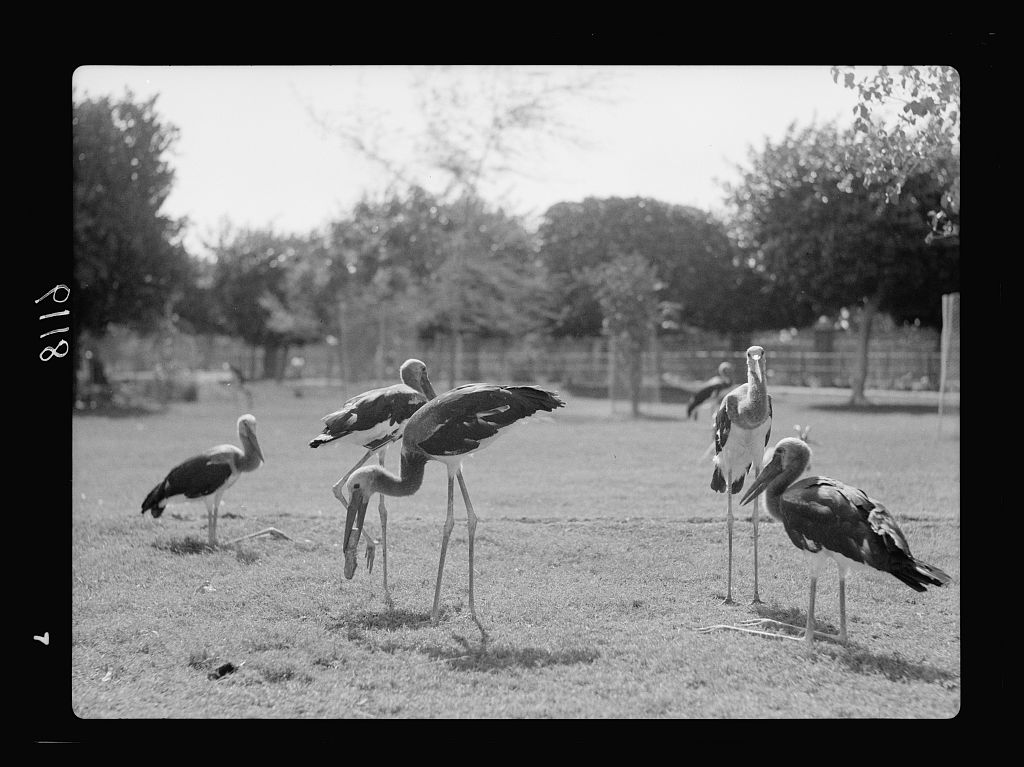
The catalogue locates these birds at Khartoum Zoo. Several long-legged birds stand on grass, with trees and fencing behind them. An uncertain species label in the historical caption is not repeated as a verified modern identification. Matson Photo Service; Library of Congress, dated [1936]. The date is approximate. This historical image does not describe current conditions. The Library records no known restrictions on publication; that is not a declaration of public-domain status.
Matson Photo Service / Library of Congress · No known restrictions on publication Library of Congress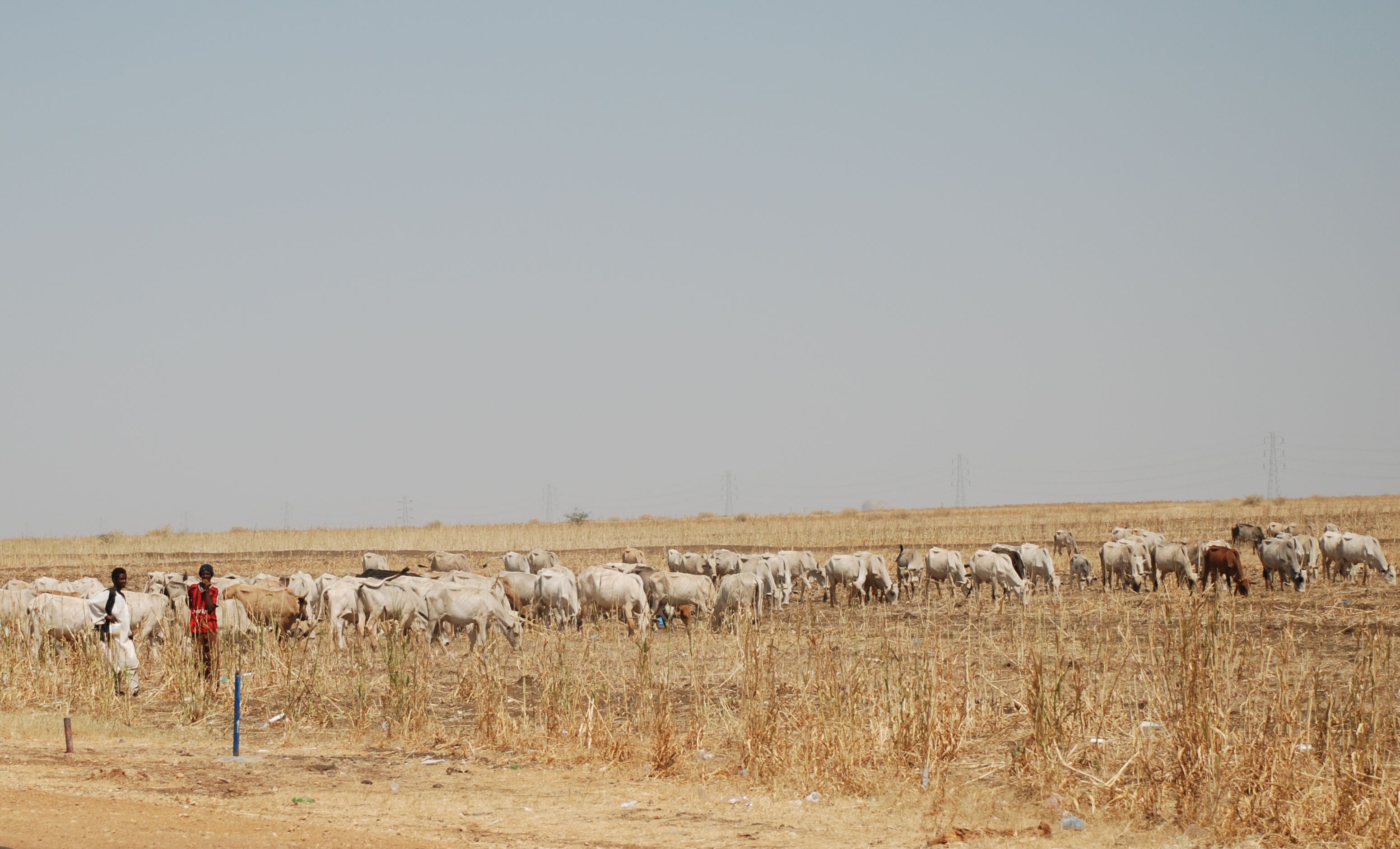
Bertramz photographed this field in November 2008. The source locates it in Gezira, about 50 kilometres north of Kosti, and identifies the crop as sorghum. Cattle stand among the cut stalks. The photograph does not establish current farming conditions or the identities of the people shown.
Bertramz · CC BY 3.0 Wikimedia Commons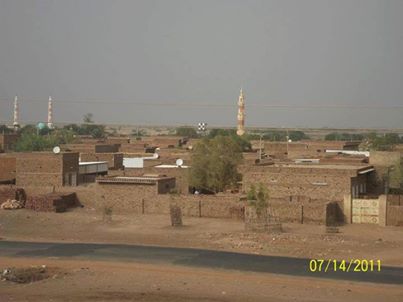
A view of Faris village in Gezira State, photographed on 14 July 2011 by Abd al-Qadir Mudawi Muhammad. The capture date is distinct from the 2014 upload date. This is an earlier view of the village, not evidence of present conditions.
عبدالقادر مضوي محمد · CC BY-SA 3.0 Wikimedia Commons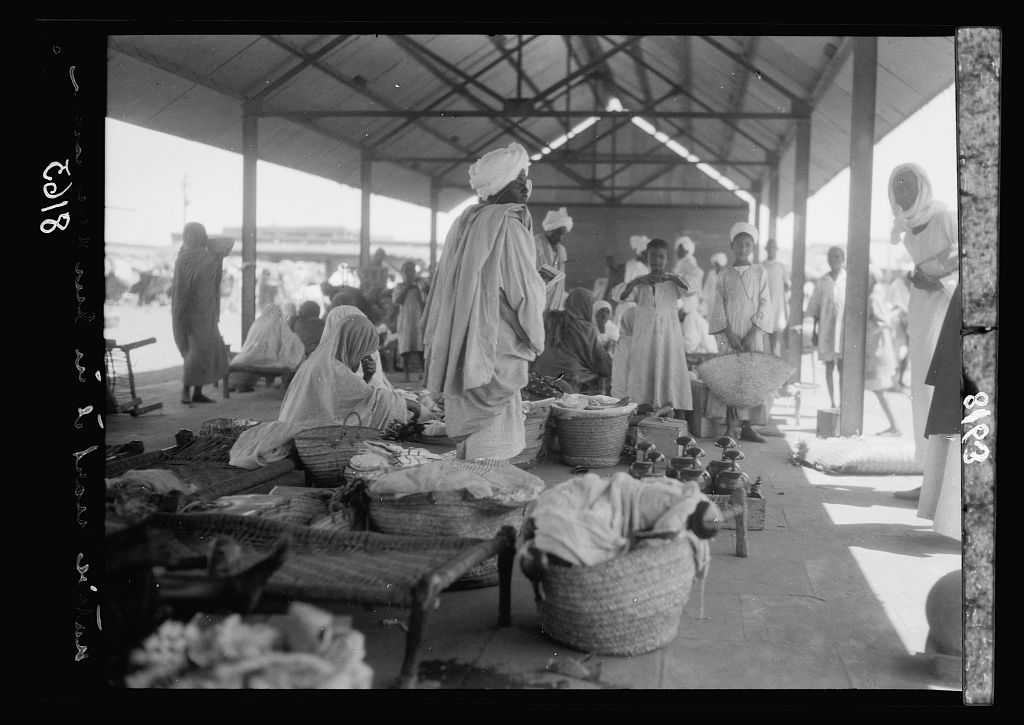
The catalogue identifies this as a market shed in Omdurman. Baskets and containers fill the foreground, with people gathered beneath the roof. Personal identities are not supplied by the record. Matson Photo Service; Library of Congress, dated [1936]. The date is approximate. This historical image does not describe current conditions. The Library records no known restrictions on publication; that is not a declaration of public-domain status.
Matson Photo Service / Library of Congress · No known restrictions on publication Library of Congress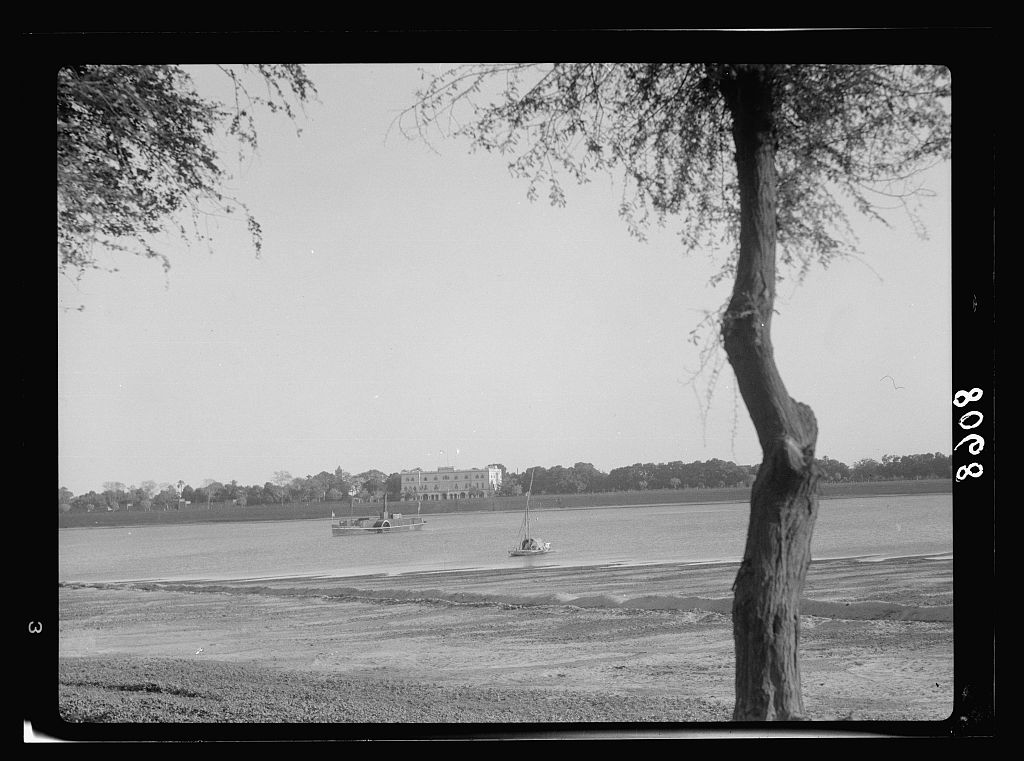
The catalogue identifies the far-bank building as the palace in Khartoum and describes one vessel as General Gordon’s riverboat. That vessel identification is attributed to the historical catalogue rather than independently established from the photograph. Matson Photo Service; Library of Congress, dated [1936]. The date is approximate. This historical image does not describe current conditions. The Library records no known restrictions on publication; that is not a declaration of public-domain status.
Matson Photo Service / Library of Congress · No known restrictions on publication Library of Congress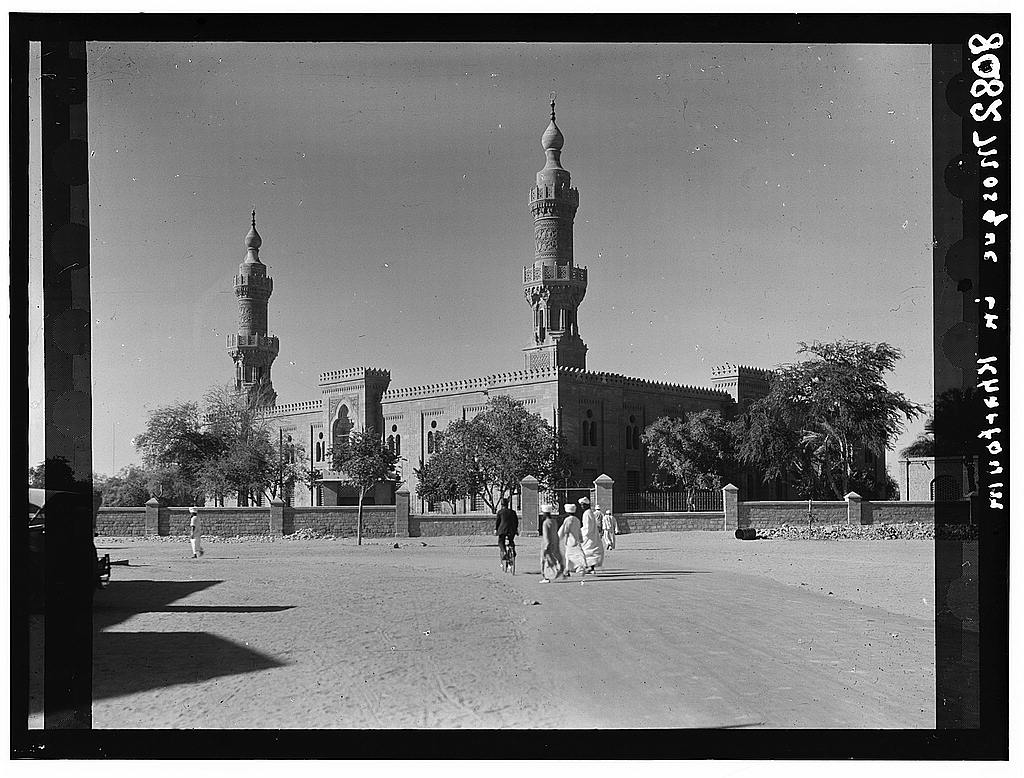
The catalogue identifies this building as Khartoum’s main mosque. Two minarets rise above the façade, with trees and people along the street in front. Matson Photo Service; Library of Congress, dated [1936]. The date is approximate. This historical image does not describe current conditions. The Library records no known restrictions on publication; that is not a declaration of public-domain status.
Matson Photo Service / Library of Congress · No known restrictions on publication Library of Congress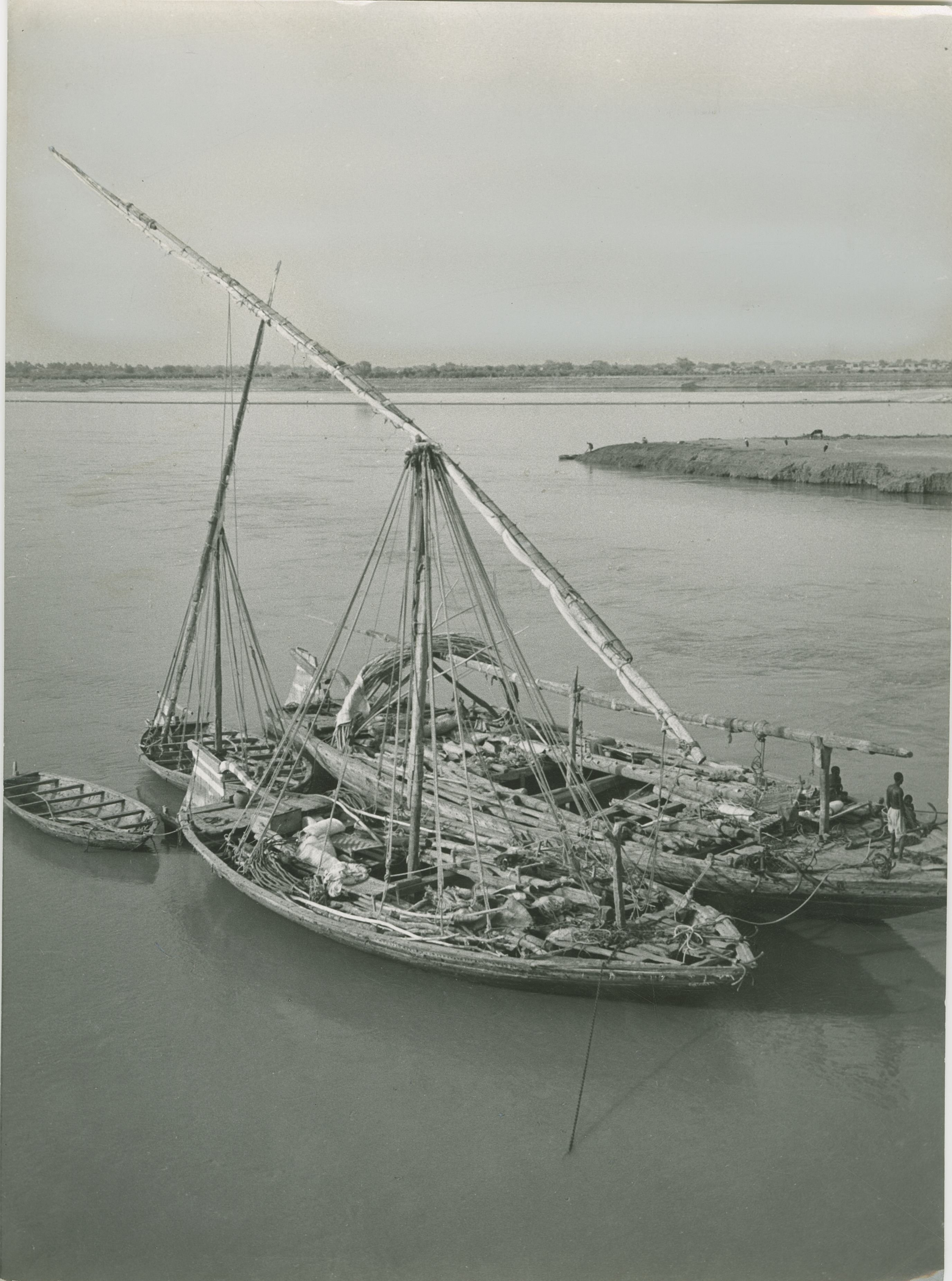
The Touring Club Italiano collection dates this photograph to 1956 and identifies the location as the confluence area near Khartoum. The photographer is not recorded. It shows moored sailing boats and the opposite riverbank; it should not be read as a description of present river traffic.
Photographer unrecorded / Touring Club Italiano · CC BY-SA 4.0 Wikimedia Commons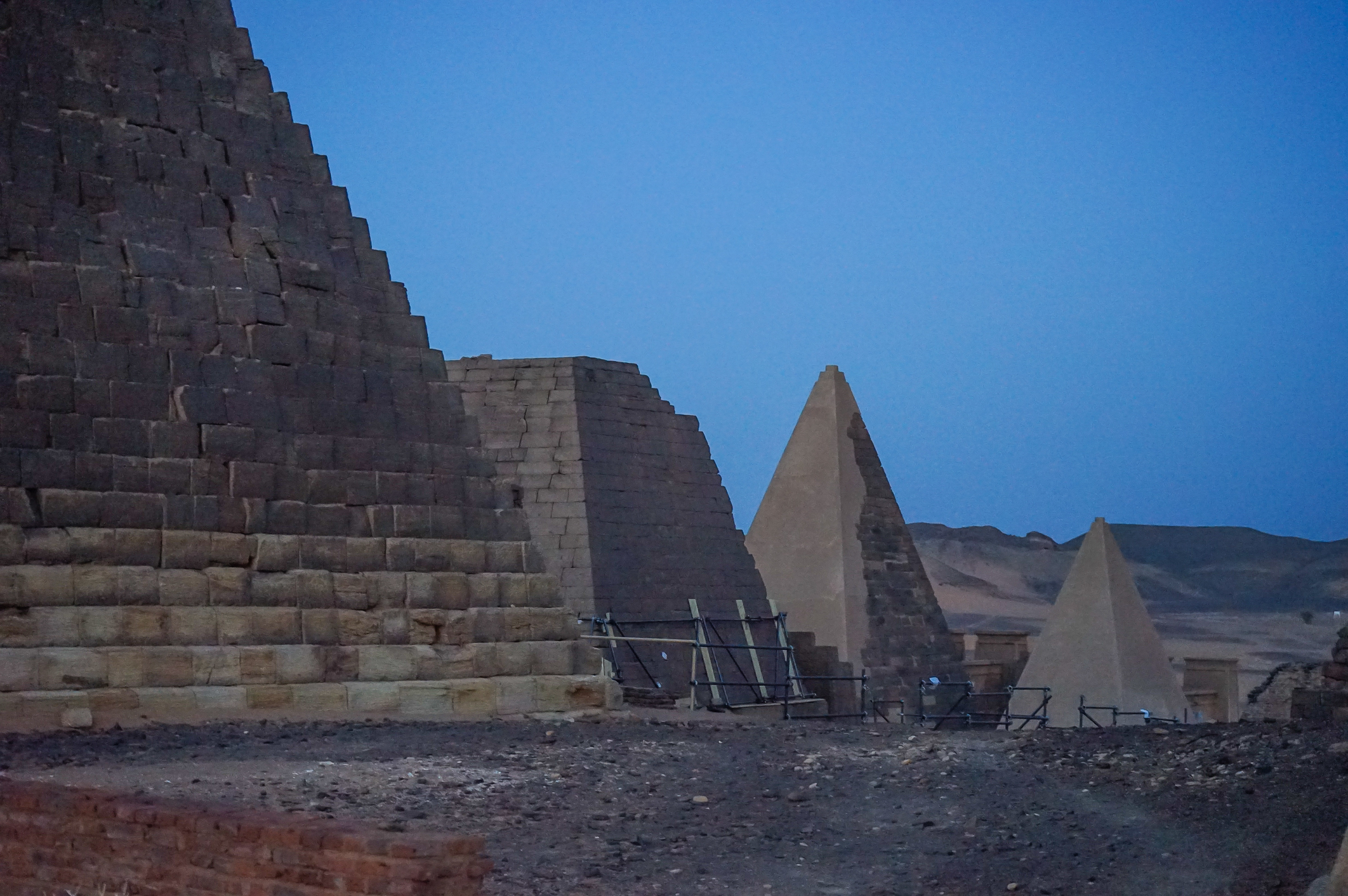
Nina R photographed these Nubian pyramids in Sudan on 26 March 2016. Stone courses, entrances and steep pyramid sides are visible. The source provides the country and date but no monument numbers; none are inferred here. This historical photograph is not a statement about present access or conservation.
Nina R · CC BY 2.0 Wikimedia Commons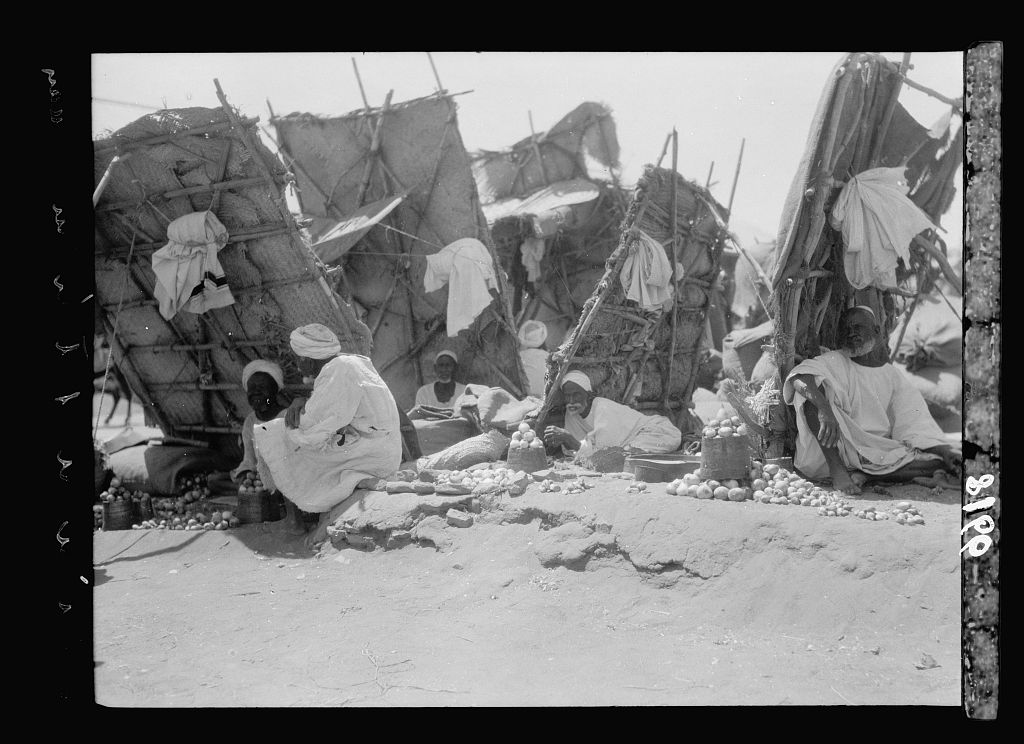
The catalogue identifies this scene as Omdurman’s onion market. Traders sit among piles of produce and woven shelters. The photograph records a market scene, not the names or incomes of the people shown. Matson Photo Service; Library of Congress, dated [1936]. The date is approximate. This historical image does not describe current conditions. The Library records no known restrictions on publication; that is not a declaration of public-domain status.
Matson Photo Service / Library of Congress · No known restrictions on publication Library of Congress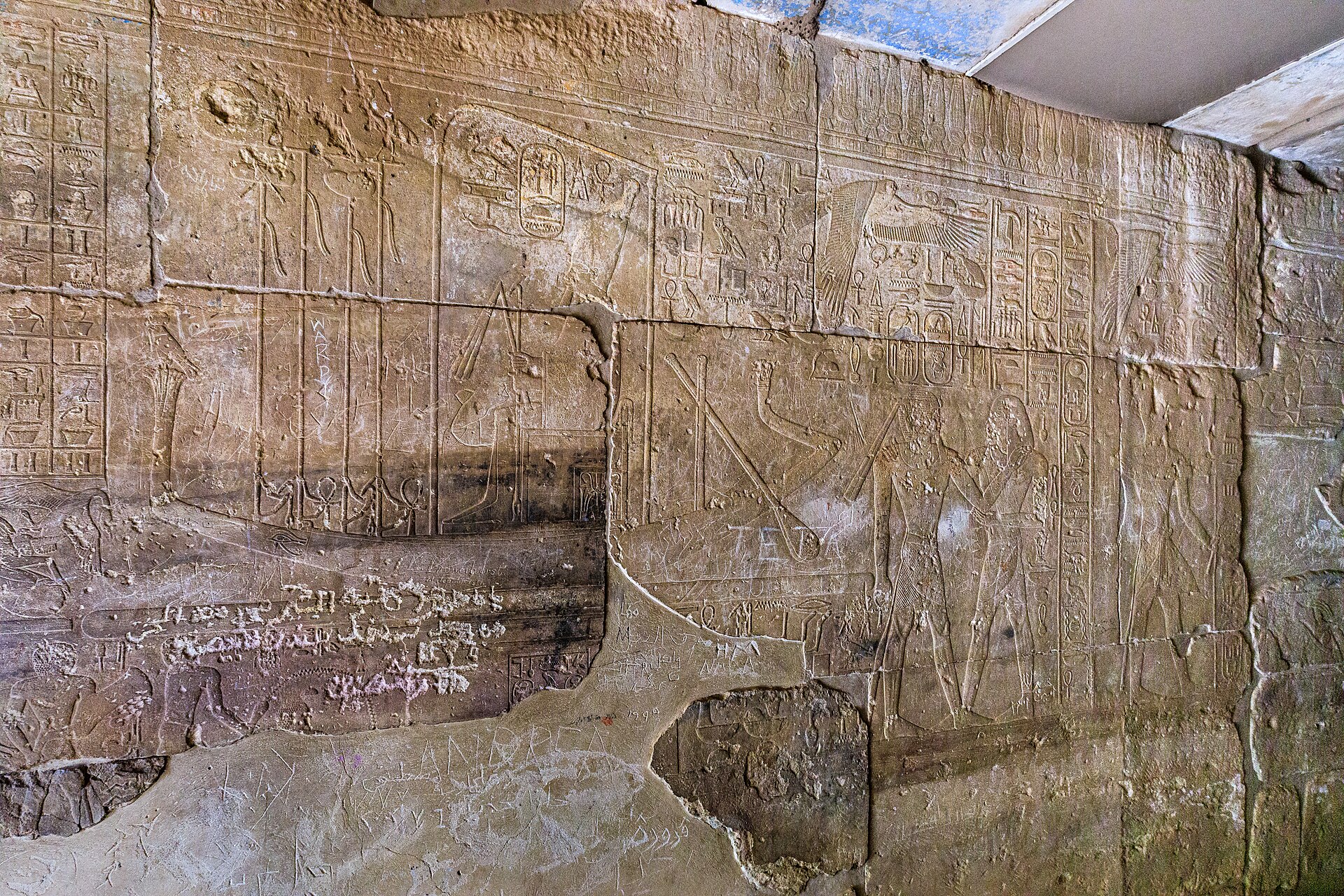
Matthias Gehricke photographed these reliefs on 1 January 2019. The source identifies them as part of the relocated Semna temple at the Sudan National Museum in Khartoum. The carving, surface wear and later marks remain visible. This dated museum view is not evidence of the temple’s current condition.
Matthias Gehricke · CC BY-SA 4.0 Wikimedia Commons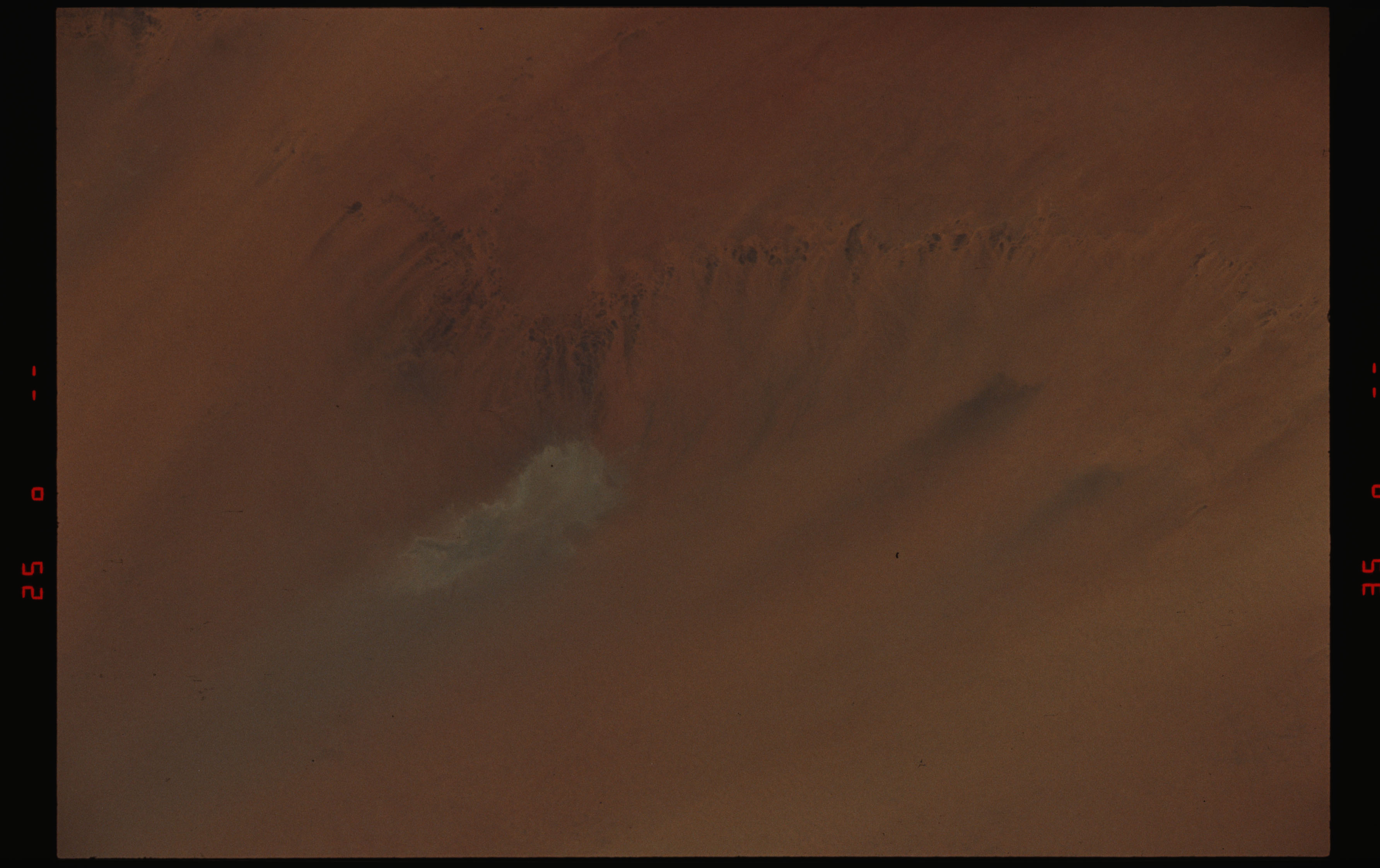
NASA’s STS-55 mission photographed this desert terrain in Sudan on 6 May 1993. The archival identifier is STS055-09-010; the National Archives record is 23258606. This is an orbital film photograph, not a current satellite map. Its dark tones and original frame are retained.
NASA / Johnson Space Center; NARA · Public domain Wikimedia Commons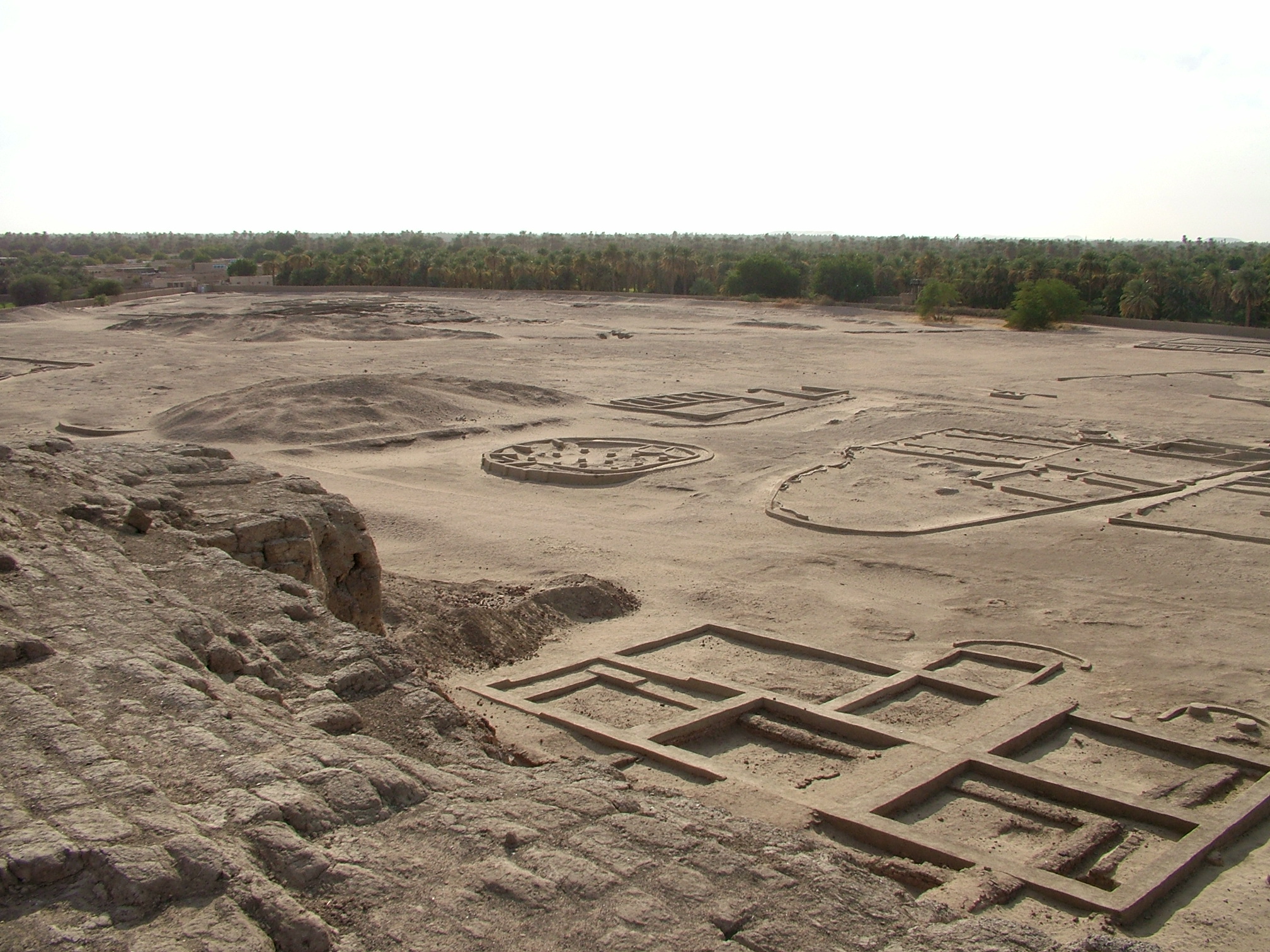
Low walls and building outlines mark part of the archaeological site of ancient Kerma in Sudan, with palm trees beyond. Photographer Lassi dates this image to 2005; the source does not give a capture day or month. Reproduced without alteration under CC BY-SA 4.0. This historical view is not a report on the site’s present condition or visitor access.
Lassi · CC BY-SA 4.0 Wikimedia Commons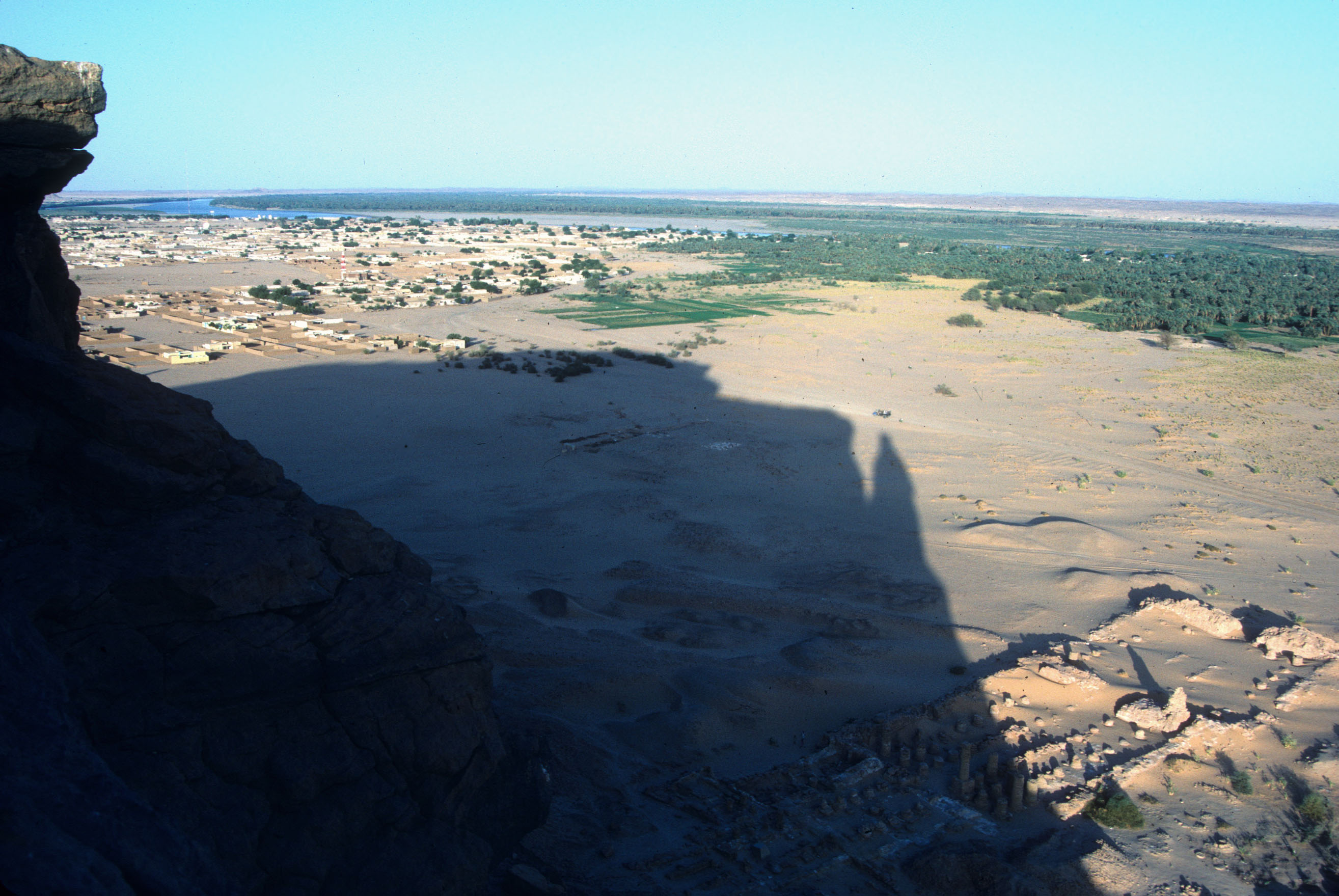
A view from Jebel Barkal near Karima, Sudan, photographed by Maurice Chédel on 14 March 1984. Archaeological remains lie below the mountain, with buildings, cultivated land and the Nile beyond. The source identifies the Amun temple at the mountain’s foot. This is a scan of a historical slide, reproduced without further alteration; it does not show present conditions.
Maurice Chédel · Public domain Wikimedia Commons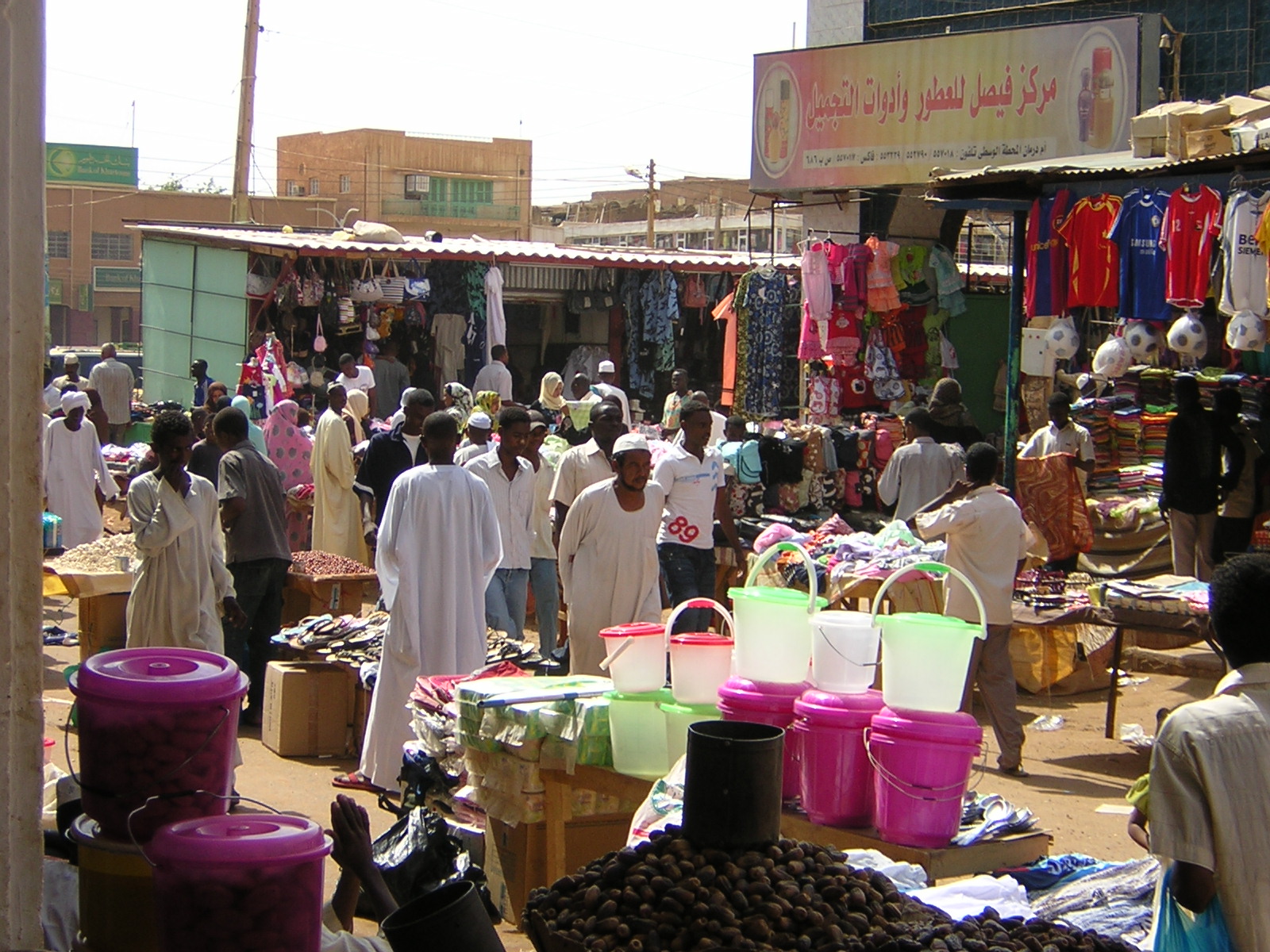
Photographed on 14 August 2009. An everyday market scene in Omdurman, Sudan, with clothing, baskets and household goods. This unmodified historical photograph does not show current conditions.
Petr Adam Dohnálek · CC BY-SA 3.0 CZ Wikimedia Commons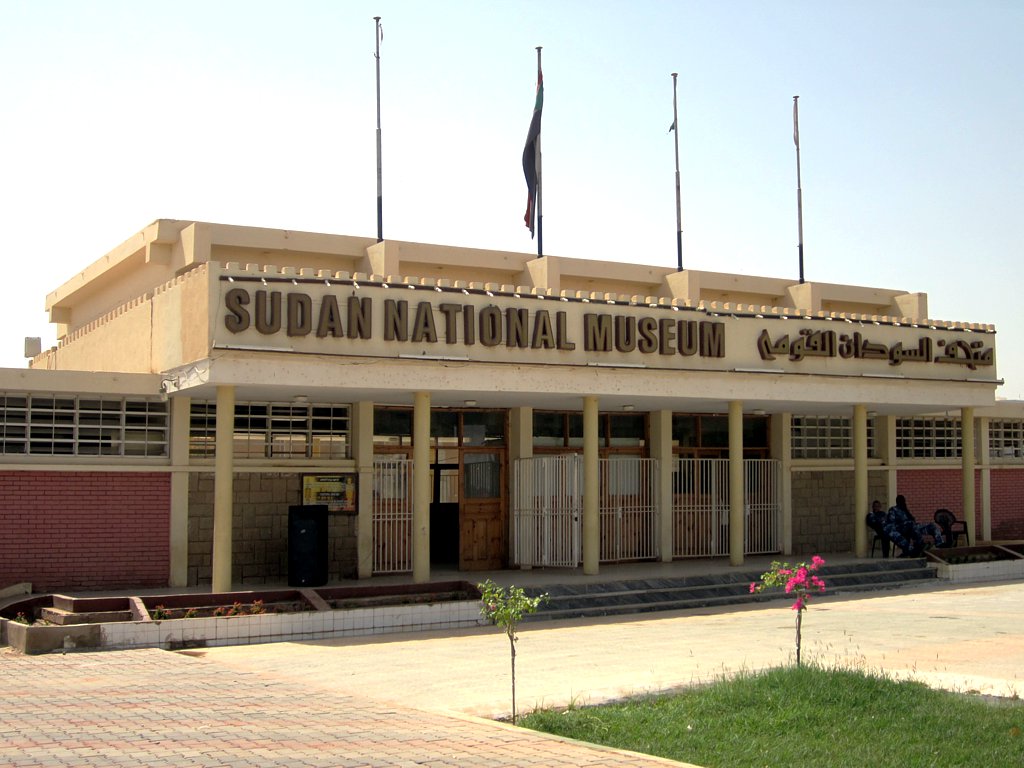
Photographed on 12 February 2013 in Khartoum, Sudan. The entrance and its Arabic and English sign are visible. This unmodified historical photograph does not establish the museum’s present condition or whether it is open to visitors.
David Stanley · CC BY 2.0 Wikimedia CommonsWeekly artwork selections — Reviewed each Saturday, prioritizing Sudanese artists, with creator credits and source links.
Latest reviewed illustrated addition:
Next weekly review:
Next homepage rotation:
All times are in Chicago time, with daylight saving observed. The homepage rotates reviewed works weekly; selections may repeat. New additions follow source, rights and bilingual review, and a review may yield no additions.A curated companion to the photo stream: contemporary and historical art, photography, crafts, posters and book arts, with Sudan first and room for the wider world.
 Image unavailable — view artwork at the source ↗
Metalwork · Sudan / Nubia
Maker unrecorded · 270 BCE–320 CE
This Meroitic copper-alloy bowl was excavated at Faras in Sudan, Cemetery 1, Grave 975. The museum records a diameter of 10.1 cm and height of 6.2 cm; its maker is unrecorded. The object number distinguishes it from the other Faras bowl in this collection.
View artwork & source ↗ The Metropolitan Museum of Art · Gift of Oxford University Expedition to Nubia, 1926 · Object 26.4.108 · Public domain · Met Open Access · Unmodified Image unavailable — view artwork at the source ↗
Metalwork · Sudan / Nubia
Maker unrecorded · 270 BCE–320 CE
Copper-alloy vessel from Faras, Sudan. Individual maker unrecorded.
View artwork & source ↗ The Metropolitan Museum of Art · Public domain · Met Open Access Image unavailable — view artwork at the source ↗
Historical wall painting · Sudan / Nubia
Painter unrecorded (Faras) · 1005–1036
Tempera on plaster from Faras, now in the National Museum in Warsaw. The source dates the painting to 1005–1036; this is the artwork date, not the photograph date. The individual painter is unrecorded.
View artwork & source ↗ National Museum in Warsaw · Photograph uploaded by Vert, Wikimedia Commons · Public domain · Unmodified reproduction Image unavailable — view artwork at the source ↗
Ceramics · Sudan / Nubia
Maker unrecorded · 30 BCE–364 CE
Excavated at Faras in Sudan, this Meroitic jug combines ankh-and-crescent bands with vine decoration on its upper surface. The museum records pottery and paint as its materials; the individual maker is unknown.
View artwork & source ↗ The Metropolitan Museum of Art · Rogers Fund, 1913 · Object 13.125.43 · Public domain · Met Open Access · Unmodified Image unavailable — view artwork at the source ↗
Jewellery · Kush / Nubia
Maker unrecorded · About 721–664 BCE
A small gold object from the Kushite period, when Nubian rulers governed Egypt. The Met suggests it probably belonged to a royal necklace and connects the ram with Amun. Its precise origin is uncertain: the museum lists Egypt and Sudan, possibly Nubia, rather than a confirmed Sudanese findspot.
View artwork & source ↗ The Metropolitan Museum of Art · Photograph by Oi-Cheong Lee · Gift of Norbert Schimmel Trust, 1989 · Public domain · Met Open Access · Unmodified Image unavailable — view artwork at the source ↗
Contemporary photography · Sudan
Ola Alsheikh · 2016
A photographic work documenting Mawlid celebrations in Omdurman, Sudan, on 5 December 2016.
View artwork & source ↗ Wikimedia Commons · Photograph by Ola A. Alsheikh · CC BY-SA 4.0 · Unmodified Image unavailable — view artwork at the source ↗
Historical painting · Sudan / Nubia
Painter unrecorded · Historical painting; photograph published 2005
A Nubian church painting photographed at the museum in Khartoum. The descriptive title identifies the scene from Daniel 3; the record does not name the original painter or date the artwork.
View artwork & source ↗ Wikimedia Commons · Photograph by Ibrahim Omer / ancientsudan.org · CC BY-SA 3.0 · Unmodified Image unavailable — view artwork at the source ↗
Crafts · Sudan / Nubia
Maker unrecorded · 1st–3rd century
Meroitic pottery from Faras, Sudan. The museum record identifies no individual maker.
View artwork & source ↗ The Metropolitan Museum of Art · Public domain · Met Open Access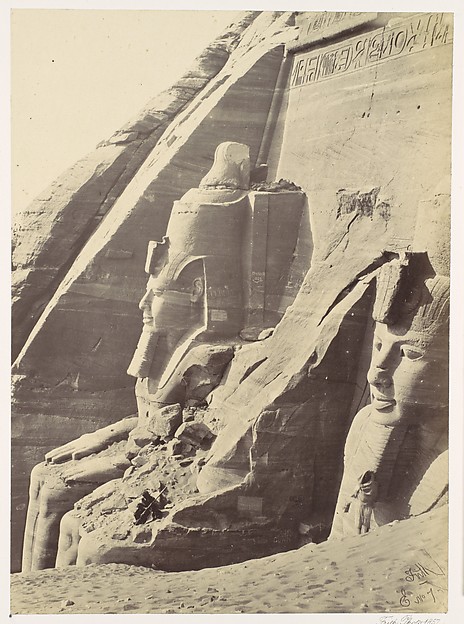 Image unavailable — view artwork at the source ↗
Historical photography · Egyptian Nubia
Francis Frith · 1857
Albumen silver print from a glass negative. The historical title is retained; Abu Simbel is in present-day Egypt, not Sudan.
View artwork & source ↗ The Metropolitan Museum of Art · Public domain · Met Open AccessCurrent selection week begins:
Next research review:
Next homepage rotation:
All times are in Chicago time, with daylight saving observed. Homepage selections rotate weekly from the existing catalogue and may repeat. The weekly research review recommends new material; its scheduled time does not mean automatic catalogue additions.Fernando Murillo; Salah Mohamoud Osman; Hag Adam H. El Tahir; Abdalla Kafeel; Khadeiga M. Osman; Burhan El Ghazali; Abdel Rahman Mustafa · 2009
The complete 2009 UN-HABITAT Khartoum State report, edited by Edward Miller, with seven primary authors and …
Read author-uploaded full reportSecretariat for Legal Affairs and Constitutional Development (New Sudan) · 2003
Historical 2003 New Sudan Penal Code, issued by the Secretariat for Legal Affairs and Constitutional …
Read historical PDFStuart Tyson Smith · 2023
Stuart Tyson Smith's illustrated Smarthistory essay on the Naga Lion Temple pylon, Kushite royal imagery and …
Read original article

