Art & Visual Heritage

Art and visual heritage from Sudan and beyond

Review/rotation: /

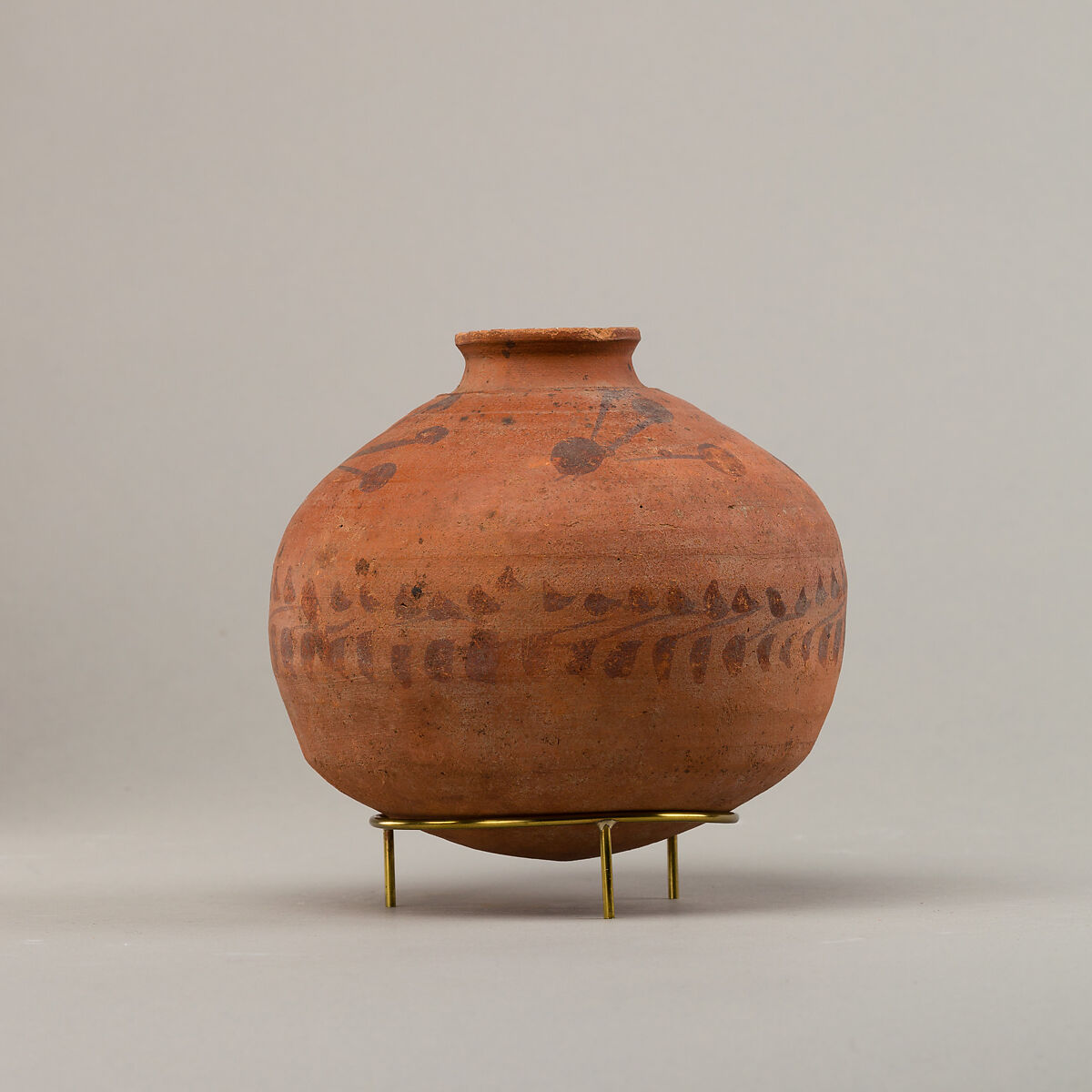
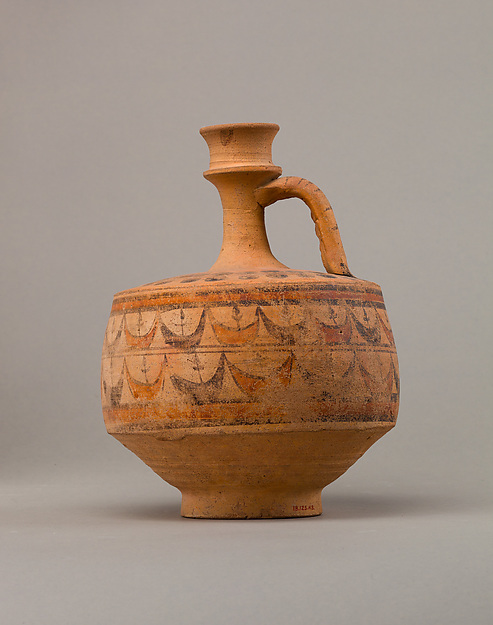
Rounded reddish pottery jar with a short neck, dark painted vines on the shoulder and a leafy band around the body

Painted ceramics · Sudan / Nubia

Jar with painted vines

Maker unrecorded · 270 BCE–320 CE

Dark vines and a leafy band decorate this rounded pottery jar from Faras in Nubia, in present-day Sudan. The Met dates it to the Meroitic period, 270 BCE–320 CE. Its maker is unrecorded. The museum identifies the photograph as public domain and makes it available through Open Access.

View artwork & source ↗ The Metropolitan Museum of Art · Gift of Oxford University Expedition to Nubia, 1926 · Object 26.4.68 · Public domain · CC0 · Met Open Access
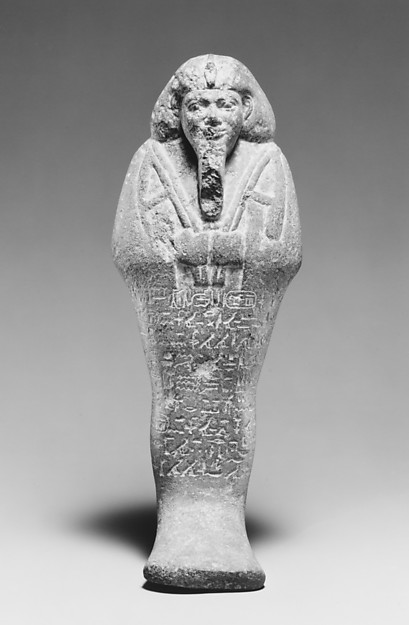
Grey stone funerary figure of Taharqo with crossed arms, a long beard and rows of hieroglyphs down the body

Funerary sculpture · Kush / Nubia

Shabti of Taharqo

Sculptor unrecorded · 690–664 BCE

This granite funerary figure represents the Kushite king Taharqo, who ruled in 690–664 BCE. The Met considers it probably from his pyramid at Nuri in Sudan; that findspot is not certain. Its sculptor is unrecorded. The museum makes this public-domain photograph available through Open Access.

View artwork & source ↗ The Metropolitan Museum of Art · Rogers Fund, 1918 · Object 18.2.10 · Public domain · CC0 · Met Open Access
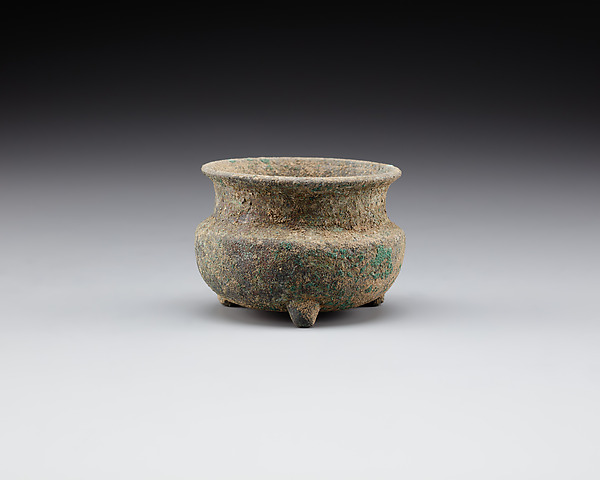
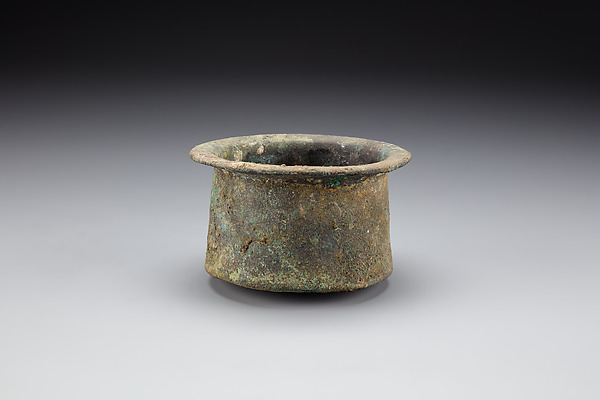
Small copper-alloy vessel with a flared rim, nearly straight sides and a mottled green-brown surface

Metalwork · Sudan / Nubia

Bowl (Faras, 26.4.108)

Maker unrecorded · 270 BCE–320 CE

This Meroitic copper-alloy bowl was excavated at Faras in Sudan, Cemetery 1, Grave 975. The museum records a diameter of 10.1 cm and height of 6.2 cm; its maker is unrecorded. The object number distinguishes it from the other Faras bowl in this collection.

View artwork & source ↗ The Metropolitan Museum of Art · Gift of Oxford University Expedition to Nubia, 1926 · Object 26.4.108 · Public domain · Met Open Access · Unmodified
Gold ram’s head with curved ribbed horns and a cobra above its forehead

Jewellery · Kush / Nubia

Ram’s-head amulet

Maker unrecorded · About 721–664 BCE

A small gold object from the Kushite period, when Nubian rulers governed Egypt. The Met suggests it probably belonged to a royal necklace and connects the ram with Amun. Its precise origin is uncertain: the museum lists Egypt and Sudan, possibly Nubia, rather than a confirmed Sudanese findspot.

View artwork & source ↗ The Metropolitan Museum of Art · Photograph by Oi-Cheong Lee · Gift of Norbert Schimmel Trust, 1989 · Public domain · Met Open Access · Unmodified
Nubian wall painting of the Virgin and Child beside Bishop Marianos in decorated ecclesiastical robes

Historical wall painting · Sudan / Nubia

Madonna and Child with Bishop Marianos

Painter unrecorded (Faras) · 1005–1036

Tempera on plaster from Faras, now in the National Museum in Warsaw. The source dates the painting to 1005–1036; this is the artwork date, not the photograph date. The individual painter is unrecorded.

View artwork & source ↗ National Museum in Warsaw · Photograph uploaded by Vert, Wikimedia Commons · Public domain · Unmodified reproduction
Nubian Christian wall painting depicting the three youths in the fiery furnace

Historical painting · Sudan / Nubia

Three youths in the fiery furnace — Nubian church painting

Painter unrecorded · Historical painting; photograph published 2005

A Nubian church painting photographed at the museum in Khartoum. The descriptive title identifies the scene from Daniel 3; the record does not name the original painter or date the artwork.

View artwork & source ↗ Wikimedia Commons · Photograph by Ibrahim Omer / ancientsudan.org · CC BY-SA 3.0 · Unmodified

Photo stream

Explore Sudan through the years.

Review/rotation:

Ruined fort walls on an elevated sandy riverbank, with a river and leafy shrubs to the left.

The Ottoman fort on Sai Island, photographed in 2016

Ruined walls of the Ottoman fort rise above the riverbank on Sai Island in northern Sudan, with riverside vegetation in the foreground. Valerian Guillot photographed this view on 28 January 2016; his source record includes coordinates on the island. This historical photograph does not establish the site's present condition or visitor access.

Valerian Guillot · CC BY 2.0

Original source ↗
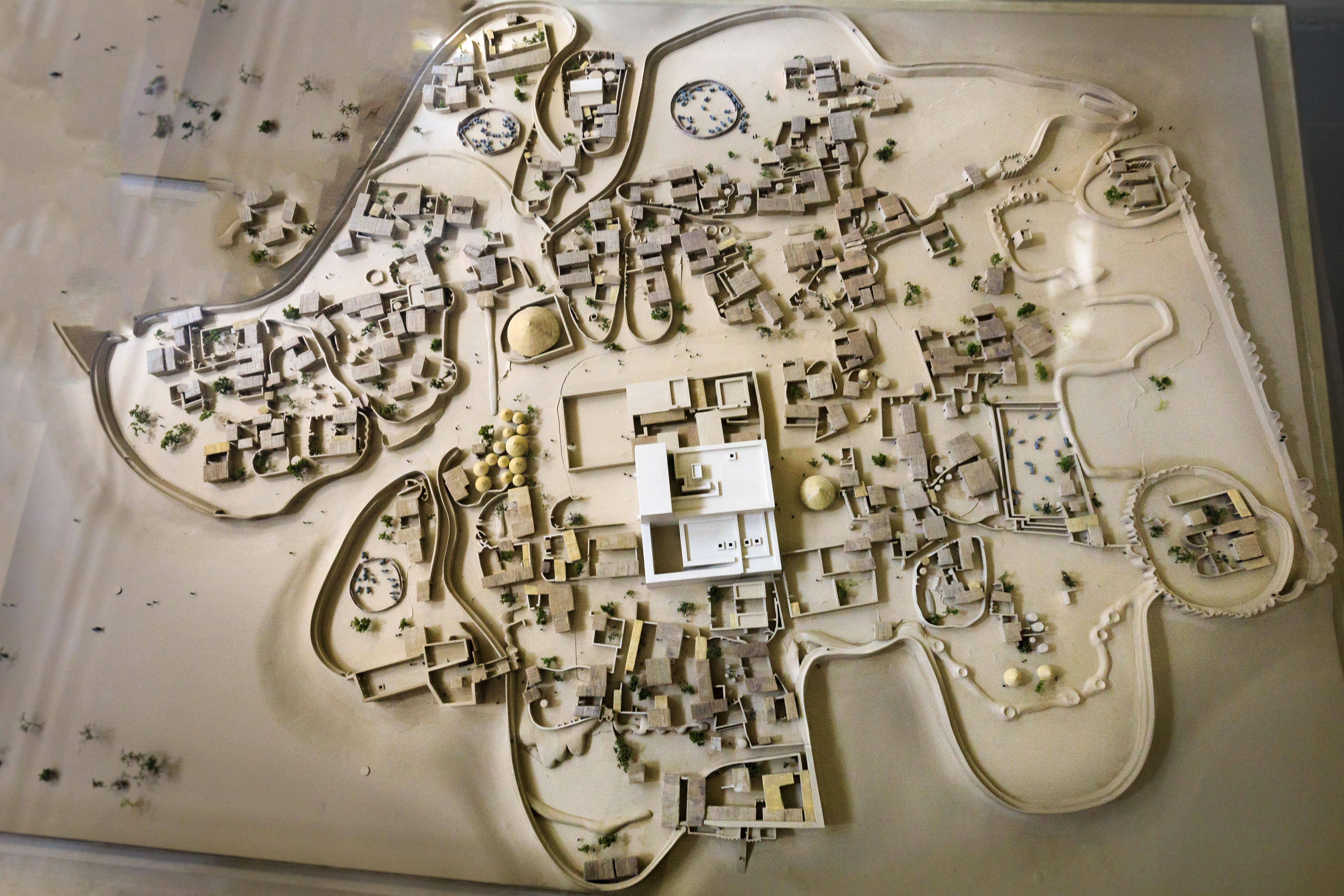
A museum scale model with a tall rectangular central building, small surrounding houses, curved enclosure walls and circular structures.

A model of ancient Kerma in the museum

A photographed scale model of ancient Kerma on display in the Kerma Museum in Sudan. The model shows the Deffufa and surrounding buildings, lanes and enclosure walls. Matthias Gehricke took this photograph on 27 December 2018, as recorded in the source and camera metadata. The model presents an interpretation of the ancient city. This dated photograph gives no assurance about current displays or visitor access.

Matthias Gehricke · CC BY-SA 4.0

Original source ↗
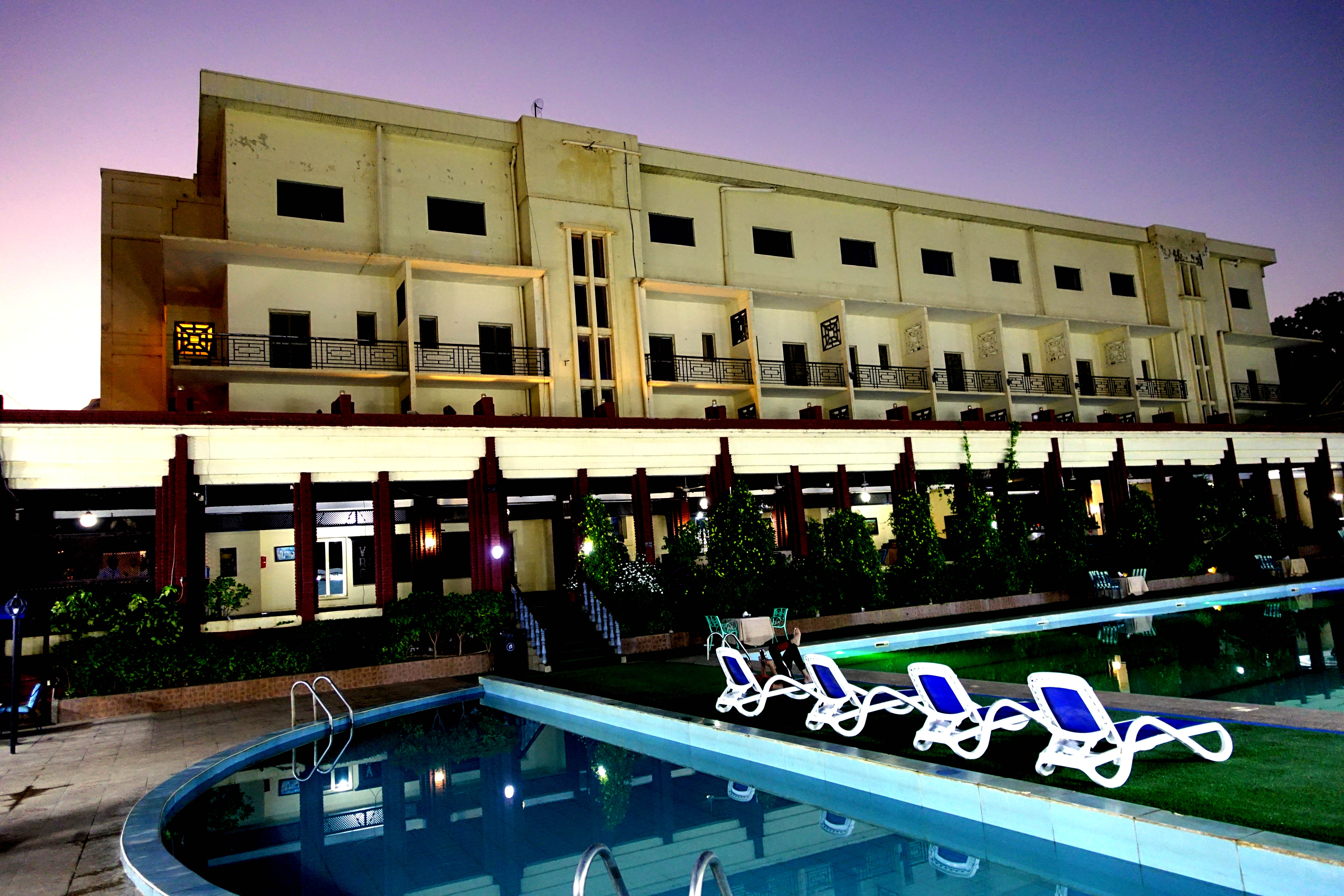
A pale multi-storey hotel building behind an outdoor pool, with white loungers, balconies and plants at dusk.

The pool courtyard at Khartoum’s Grand Hotel

An undated photograph of the pool courtyard at the Grand Hotel in Khartoum, Sudan, credited to the Commons contributor Grandhotelsudan. A pale building with balconies stands behind the pool and loungers. The capture date is unconfirmed. The image was uploaded to Wikimedia Commons on 26 March 2023. It documents an earlier view and gives no assurance about the hotel’s present condition, services or visitor access.

Grandhotelsudan · CC BY-SA 4.0

Original source ↗
An unfinished stone royal statue lying among quarry boulders at Tombos, with a patterned kilt and broad base.

The unfinished royal statue at Tombos

The unfinished royal statue at the Tombos quarry, near the Third Nile Cataract in Sudan. Although the original Commons file is titled “Kerma Statue”, its carved details and surrounding boulders match archaeological photographs of Tombos. The king’s identity is uncertain. The camera metadata records 8 June 2016; this is not the upload date. Photograph by MustafaO, reproduced without modification under CC BY-SA 4.0. This historical photograph does not establish present-day conditions or visitor access.

MustafaO · CC BY-SA 4.0

Original source ↗
Black-and-white palace hallway with arches, wall-mounted weapons, a wheeled cannon and several people.

Inside Khartoum Palace: a photograph catalogued to 1936

An interior of the Palace in Khartoum, Sudan, catalogued by the Library of Congress to 1936. Matson Photo Service is credited as photographer. Arches, displayed weapons and a wheeled cannon are visible; the record does not identify the people. The year is a catalogue date, not a verified day of capture. This is the Library’s uncropped digital reproduction, used without further modification. It documents a historical interior, not present-day conditions or visitor access.

Matson Photo Service · G. Eric and Edith Matson Photograph Collection · No known restrictions on publication

Original source ↗
Courthouse facade with a columned entrance and cars parked on a sandy forecourt in Omdurman.

Omdurman courthouse: a view from 2014

The courthouse in Omdurman, Sudan, photographed in November 2014 according to the source record. The precise day is uncertain: the catalogue gives 24 November, while embedded image metadata gives 26 November. The source credits Noory Taha and identifies the photograph as the uploader’s own work. This unmodified historical image does not establish the building’s current condition or public access.

Noory Taha (credited by the source) · CC BY-SA 4.0

Original source ↗
Close-up of a stone royal head with a headdress, cobra ornament and carved beard.

A Nubian royal statue: a historical close-up

Steve Evans’s historical photograph of a Nubian royal statue in Sudan. Commons associates the statue with Tabo on Argo Island but treats its identification as Natakamani as uncertain. The record gives 24 February 2005; the exact capture date is not independently established. This unmodified photograph does not document present conditions.

Steve Evans · CC BY 2.0

Original source ↗
Elevated view of low-rise houses, sandy streets, trees and fields at Al-ʿEkura.

Al-ʿEkura, Gezira: a view from 2022

Al-ʿEkura in Gezira State, Sudan, photographed on 15 February 2022 by Muwafaq Osman. Houses, trees and sandy streets fill the foreground, with fields beyond. The photographer identifies this as their own work. This unmodified historical photograph does not show current conditions or establish safe access.

Muwafaq Osman (موفق عثمان) · CC BY-SA 4.0

Original source ↗
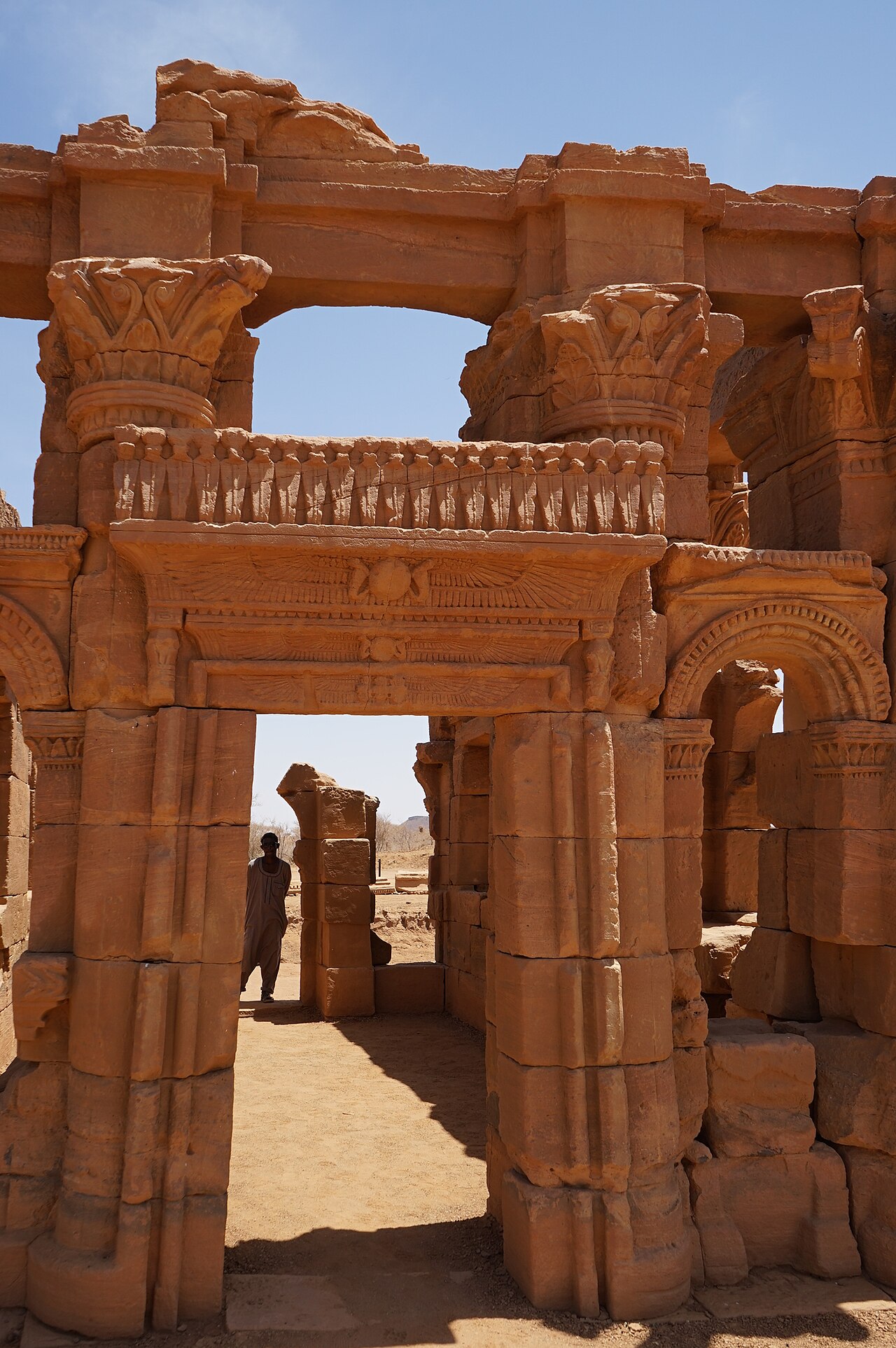
Sandstone doorway with a winged sun disc, carved columns and arched openings at Naqa.

Hathor chapel at Naqa, 2016

The carved entrance of the Hathor chapel at Naqa, Sudan, photographed by Nina R on 26 March 2016. The columns, arched openings and winged sun-disc decoration match the chapel documented by the Naga excavation team. The source file's title and description incorrectly refer to pyramid reliefs at Meroe; Kandaka has corrected that identification. This photograph records the monument in 2016, not its present condition.

Nina R, via Flickr and Wikimedia Commons; image unmodified · CC BY 2.0

Original source ↗
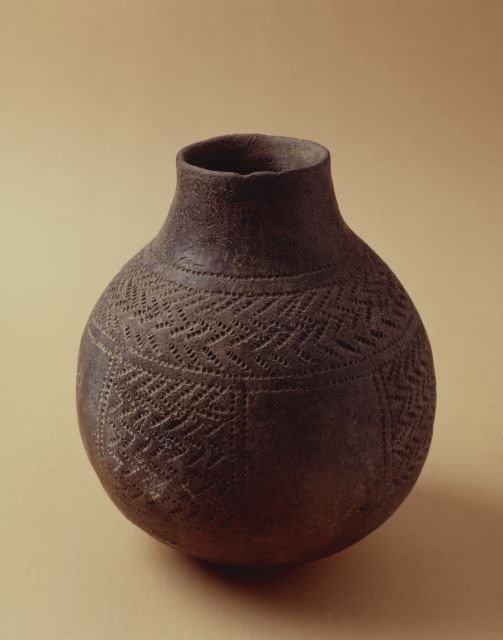
Dark round-bottomed pottery jar with a short neck and impressed geometric decoration.

Decorated Meroitic jar from Nubia

A Meroitic jar with a rounded base and comb-impressed decoration, held by the Finnish Heritage Agency (KM17000:39:119:3). Its catalogue gives a broad date of 300 BCE–400 CE and links it to Nubia, listing both Egypt and Sudan rather than a clear modern-country findspot. The maker and photographic date are unrecorded. This entry uses the actual object photograph, not the accompanying archaeological drawing.

Finnish Heritage Agency, Archaeological Object Collection; photographer not named · CC BY 4.0

Original source ↗