Art & Visual Heritage

Art and visual heritage from Sudan and beyond

Review/rotation: /

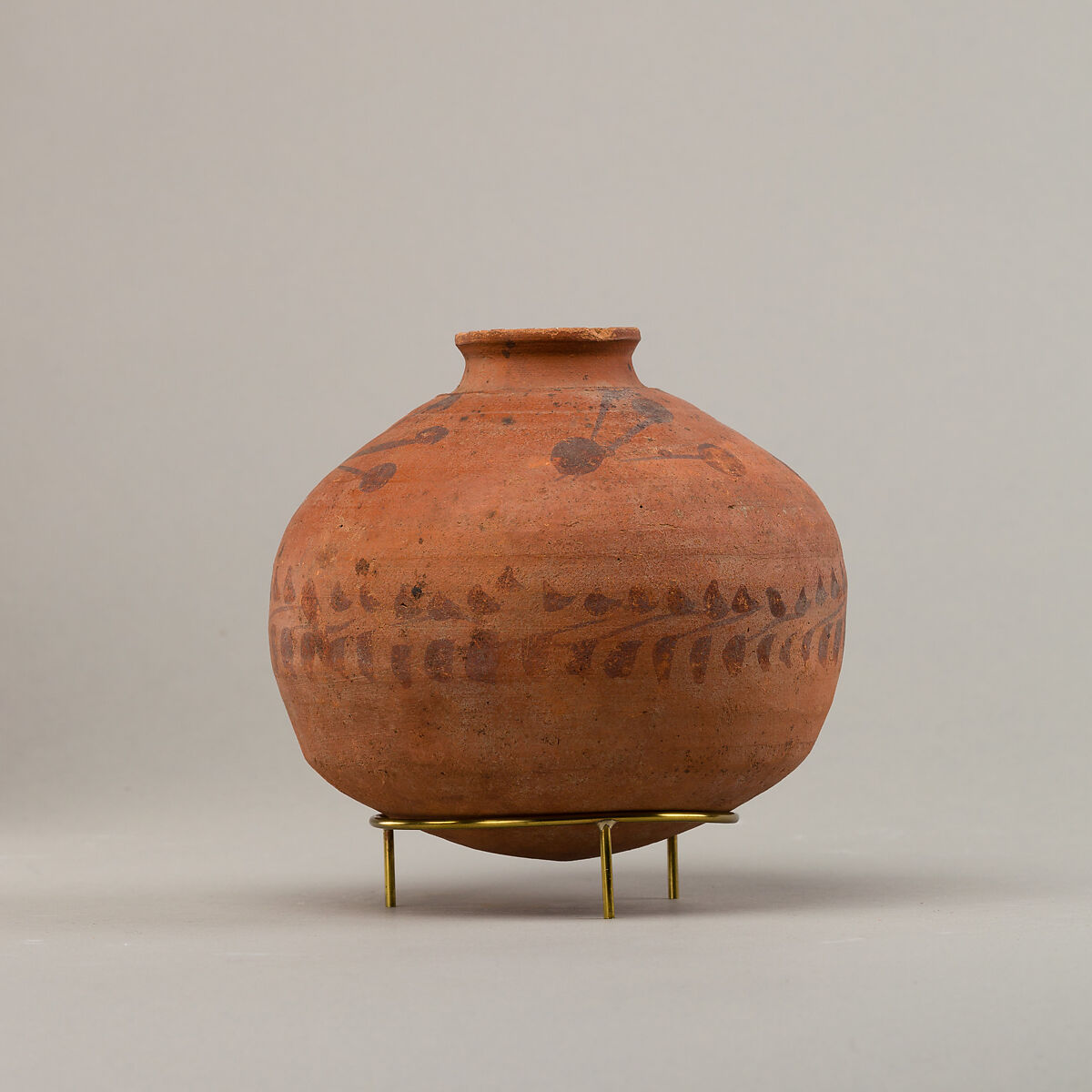
Rounded reddish pottery jar with a short neck, dark painted vines on the shoulder and a leafy band around the body

Painted ceramics · Sudan / Nubia

Jar with painted vines

Maker unrecorded · 270 BCE–320 CE

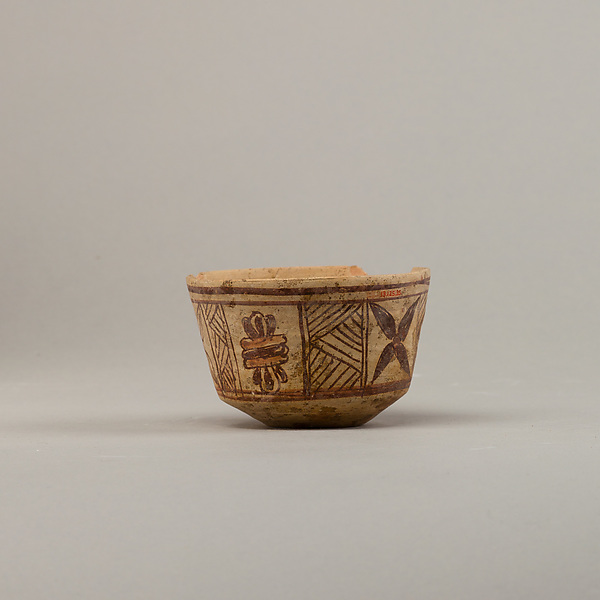
Dark vines and a leafy band decorate this rounded pottery jar from Faras in Nubia, in present-day Sudan. The Met dates it to the Meroitic period, 270 BCE–320 CE. Its maker is unrecorded. The museum identifies the photograph as public domain and makes it available through Open Access.

View artwork & source ↗ The Metropolitan Museum of Art · Gift of Oxford University Expedition to Nubia, 1926 · Object 26.4.68 · Public domain · CC0 · Met Open Access
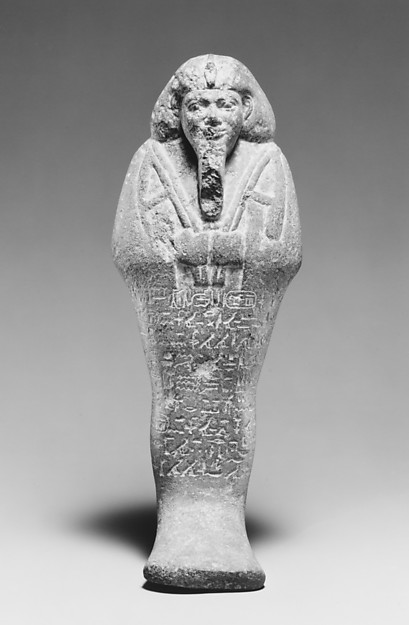
Grey stone funerary figure of Taharqo with crossed arms, a long beard and rows of hieroglyphs down the body

Funerary sculpture · Kush / Nubia

Shabti of Taharqo

Sculptor unrecorded · 690–664 BCE

This granite funerary figure represents the Kushite king Taharqo, who ruled in 690–664 BCE. The Met considers it probably from his pyramid at Nuri in Sudan; that findspot is not certain. Its sculptor is unrecorded. The museum makes this public-domain photograph available through Open Access.

View artwork & source ↗ The Metropolitan Museum of Art · Rogers Fund, 1918 · Object 18.2.10 · Public domain · CC0 · Met Open Access
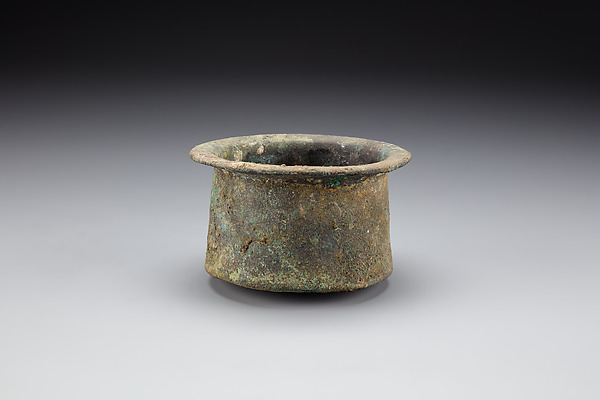
Small copper-alloy vessel with a flared rim, nearly straight sides and a mottled green-brown surface

Metalwork · Sudan / Nubia

Bowl (Faras, 26.4.108)

Maker unrecorded · 270 BCE–320 CE

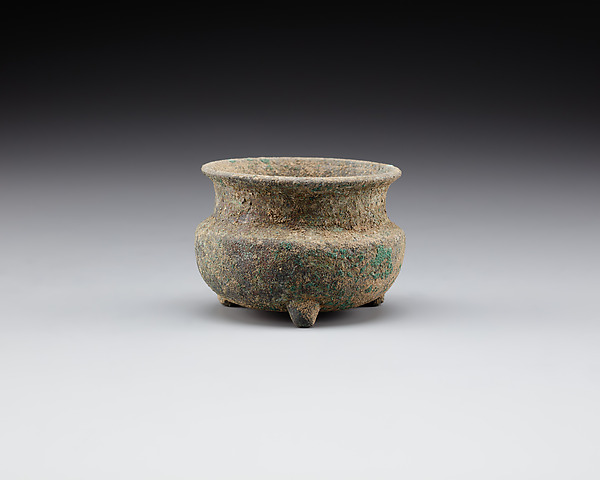
This Meroitic copper-alloy bowl was excavated at Faras in Sudan, Cemetery 1, Grave 975. The museum records a diameter of 10.1 cm and height of 6.2 cm; its maker is unrecorded. The object number distinguishes it from the other Faras bowl in this collection.

View artwork & source ↗ The Metropolitan Museum of Art · Gift of Oxford University Expedition to Nubia, 1926 · Object 26.4.108 · Public domain · Met Open Access · Unmodified
Gold ram’s head with curved ribbed horns and a cobra above its forehead

Jewellery · Kush / Nubia

Ram’s-head amulet

Maker unrecorded · About 721–664 BCE

A small gold object from the Kushite period, when Nubian rulers governed Egypt. The Met suggests it probably belonged to a royal necklace and connects the ram with Amun. Its precise origin is uncertain: the museum lists Egypt and Sudan, possibly Nubia, rather than a confirmed Sudanese findspot.

View artwork & source ↗ The Metropolitan Museum of Art · Photograph by Oi-Cheong Lee · Gift of Norbert Schimmel Trust, 1989 · Public domain · Met Open Access · Unmodified
Nubian wall painting of the Virgin and Child beside Bishop Marianos in decorated ecclesiastical robes

Historical wall painting · Sudan / Nubia

Madonna and Child with Bishop Marianos

Painter unrecorded (Faras) · 1005–1036

Tempera on plaster from Faras, now in the National Museum in Warsaw. The source dates the painting to 1005–1036; this is the artwork date, not the photograph date. The individual painter is unrecorded.

View artwork & source ↗ National Museum in Warsaw · Photograph uploaded by Vert, Wikimedia Commons · Public domain · Unmodified reproduction
Nubian Christian wall painting depicting the three youths in the fiery furnace

Historical painting · Sudan / Nubia

Three youths in the fiery furnace — Nubian church painting

Painter unrecorded · Historical painting; photograph published 2005

A Nubian church painting photographed at the museum in Khartoum. The descriptive title identifies the scene from Daniel 3; the record does not name the original painter or date the artwork.

View artwork & source ↗ Wikimedia Commons · Photograph by Ibrahim Omer / ancientsudan.org · CC BY-SA 3.0 · Unmodified

Photo stream

Explore Sudan through the years.

Review/rotation:

A panoramic crop of mud-brick remains at the Western Deffufa.

The Western Deffufa at Kerma, 2009

Walter Callens photographed the Western Deffufa at ancient Kerma on 26 March 2009. This version is a narrow panoramic crop supplied by Wikimedia Commons; it does not show the monument’s full height. The crop is disclosed rather than presented as the complete original photograph. No further cropping or reconstruction has been applied.

Walter Callens · CC BY 2.0

Original source ↗
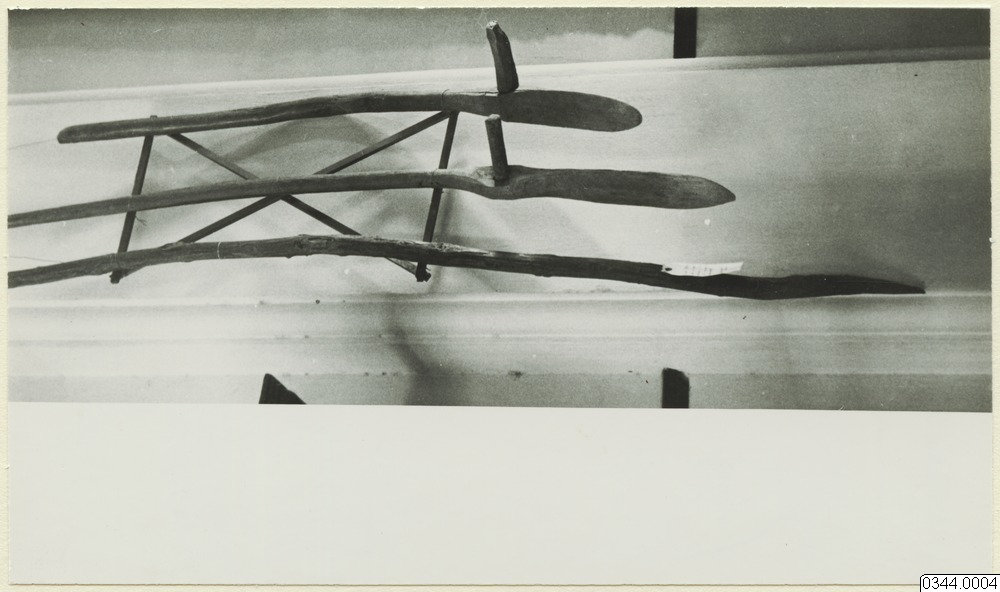
Three long-handled tools arranged in a museum display.

Tools photographed in a Khartoum museum, date unrecorded

The Museum of Ethnography’s record 0344.0004 attributes this photograph to James Hornell. It identifies the tools with Dongola province and places the photograph in a museum in Khartoum. The collection acquired it in 1939; that is not a verified capture date. The source marks the image public domain. This is a historical display, not a current museum installation.

James Hornell / Museum of Ethnography, Stockholm · Public domain

Original source ↗
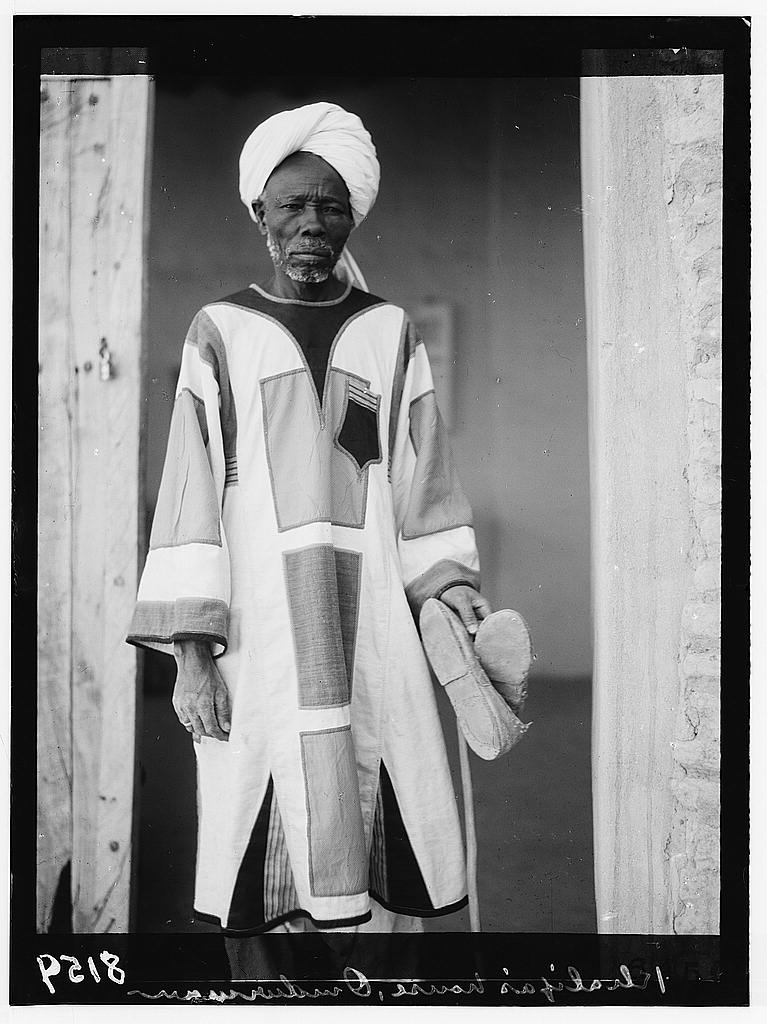
A man in a patched robe and turban stands in a doorway holding sandals.

A caretaker at the Khalifa’s House, around 1936

The catalogue identifies the man as the caretaker of the Khalifa’s House in Omdurman; his personal name is not supplied. The older caption’s generalisation about Mahdist followers is not adopted here as a factual identification. Matson Photo Service; Library of Congress, dated [1936]. The date is approximate. This historical image does not describe current conditions. The Library records no known restrictions on publication; that is not a declaration of public-domain status.

Matson Photo Service / Library of Congress · No known restrictions on publication

Original source ↗
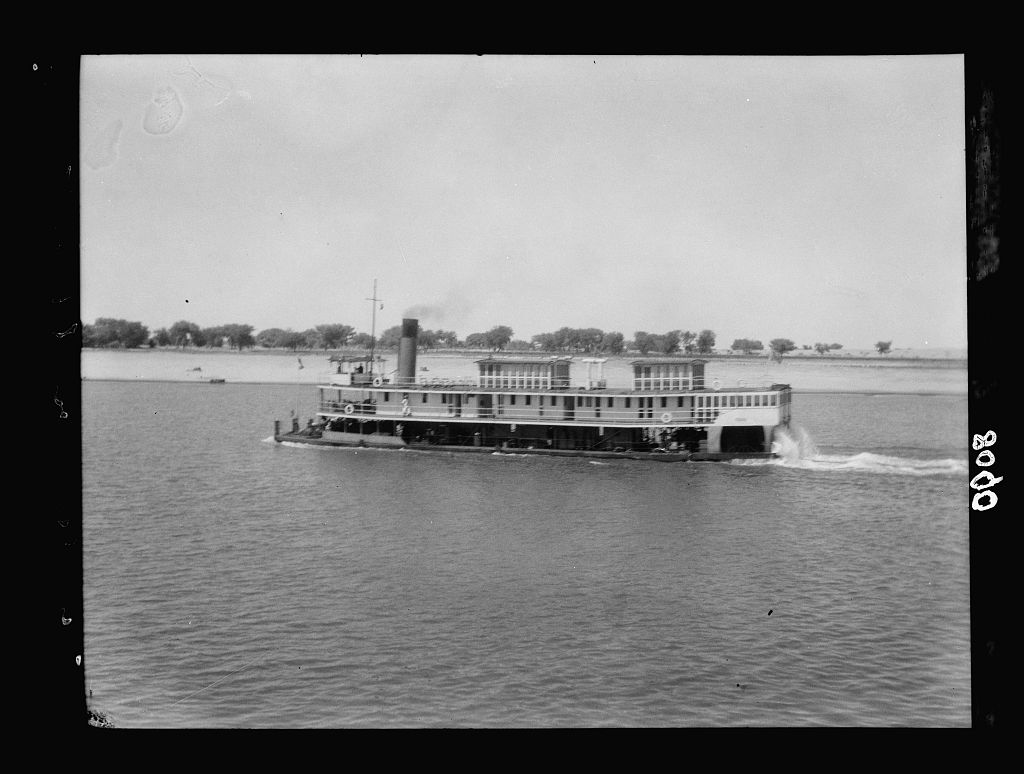
A multi-deck steamer travels along the river.

A Nile steamer at Khartoum, around 1936

The catalogue locates this Nile steamer at Khartoum. The photograph shows its decks, funnel and wake; it does not provide a vessel name, which is therefore not inferred here. Matson Photo Service; Library of Congress, dated [1936]. The date is approximate. This historical image does not describe current conditions. The Library records no known restrictions on publication; that is not a declaration of public-domain status.

Matson Photo Service / Library of Congress · No known restrictions on publication

Original source ↗
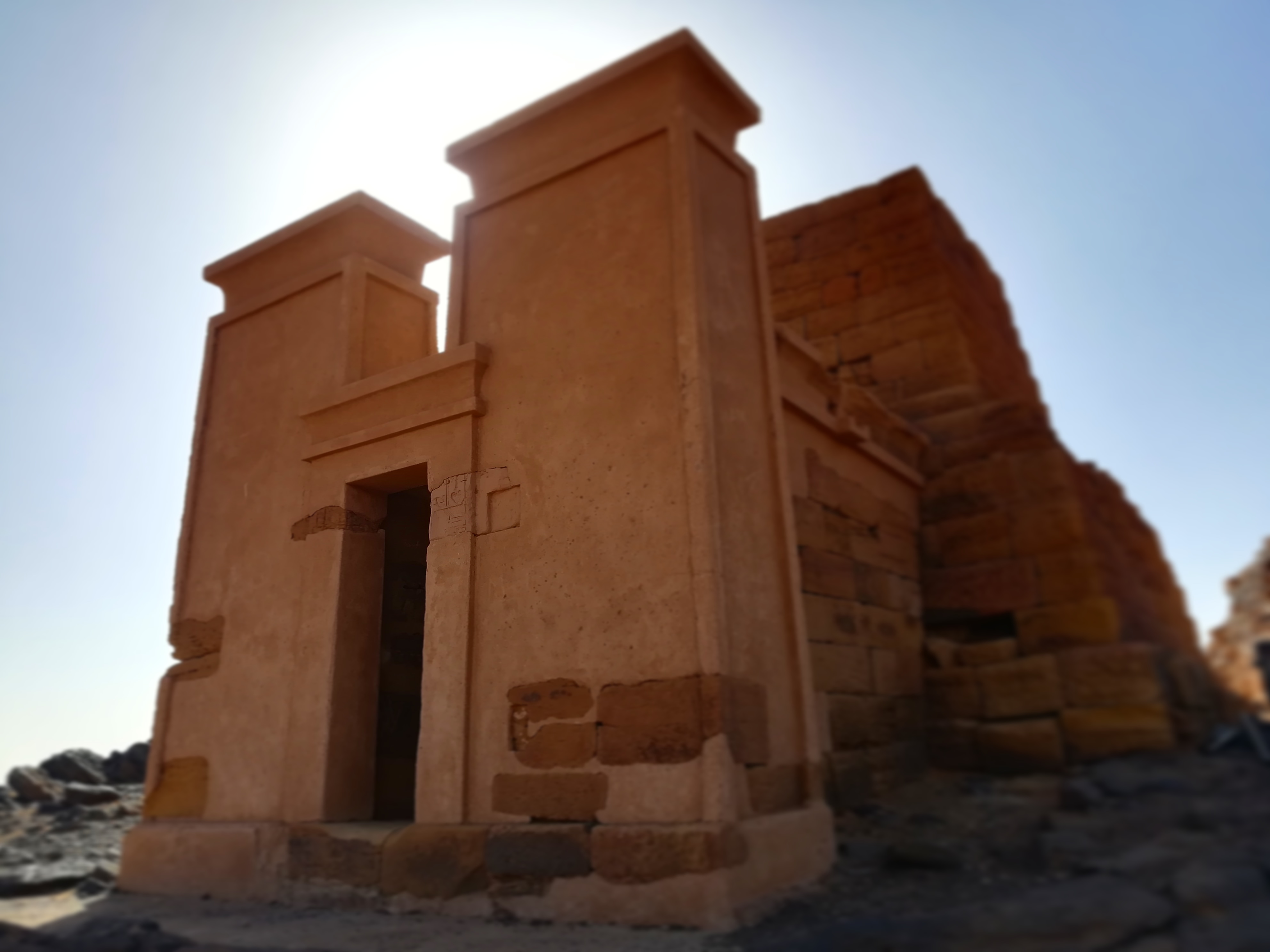
A decorated chapel façade with a pyramid rising behind it.

A pyramid chapel at Meroe, 2019

Ahmed Amir photographed this architectural detail at the Meroe pyramids in Bajrawiya on 14 April 2019. The image shows a chapel façade and part of a pyramid, rather than a panorama of the whole site. No individual tomb number is assigned here, and the photograph does not establish present conservation conditions.

Ahmed Amir · CC BY-SA 4.0

Original source ↗
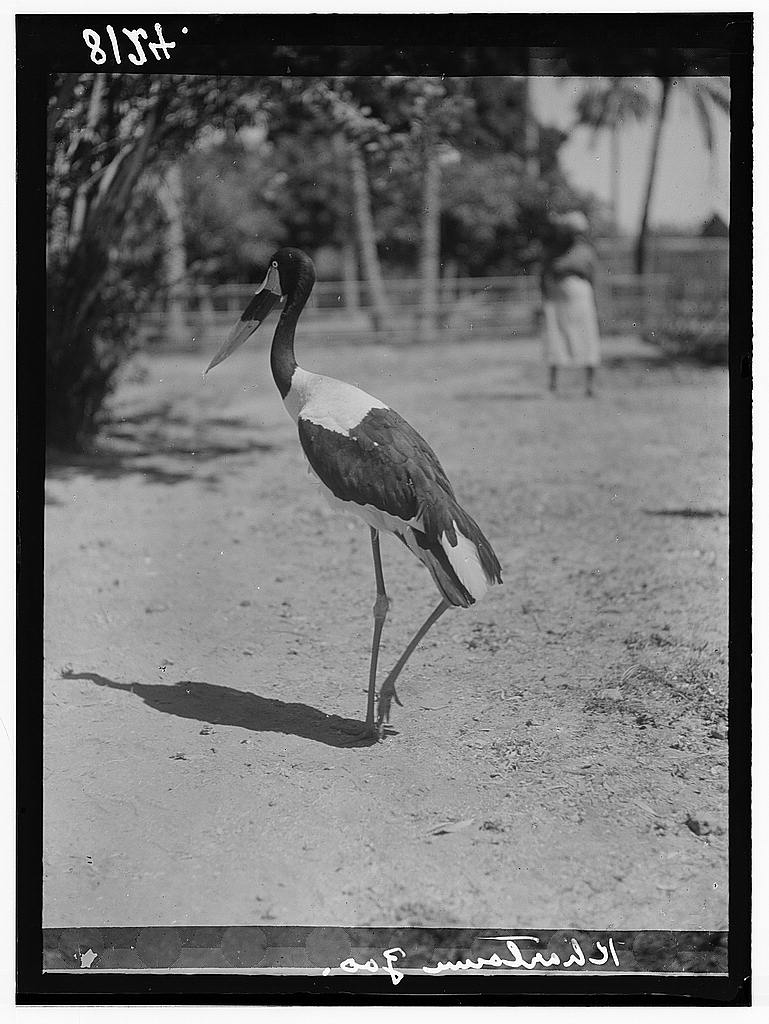
A long-legged stork stands in the zoo grounds.

A stork at Khartoum Zoo, around 1936

The Library of Congress catalogue identifies this as a photograph at Khartoum Zoo. A stork stands in the foreground, with trees and a figure behind it. Matson Photo Service; Library of Congress, dated [1936]. The date is approximate. This historical image does not describe current conditions. The Library records no known restrictions on publication; that is not a declaration of public-domain status.

Matson Photo Service / Library of Congress · No known restrictions on publication

Original source ↗
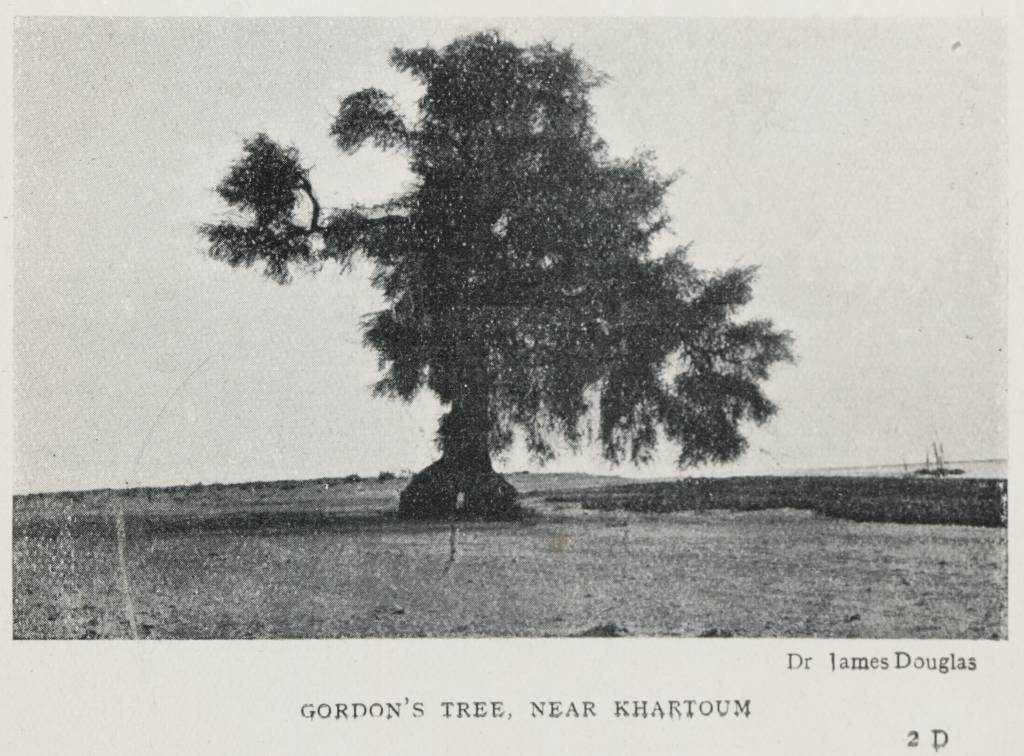
A solitary tree on an open plain in a historical printed photograph.

A tree near Khartoum, published in 1906

This photograph by James Douglas appeared in New Egypt in 1906, captioned “Gordon’s Tree, Near Khartoum”. The publication year is not a verified capture date. The historical caption is retained as source context, not independent proof of the tree’s identity or survival today. Digitised by the Travelers in the Middle East Archive (TIMEA).

James Douglas / TIMEA · CC BY-SA 2.5

Original source ↗
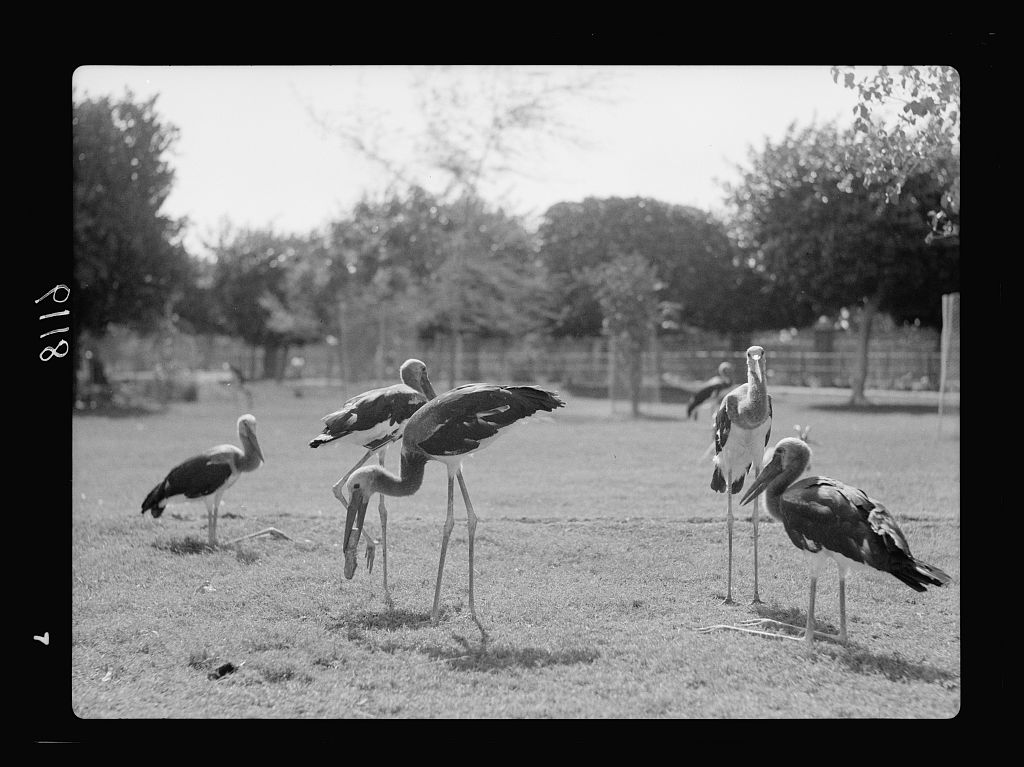
Several long-legged birds stand on grass in a zoo enclosure.

Birds at Khartoum Zoo, around 1936

The catalogue locates these birds at Khartoum Zoo. Several long-legged birds stand on grass, with trees and fencing behind them. An uncertain species label in the historical caption is not repeated as a verified modern identification. Matson Photo Service; Library of Congress, dated [1936]. The date is approximate. This historical image does not describe current conditions. The Library records no known restrictions on publication; that is not a declaration of public-domain status.

Matson Photo Service / Library of Congress · No known restrictions on publication

Original source ↗
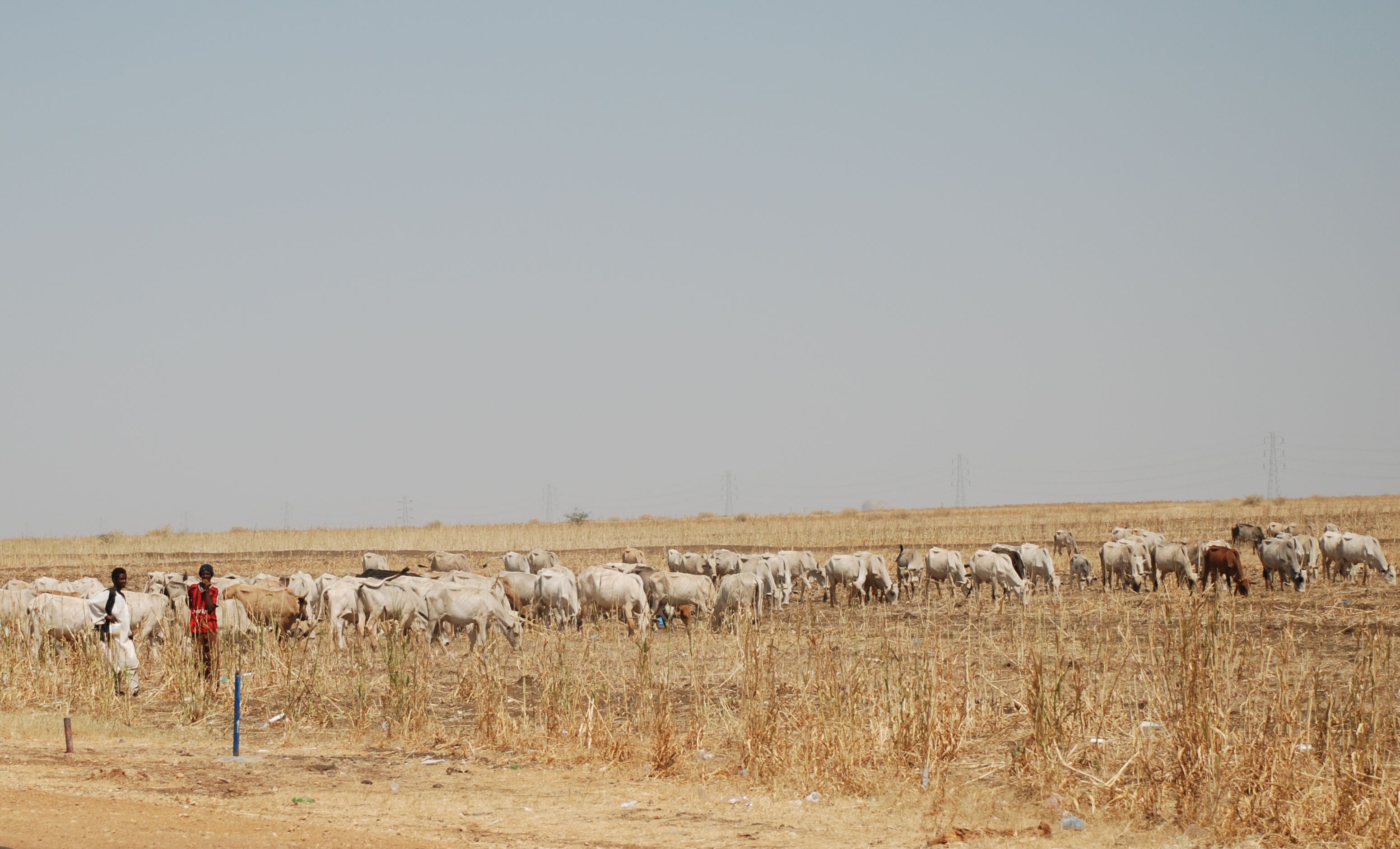
Cattle and people in a harvested field.

Cattle in a Gezira field, 2008

Bertramz photographed this field in November 2008. The source locates it in Gezira, about 50 kilometres north of Kosti, and identifies the crop as sorghum. Cattle stand among the cut stalks. The photograph does not establish current farming conditions or the identities of the people shown.

Bertramz · CC BY 3.0

Original source ↗
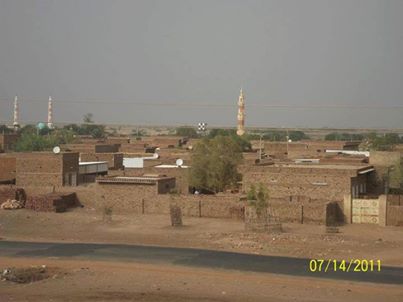
Brick buildings, a road and minarets in Faris village.

Faris village, Gezira, 2011

A view of Faris village in Gezira State, photographed on 14 July 2011 by Abd al-Qadir Mudawi Muhammad. The capture date is distinct from the 2014 upload date. This is an earlier view of the village, not evidence of present conditions.

عبدالقادر مضوي محمد · CC BY-SA 3.0

Original source ↗