Art & Visual Heritage

Art and visual heritage from Sudan and beyond

Review/rotation: /

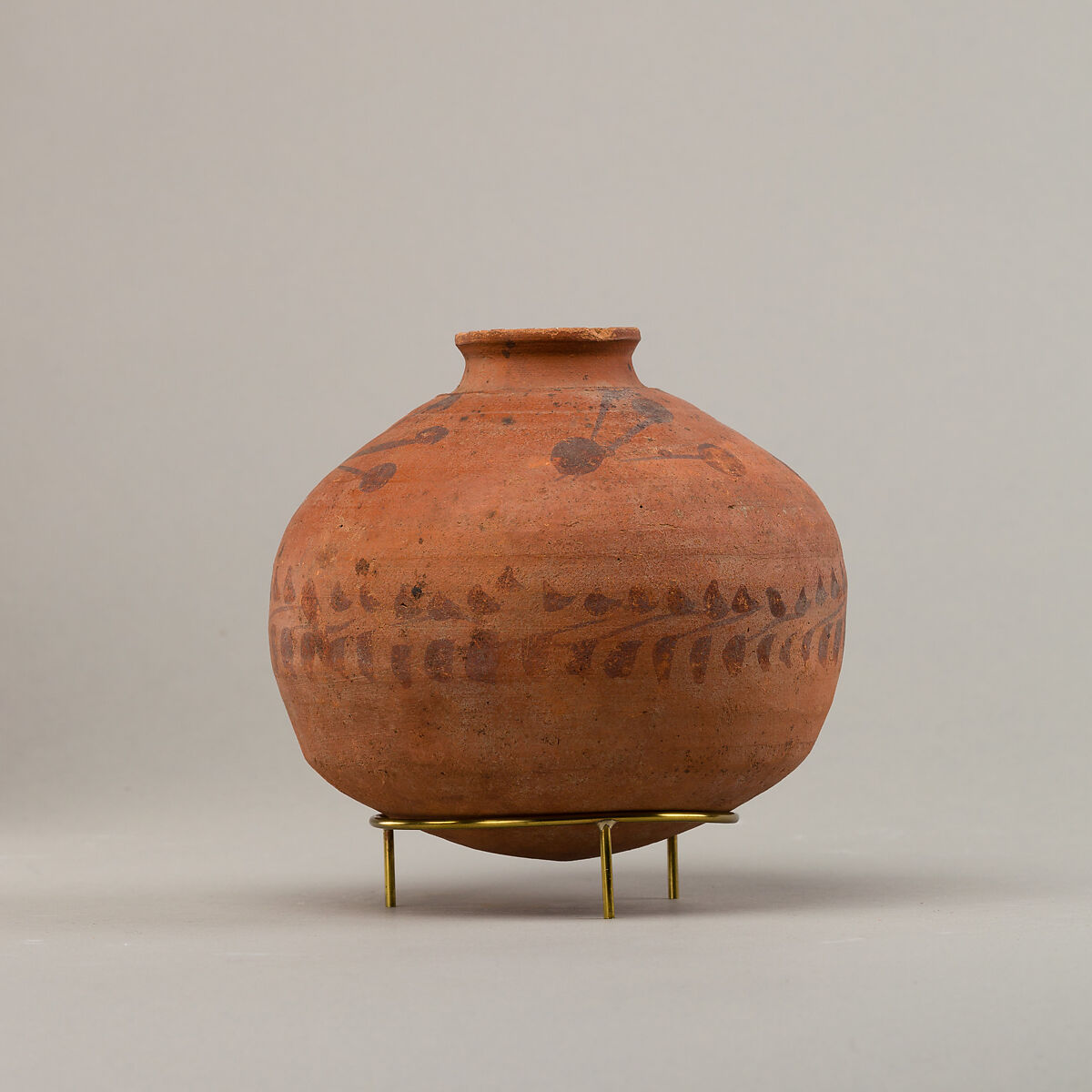
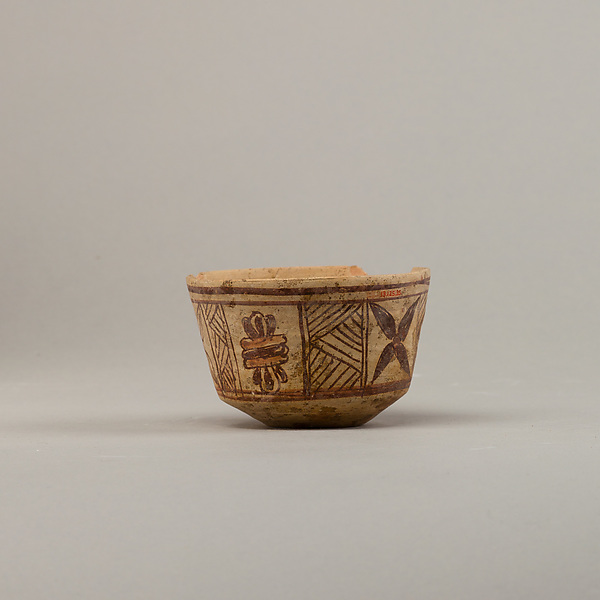
Rounded reddish pottery jar with a short neck, dark painted vines on the shoulder and a leafy band around the body

Painted ceramics · Sudan / Nubia

Jar with painted vines

Maker unrecorded · 270 BCE–320 CE

Dark vines and a leafy band decorate this rounded pottery jar from Faras in Nubia, in present-day Sudan. The Met dates it to the Meroitic period, 270 BCE–320 CE. Its maker is unrecorded. The museum identifies the photograph as public domain and makes it available through Open Access.

View artwork & source ↗ The Metropolitan Museum of Art · Gift of Oxford University Expedition to Nubia, 1926 · Object 26.4.68 · Public domain · CC0 · Met Open Access
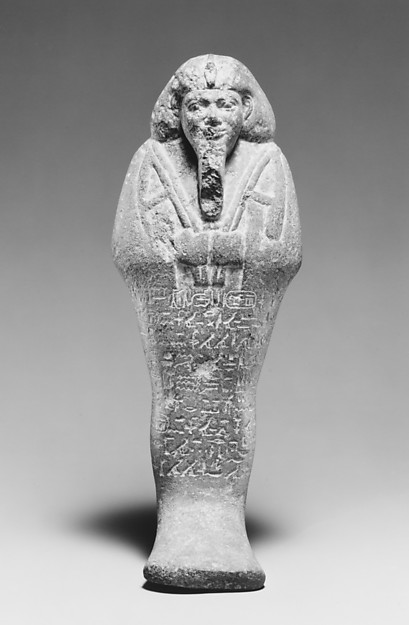
Grey stone funerary figure of Taharqo with crossed arms, a long beard and rows of hieroglyphs down the body

Funerary sculpture · Kush / Nubia

Shabti of Taharqo

Sculptor unrecorded · 690–664 BCE

This granite funerary figure represents the Kushite king Taharqo, who ruled in 690–664 BCE. The Met considers it probably from his pyramid at Nuri in Sudan; that findspot is not certain. Its sculptor is unrecorded. The museum makes this public-domain photograph available through Open Access.

View artwork & source ↗ The Metropolitan Museum of Art · Rogers Fund, 1918 · Object 18.2.10 · Public domain · CC0 · Met Open Access
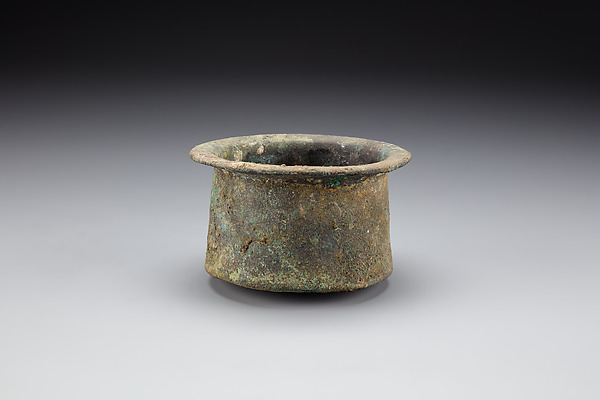
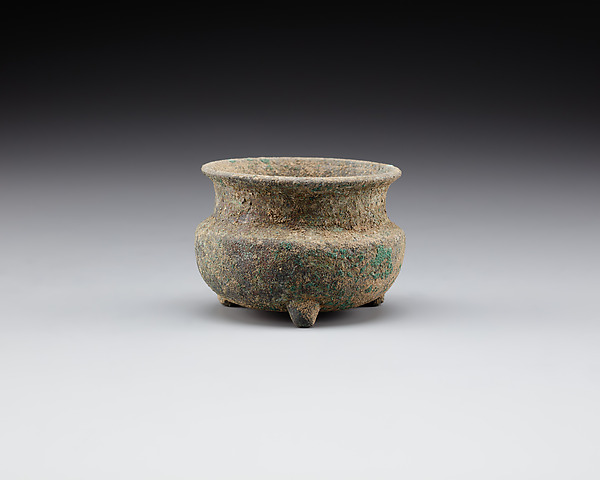
Small copper-alloy vessel with a flared rim, nearly straight sides and a mottled green-brown surface

Metalwork · Sudan / Nubia

Bowl (Faras, 26.4.108)

Maker unrecorded · 270 BCE–320 CE

This Meroitic copper-alloy bowl was excavated at Faras in Sudan, Cemetery 1, Grave 975. The museum records a diameter of 10.1 cm and height of 6.2 cm; its maker is unrecorded. The object number distinguishes it from the other Faras bowl in this collection.

View artwork & source ↗ The Metropolitan Museum of Art · Gift of Oxford University Expedition to Nubia, 1926 · Object 26.4.108 · Public domain · Met Open Access · Unmodified
Gold ram’s head with curved ribbed horns and a cobra above its forehead

Jewellery · Kush / Nubia

Ram’s-head amulet

Maker unrecorded · About 721–664 BCE

A small gold object from the Kushite period, when Nubian rulers governed Egypt. The Met suggests it probably belonged to a royal necklace and connects the ram with Amun. Its precise origin is uncertain: the museum lists Egypt and Sudan, possibly Nubia, rather than a confirmed Sudanese findspot.

View artwork & source ↗ The Metropolitan Museum of Art · Photograph by Oi-Cheong Lee · Gift of Norbert Schimmel Trust, 1989 · Public domain · Met Open Access · Unmodified
Nubian wall painting of the Virgin and Child beside Bishop Marianos in decorated ecclesiastical robes

Historical wall painting · Sudan / Nubia

Madonna and Child with Bishop Marianos

Painter unrecorded (Faras) · 1005–1036

Tempera on plaster from Faras, now in the National Museum in Warsaw. The source dates the painting to 1005–1036; this is the artwork date, not the photograph date. The individual painter is unrecorded.

View artwork & source ↗ National Museum in Warsaw · Photograph uploaded by Vert, Wikimedia Commons · Public domain · Unmodified reproduction
Nubian Christian wall painting depicting the three youths in the fiery furnace

Historical painting · Sudan / Nubia

Three youths in the fiery furnace — Nubian church painting

Painter unrecorded · Historical painting; photograph published 2005

A Nubian church painting photographed at the museum in Khartoum. The descriptive title identifies the scene from Daniel 3; the record does not name the original painter or date the artwork.

View artwork & source ↗ Wikimedia Commons · Photograph by Ibrahim Omer / ancientsudan.org · CC BY-SA 3.0 · Unmodified

Photo stream

Explore Sudan through the years.

Review/rotation:

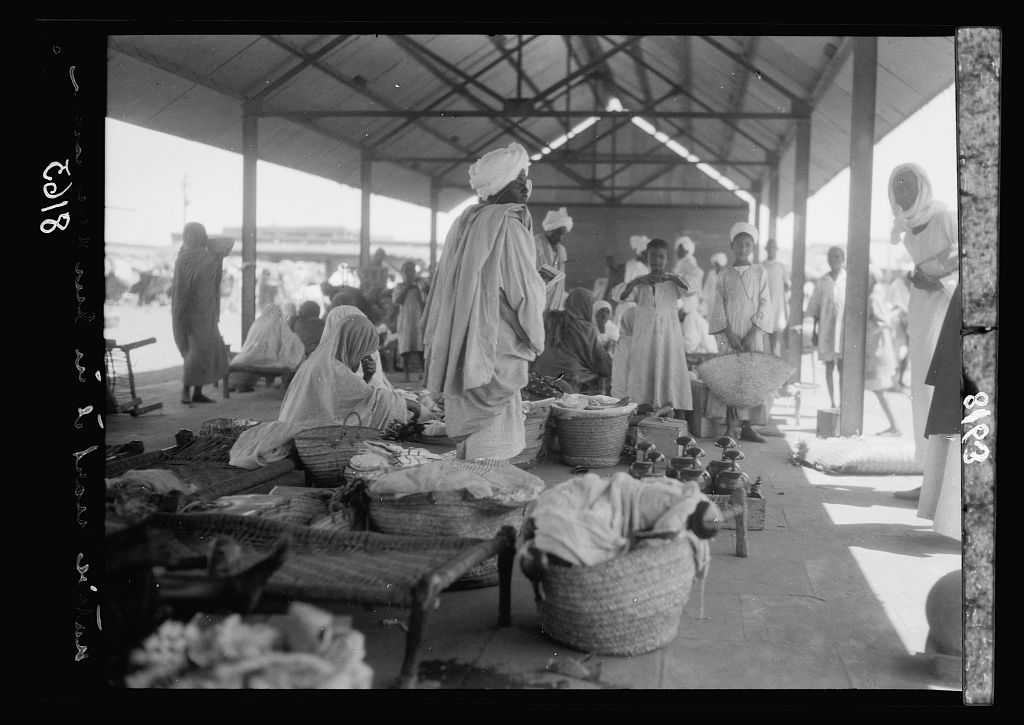
People, baskets and containers beneath a roofed market structure.

Inside an Omdurman market shed, around 1936

The catalogue identifies this as a market shed in Omdurman. Baskets and containers fill the foreground, with people gathered beneath the roof. Personal identities are not supplied by the record. Matson Photo Service; Library of Congress, dated [1936]. The date is approximate. This historical image does not describe current conditions. The Library records no known restrictions on publication; that is not a declaration of public-domain status.

Matson Photo Service / Library of Congress · No known restrictions on publication

Original source ↗
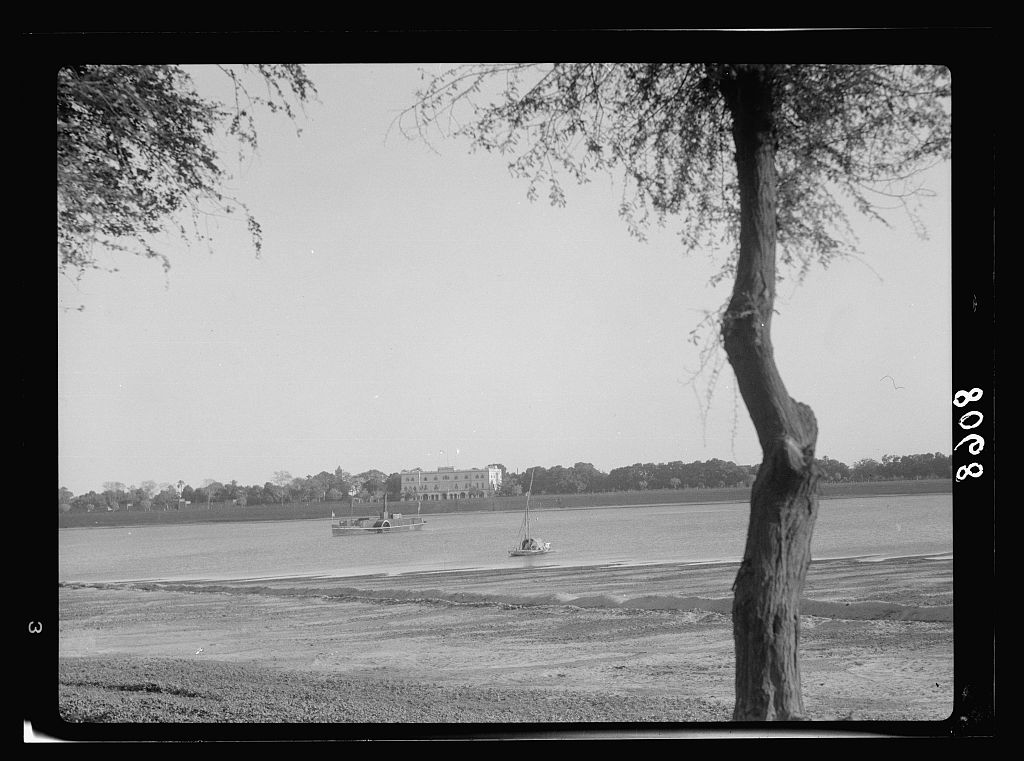
Boats on the river, a palace on the opposite bank and a tree in the foreground.

Khartoum across the Blue Nile, around 1936

The catalogue identifies the far-bank building as the palace in Khartoum and describes one vessel as General Gordon’s riverboat. That vessel identification is attributed to the historical catalogue rather than independently established from the photograph. Matson Photo Service; Library of Congress, dated [1936]. The date is approximate. This historical image does not describe current conditions. The Library records no known restrictions on publication; that is not a declaration of public-domain status.

Matson Photo Service / Library of Congress · No known restrictions on publication

Original source ↗
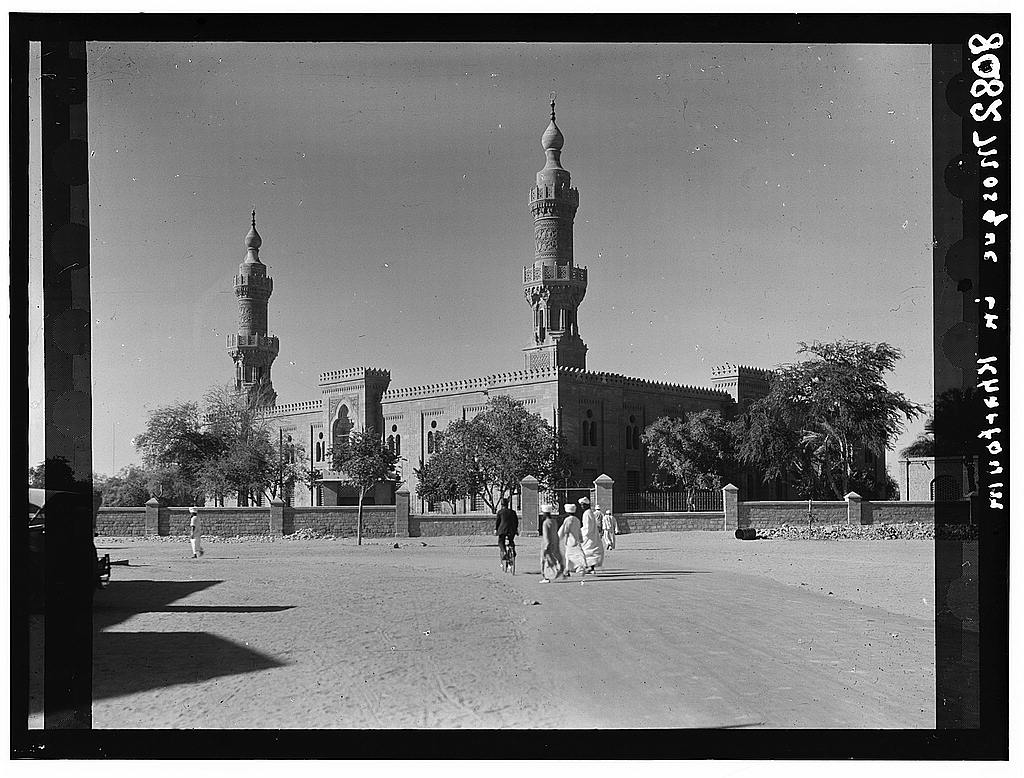
A mosque with two minarets behind trees and a street.

Khartoum’s main mosque, around 1936

The catalogue identifies this building as Khartoum’s main mosque. Two minarets rise above the façade, with trees and people along the street in front. Matson Photo Service; Library of Congress, dated [1936]. The date is approximate. This historical image does not describe current conditions. The Library records no known restrictions on publication; that is not a declaration of public-domain status.

Matson Photo Service / Library of Congress · No known restrictions on publication

Original source ↗
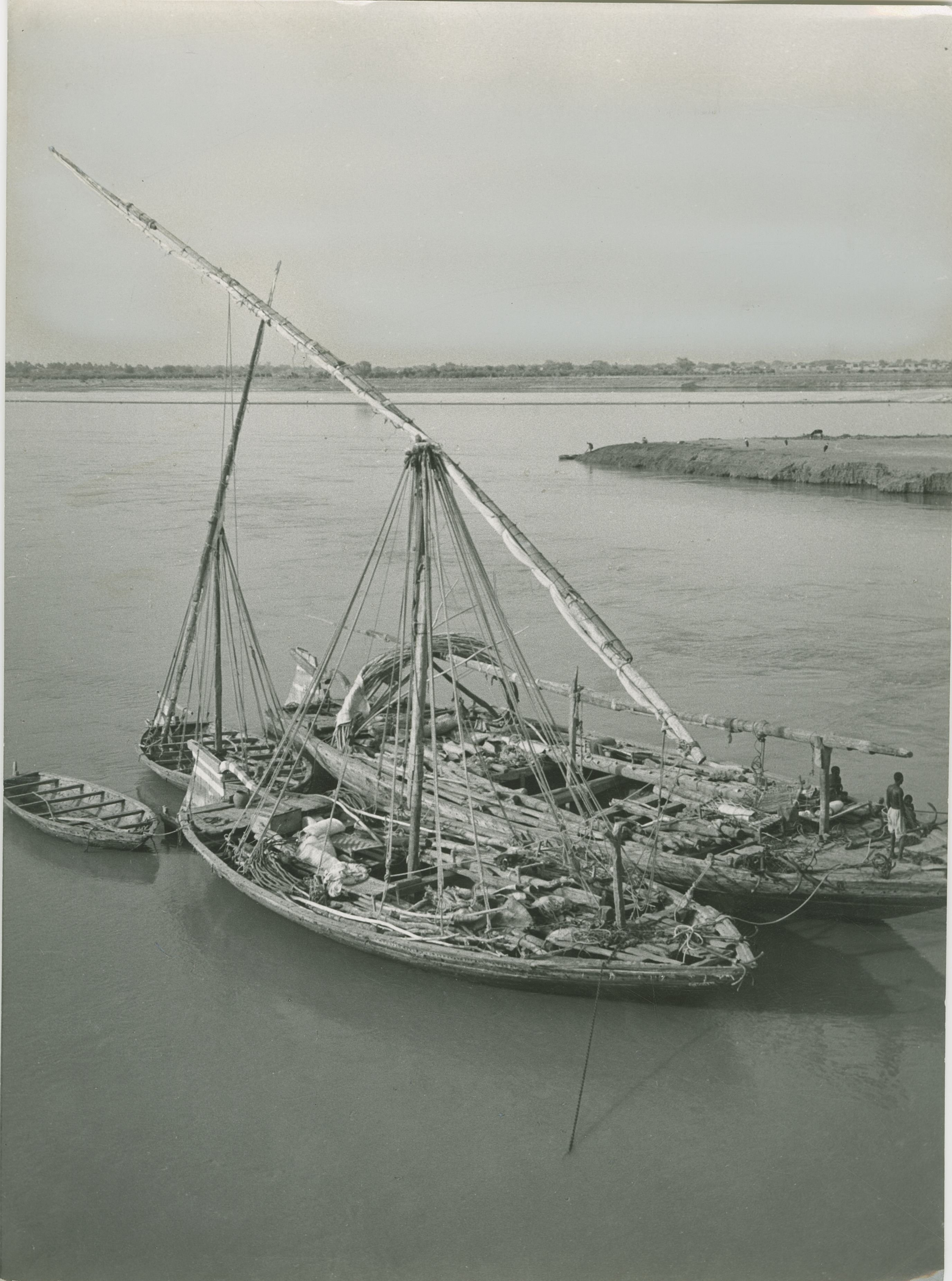
Moored sailing boats on the Nile, with the opposite bank beyond.

Nile boats near Khartoum, 1956

The Touring Club Italiano collection dates this photograph to 1956 and identifies the location as the confluence area near Khartoum. The photographer is not recorded. It shows moored sailing boats and the opposite riverbank; it should not be read as a description of present river traffic.

Photographer unrecorded / Touring Club Italiano · CC BY-SA 4.0

Original source ↗
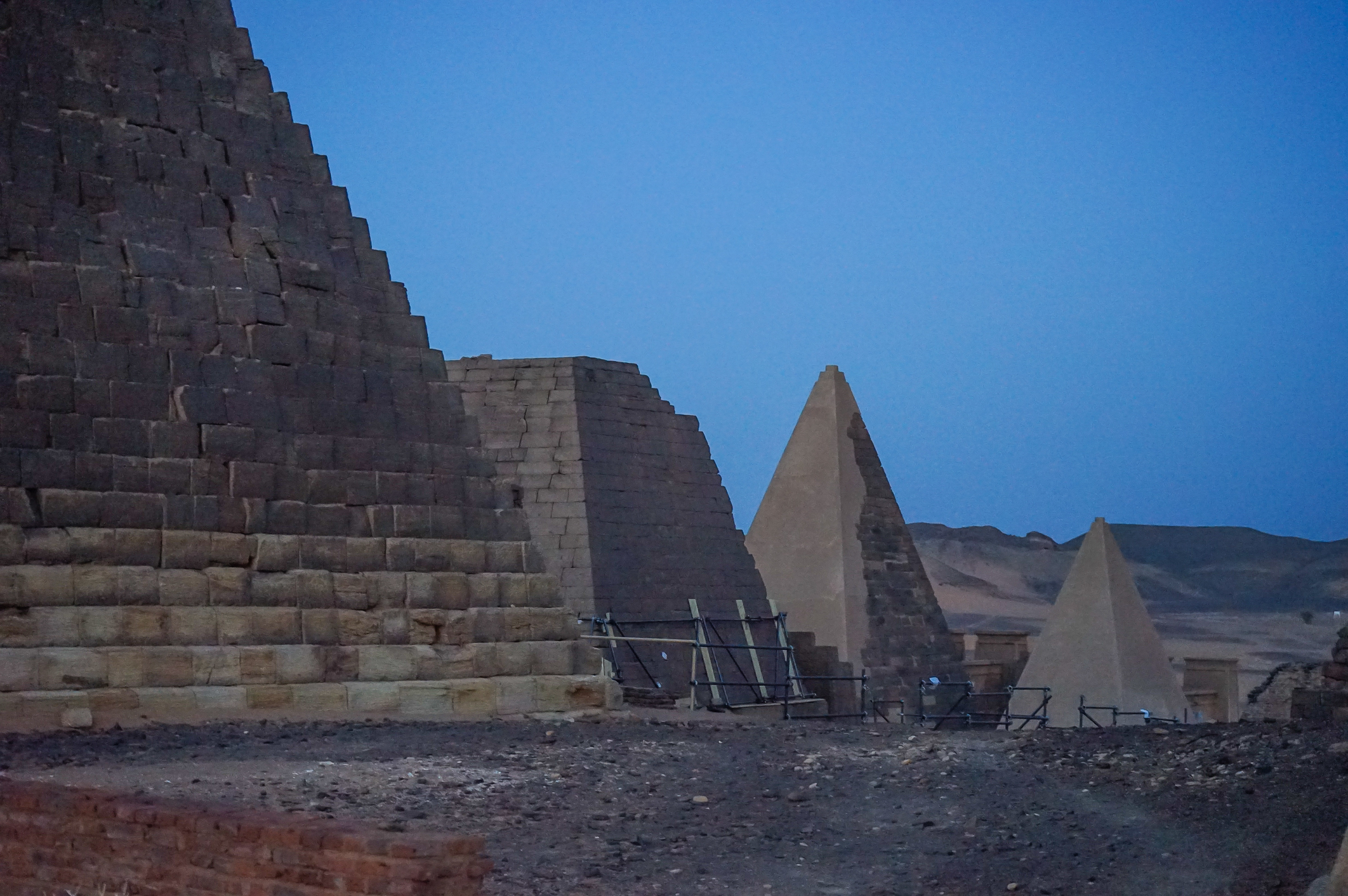
Steep-sided stone pyramids beneath a blue evening sky.

Nubian pyramids in Sudan, 2016

Nina R photographed these Nubian pyramids in Sudan on 26 March 2016. Stone courses, entrances and steep pyramid sides are visible. The source provides the country and date but no monument numbers; none are inferred here. This historical photograph is not a statement about present access or conservation.

Nina R · CC BY 2.0

Original source ↗
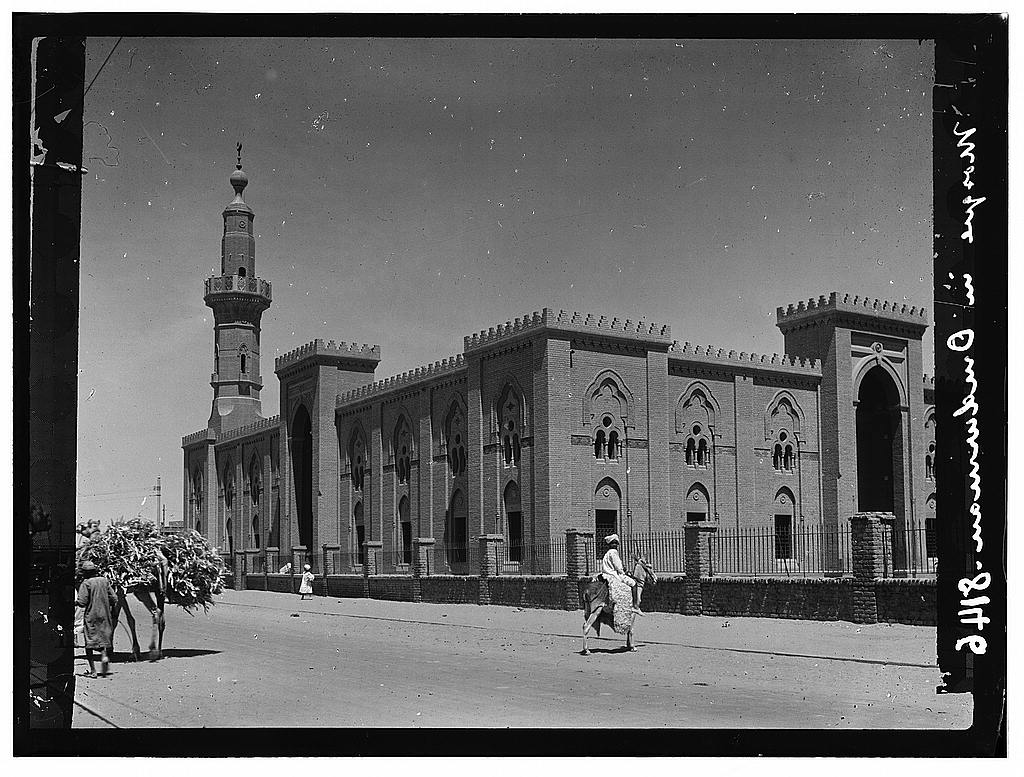
A brick mosque and minaret beside a street with people and pack animals.

Omdurman’s main mosque, around 1936

The catalogue identifies this street view as Omdurman’s main mosque. Its brick façade and minaret face a street used by pedestrians and animals. Matson Photo Service; Library of Congress, dated [1936]. The date is approximate. This historical image does not describe current conditions. The Library records no known restrictions on publication; that is not a declaration of public-domain status.

Matson Photo Service / Library of Congress · No known restrictions on publication

Original source ↗
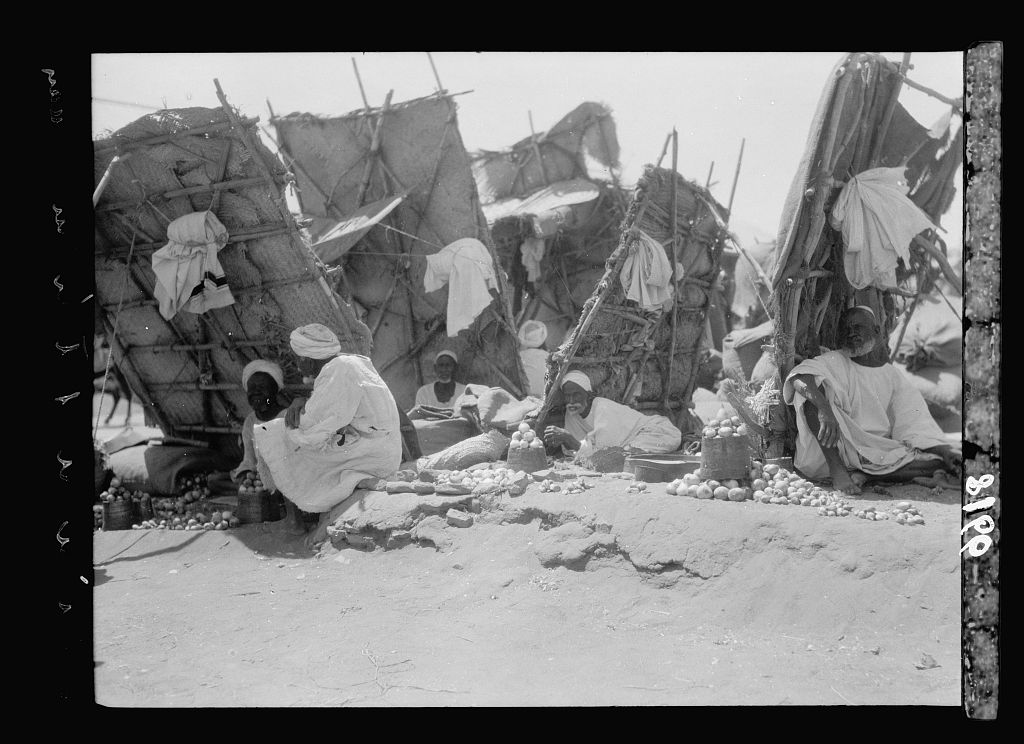
Traders sit beside piles of produce beneath woven shelters.

Omdurman’s onion market, around 1936

The catalogue identifies this scene as Omdurman’s onion market. Traders sit among piles of produce and woven shelters. The photograph records a market scene, not the names or incomes of the people shown. Matson Photo Service; Library of Congress, dated [1936]. The date is approximate. This historical image does not describe current conditions. The Library records no known restrictions on publication; that is not a declaration of public-domain status.

Matson Photo Service / Library of Congress · No known restrictions on publication

Original source ↗
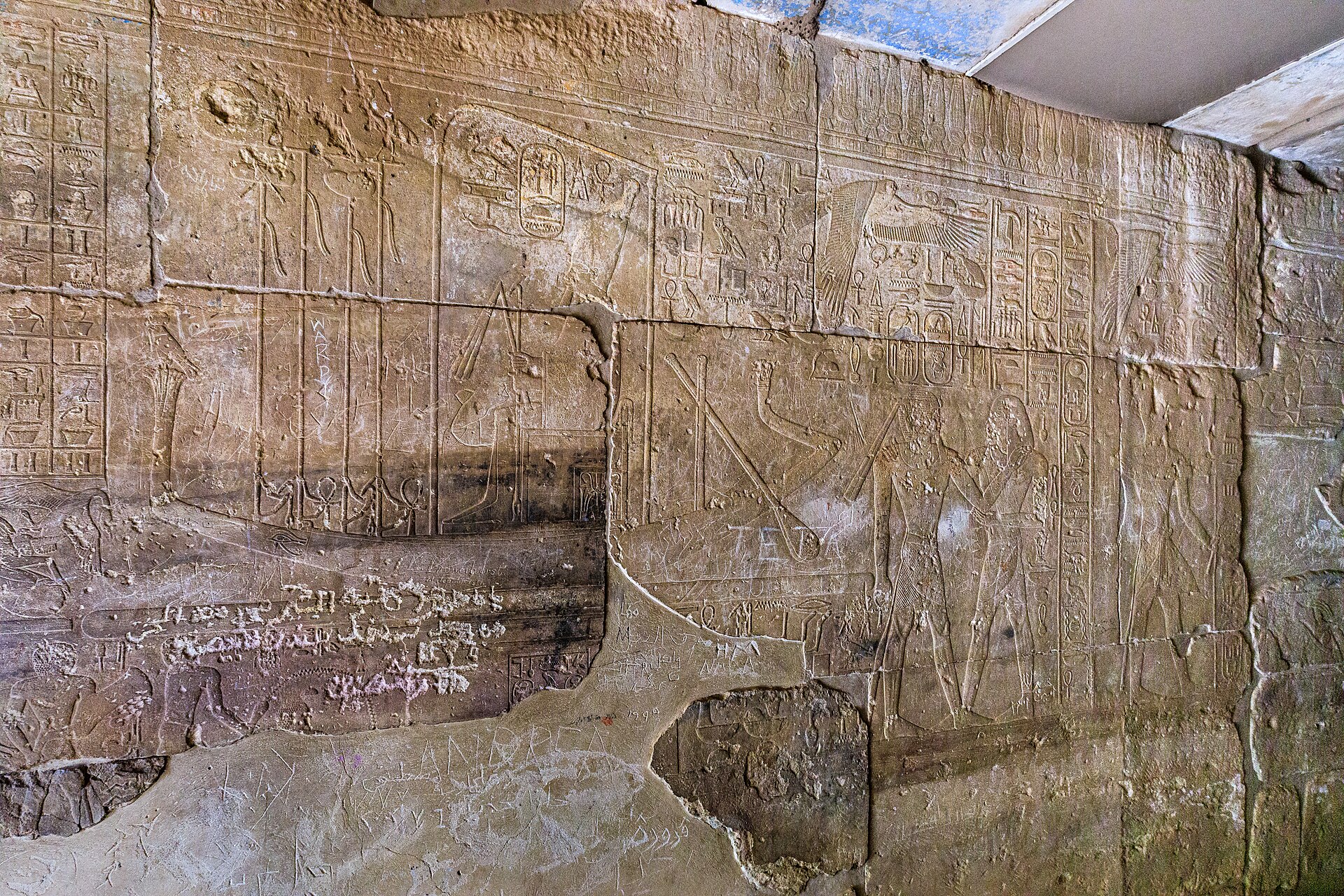
Carved figures and inscriptions across stone temple blocks.

Reliefs in the relocated Semna temple, 2019

Matthias Gehricke photographed these reliefs on 1 January 2019. The source identifies them as part of the relocated Semna temple at the Sudan National Museum in Khartoum. The carving, surface wear and later marks remain visible. This dated museum view is not evidence of the temple’s current condition.

Matthias Gehricke · CC BY-SA 4.0

Original source ↗
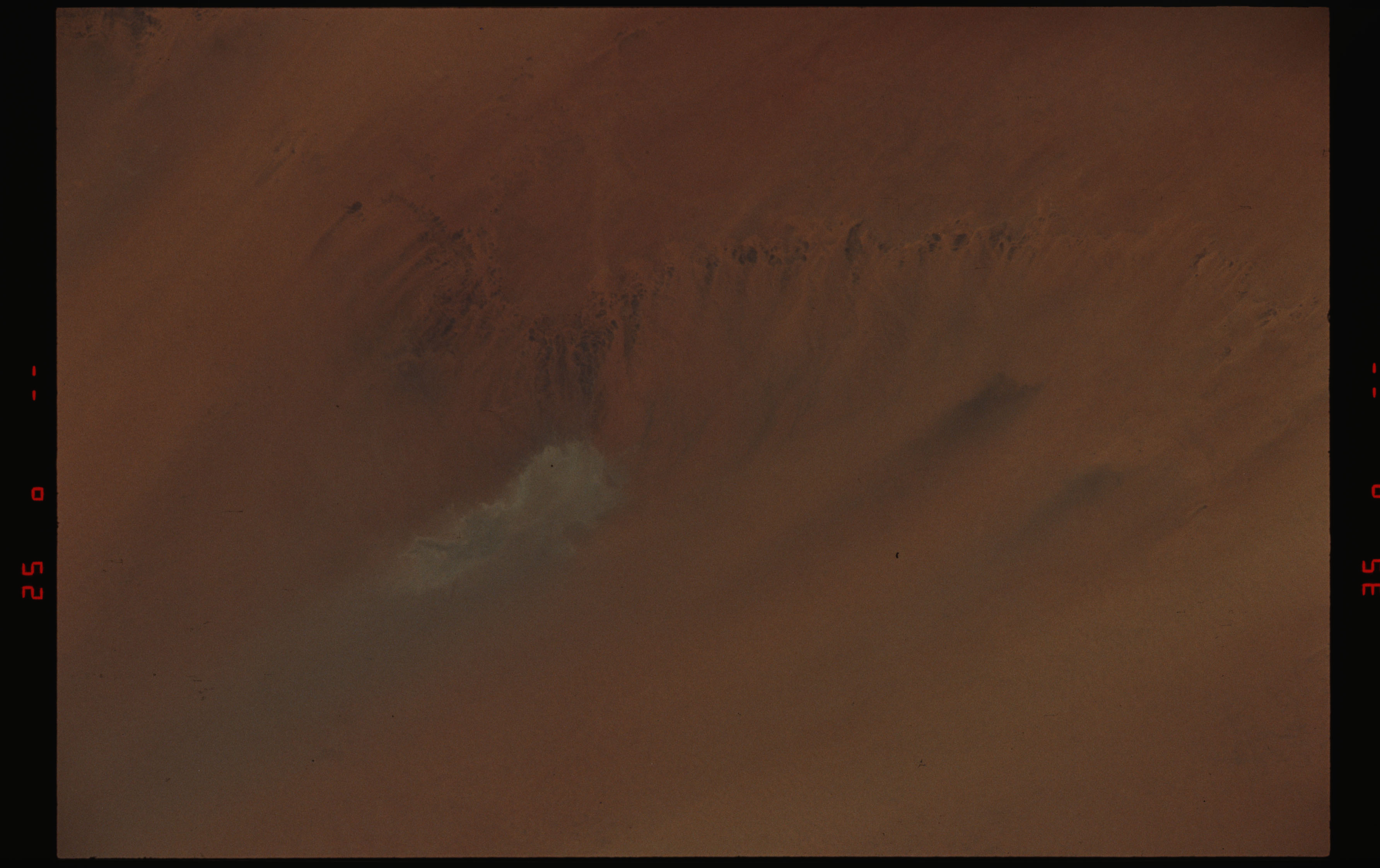
Dark reddish desert terrain photographed from orbit.

Sudan’s desert from orbit, 1993

NASA’s STS-55 mission photographed this desert terrain in Sudan on 6 May 1993. The archival identifier is STS055-09-010; the National Archives record is 23258606. This is an orbital film photograph, not a current satellite map. Its dark tones and original frame are retained.

NASA / Johnson Space Center; NARA · Public domain

Original source ↗
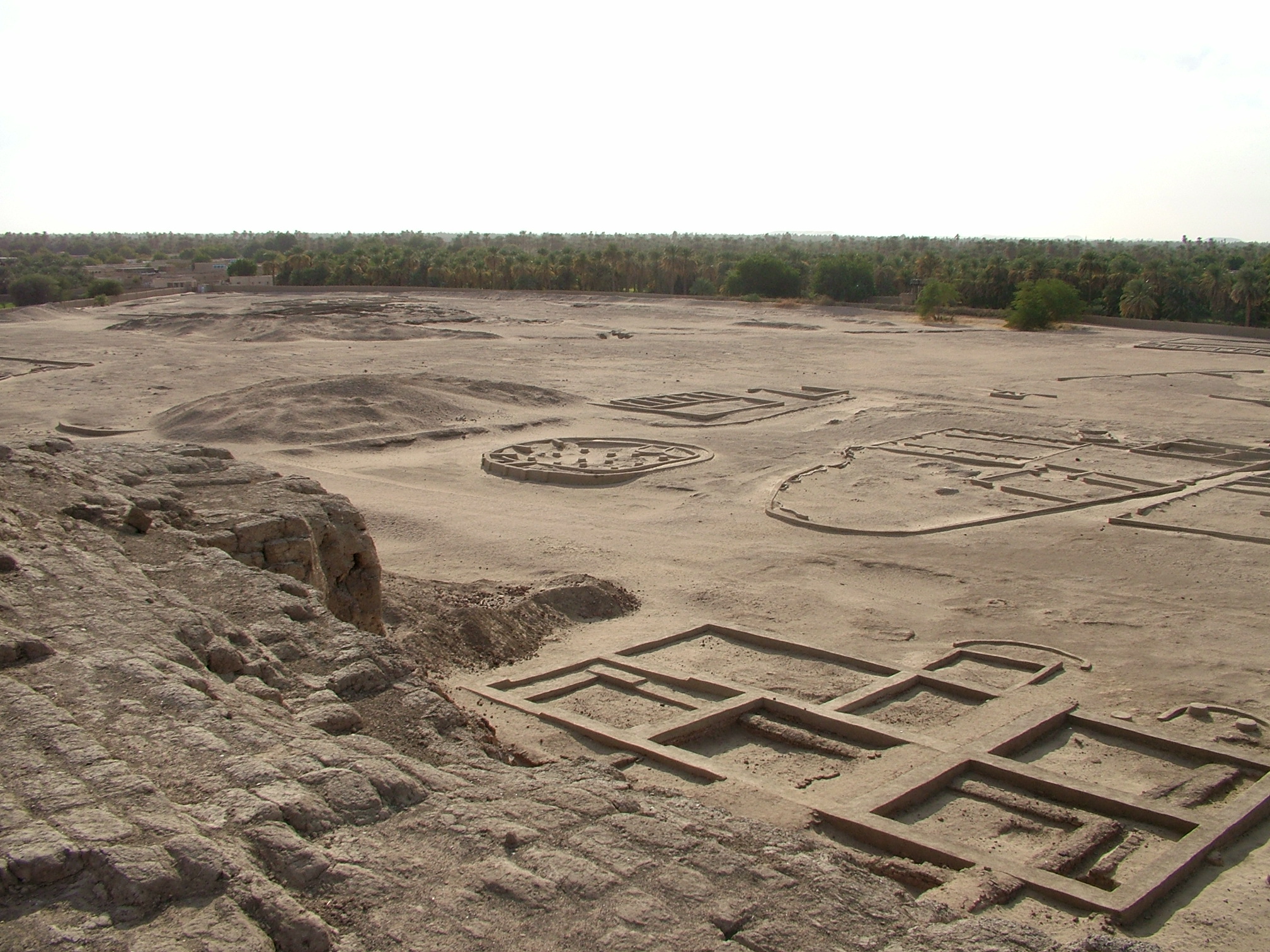
Low archaeological walls and building outlines at ancient Kerma, with palms in the background.

Ancient Kerma, photographed in 2005

Low walls and building outlines mark part of the archaeological site of ancient Kerma in Sudan, with palm trees beyond. Photographer Lassi dates this image to 2005; the source does not give a capture day or month. Reproduced without alteration under CC BY-SA 4.0. This historical view is not a report on the site’s present condition or visitor access.

Lassi · CC BY-SA 4.0

Original source ↗